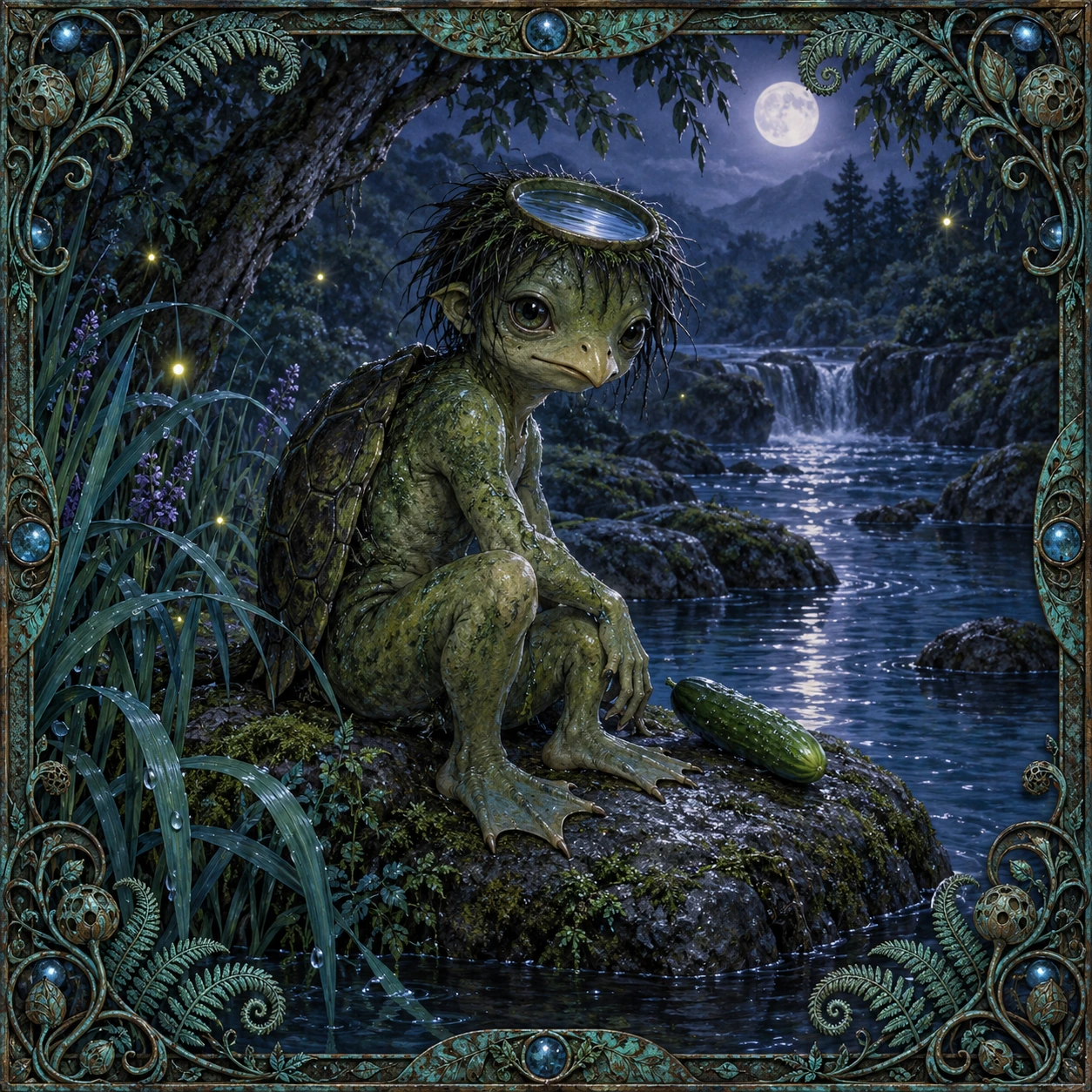
The museum explanations call the fluid in the head depression life-giving or vital. The Ashmolean also associates its figure with dragging humans and domestic animals into water. Such descriptions explain the lore represented by an object. They are not observations of a biological mechanism, and they offer no dependable rules for approaching a real river. [3][4]
小山博’s2016 Miyazaki Museum study sorts81 recorded traditions into eight categories, including features, claimed experiences, horse-dragging, gratitude, harmful consequences, marriage, customs and other material. Its opening notes regional forms such as Sekoppo in northern Kitagawa, Hyossunbo in the central area and Garappa or Gawaro around Miyakonojo. It also notes traditions of a sea-dwelling being at Hyuga and a mountain-to-river presence in Saito. These details widen the profile beyond one composite silhouette. The81 items are narrative records assembled for analysis, not81 verified creatures or encounters. The regional study distinguishes the stories’ settings and uses; it does not establish one universal anatomy or prove each narrated power. [7]