

A collection of living histories
Entomological Atlas
Explore butterflies, moths, cicadas and beetles through specimen-derived artwork and source-linked natural history.
Specimen-derived artwork opens the door. Source-linked guides reveal the insects beyond the frame.
38 guides
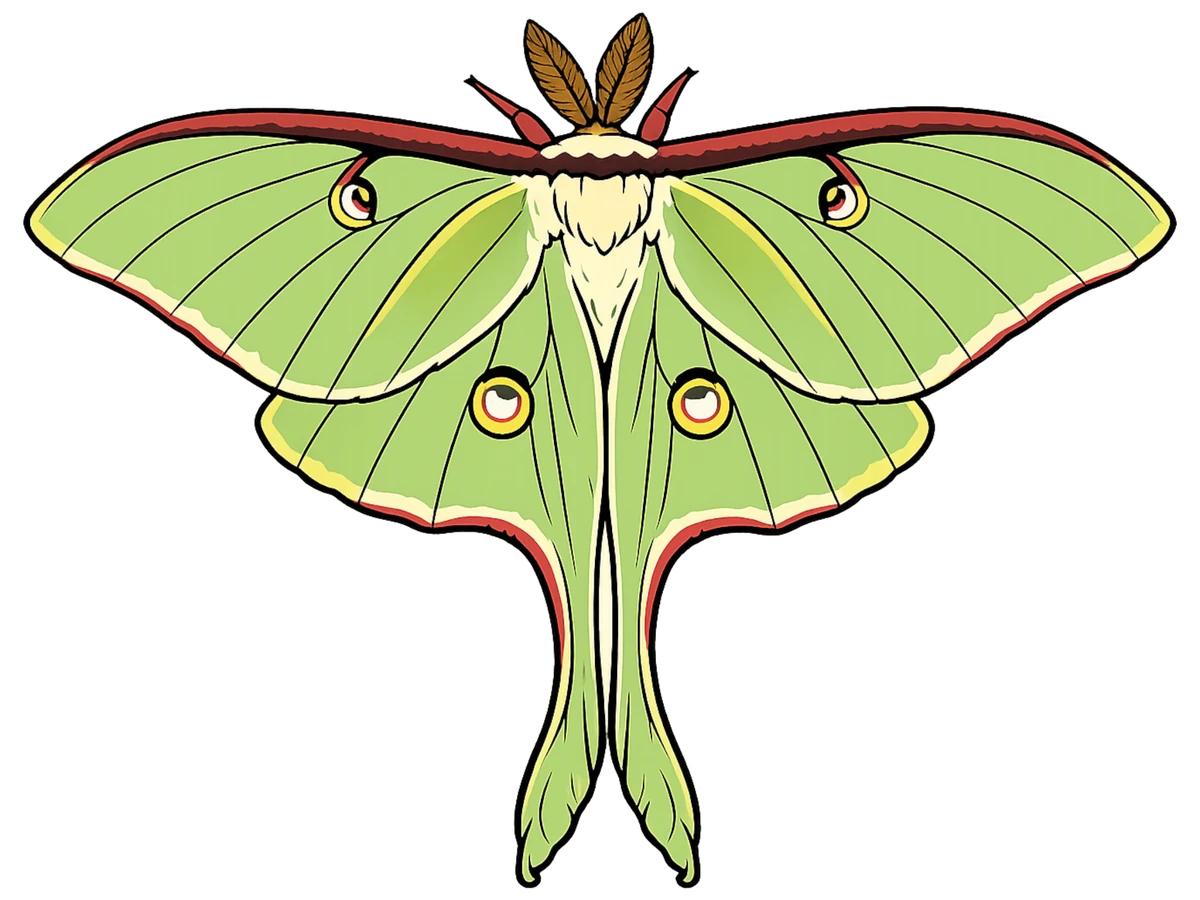
Luna Moth
Actias luna
A green North American silk moth whose long tails have been tested as acoustic decoys. Its hidden life among leaves is as interesting as the adult silhouette.
Explore the guide →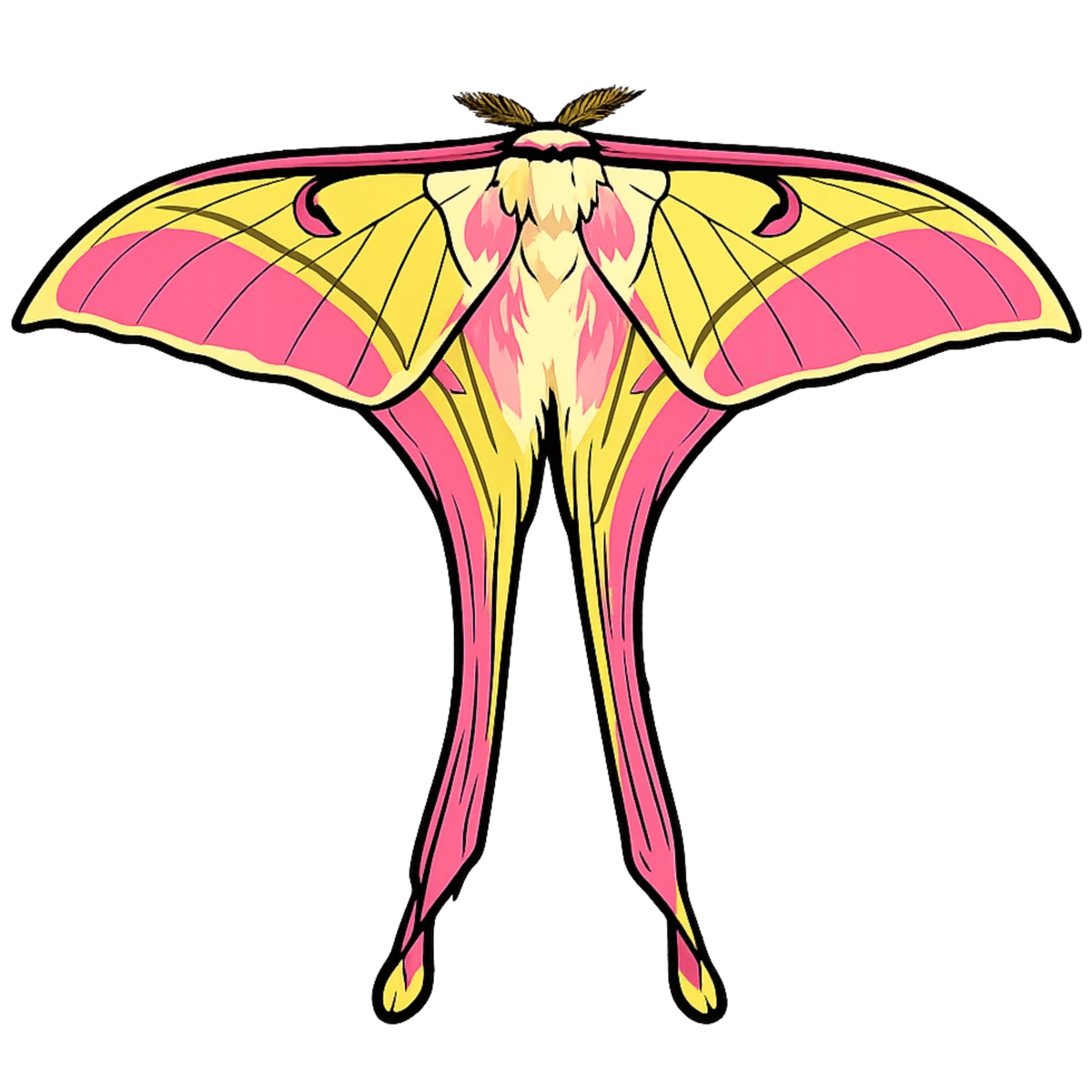
Pink Spirit Moth
Actias rhodopneuma
A moon moth represented in the collection by pink-and-yellow specimen-derived works. Published Laotian and Chinese records anchor its identity while its early life remains less fully documented here.
Explore the guide →
Indian Moon Moth
Actias selene
Pale green wings, crescent eyespots and long tails give the Indian moon moth its celestial silhouette. A local life-history study reveals the feeding caterpillar behind that delicate adult.
Explore the guide →
White Ghost Cicada
Ayuthia spectabile
Opaque cream and transparent membrane meet in the wings of this Southeast Asian cicada, revealing a very different kind of insect surface from a moth’s scales.
Explore the guide →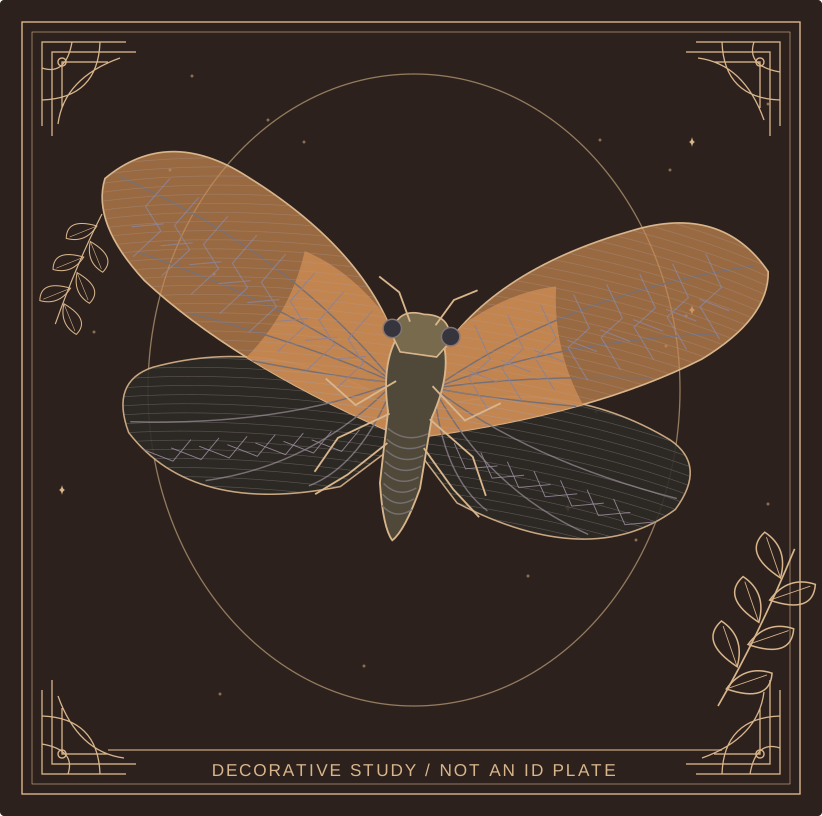
Becquartina electa
Becquartina electa
A patterned Asian cicada with a broad band across its dark wings. Its striking appearance sits beside a taxonomic story that is still being refined.
Explore the guide →
Campylotes histrionicus
Campylotes histrionicus
A boldly patterned day-flying moth whose story runs through Himalayan collections, regional plant records and changing scientific names.
Explore the guide →
Common gull butterfly
Cepora nerissa
Creamy wings crossed by dark veins give the common gull a crisp graphic structure. Seasonal variation and its connection to caper relatives add depth to a butterfly that is often associated with open landscapes, edges and cultivated ground.
Explore the guide →
Red lacewing
Cethosia biblis
The red lacewing brings together warm colour and an intricately bordered wing surface. Its caterpillars tie the butterfly to passionflower relatives, while primary observations from southern China reveal a social early life and several distinct adult food visits.
Explore the guide →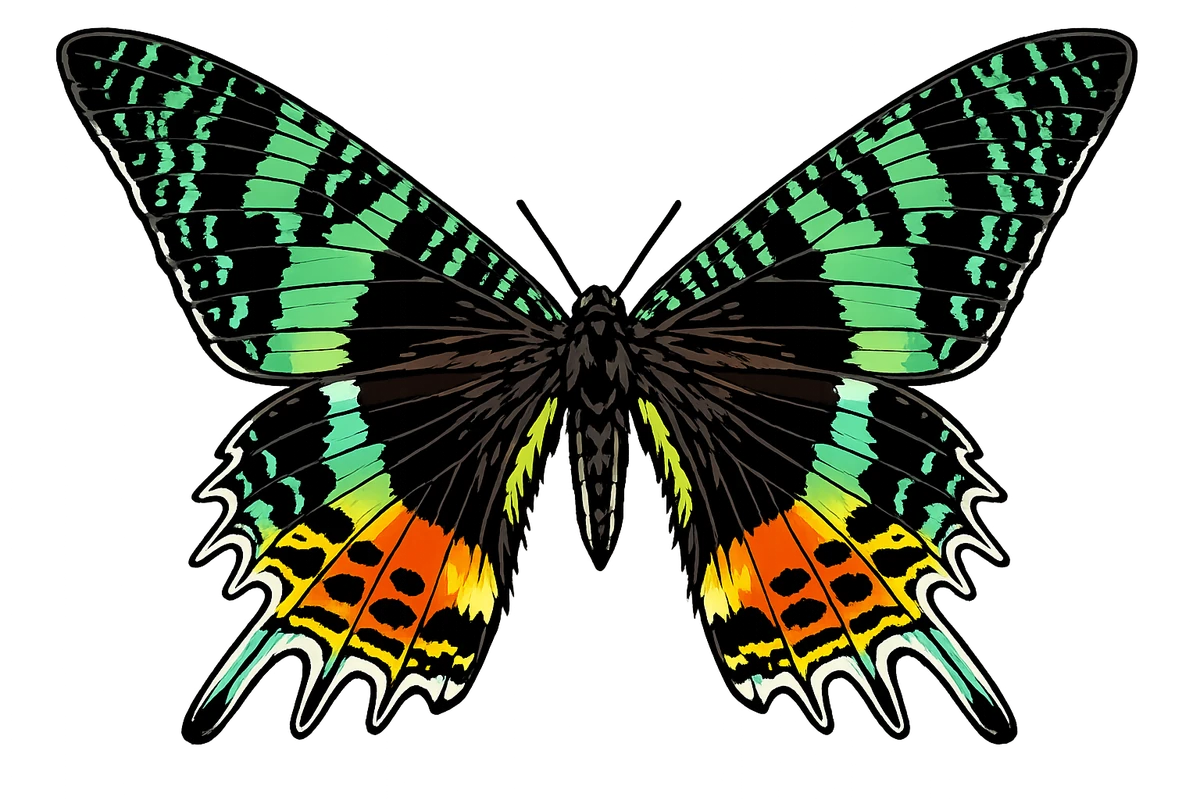
Madagascan Sunset Moth
Chrysiridia rhipheus
A day-flying Madagascan moth with color shaped by microscopic wing architecture and an intimate connection to Omphalea plants.
Explore the guide →
Batwing Cicada
Cryptotympana aquila
Dark wing bases and clear outer membranes belong to a Southeast Asian cicada whose song and microscopic wing surface have each been studied in detail.
Explore the guide →
Common map butterfly
Cyrestis thyodamas
Fine dark lines divide pale wings into a drawing that seems almost cartographic. The common map butterfly invites close looking, and its documented connection to fig leaves makes it a natural companion to the Botanical Encyclopedia.
Explore the guide →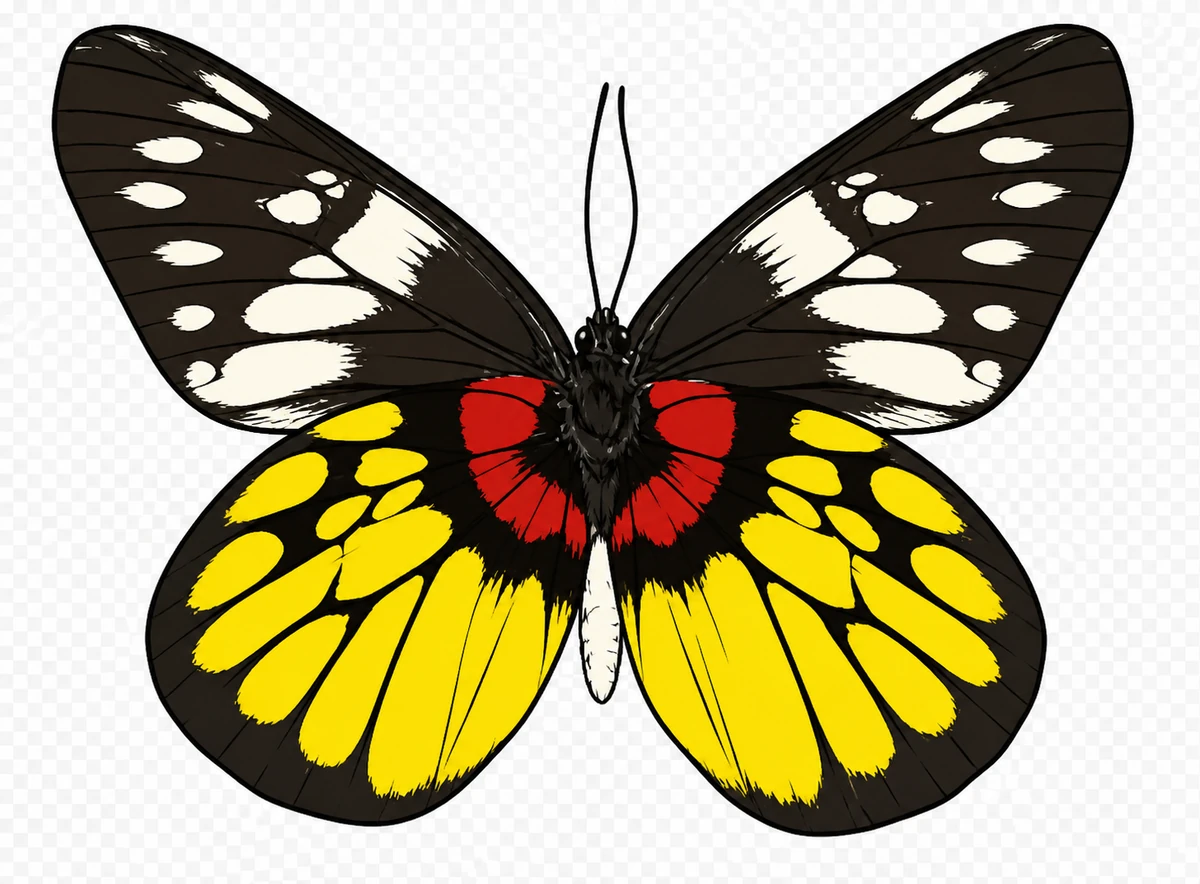
Red-base Jezebel
Delias pasithoe
A dark Asian jezebel whose vivid red hindwing base is revealed on the underside, with a regional life history that begins in company.
Explore the guide →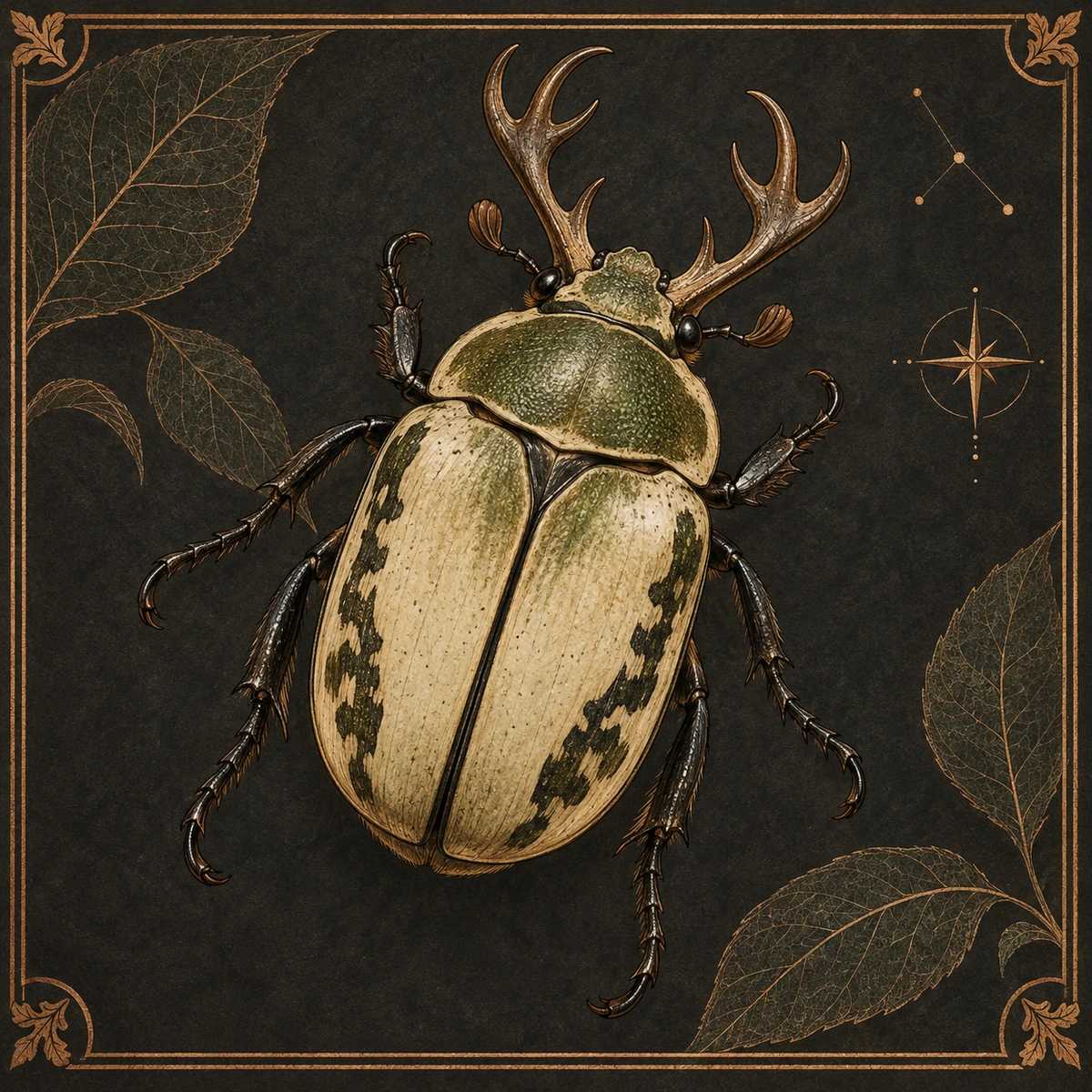
Antler-horn Flower Beetle
Dicronocephalus wallichi
An antler-horn flower chafer whose research story includes both male contests and maternal nest building. Its spread-wing portrait reveals a different side of the armored beetle.
Explore the guide →
Common Grass Yellow
Eurema hecabe
A lemon-yellow butterfly of sunlit edges, with a life tied to host plants and a name whose modern boundaries reward a closer look.
Explore the guide →
Moth-like Cicada
Gaeana maculata
Broad patterned wings make this cicada easy to mistake for a moth. Field observations and wing-surface experiments published as Gaeana cheni now sit within a revised taxonomic treatment.
Explore the guide →
Tailed Jay
Graphium agamemnon
A fast-flying swallowtail scattered with apple-green spots, with regional host-plant stories that connect garden flowers to the leaves feeding its caterpillars.
Explore the guide →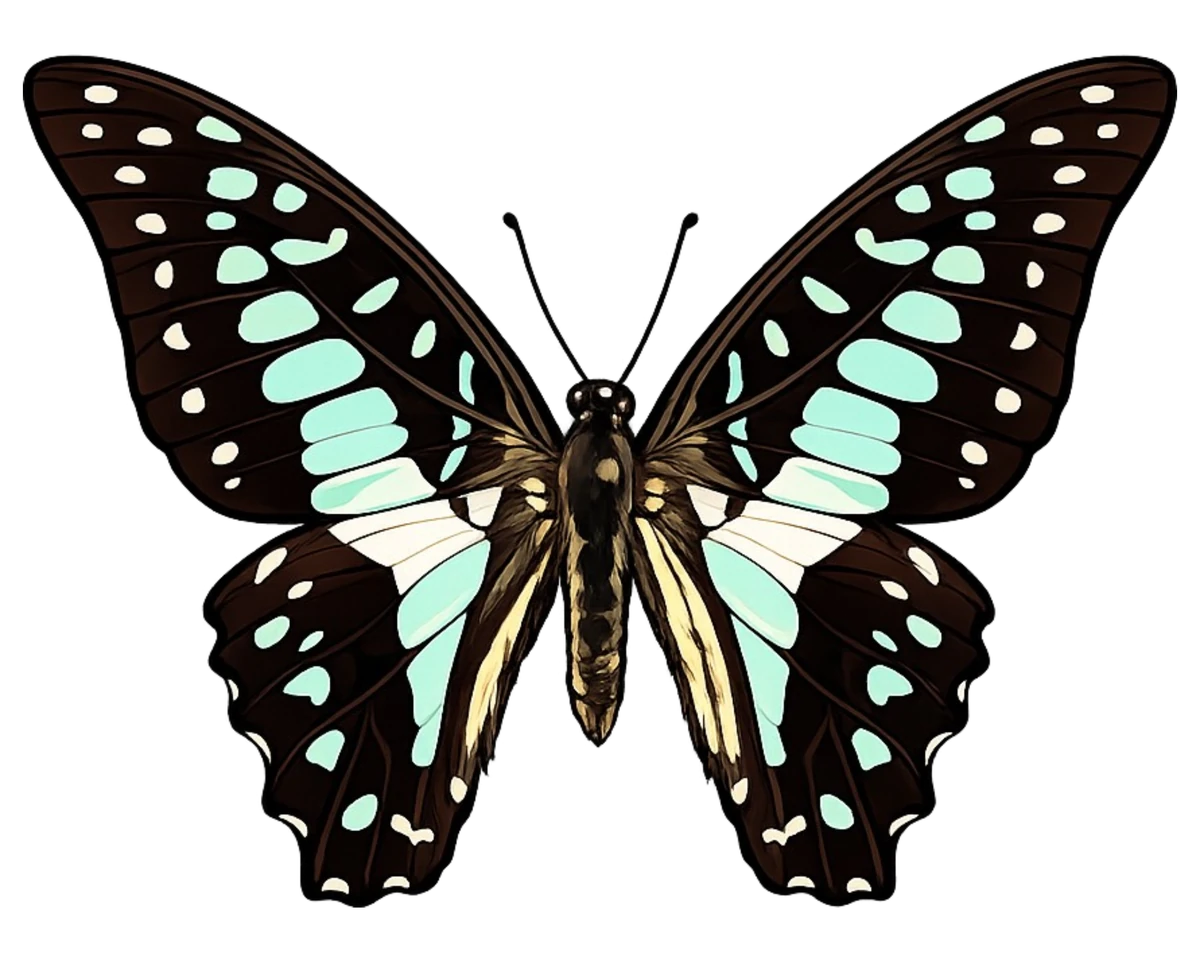
Common jay butterfly
Graphium doson
A pale blue series of spots crosses dark wings in the common jay. This specimen-derived digital subject leads into a useful comparison with other blue-marked Graphium, regional caterpillar-host records and a reminder that a butterfly called common can still have a very different local conservation story.
Explore the guide →
Coppery lady
Graphium latreillianus
This African Graphium offers a surprise: a swallowtail without long hindwing tails, with pale markings above and a copper-toned surface below. Its adult pattern and forest records are better documented than its early stages, a distinction worth preserving.
Explore the guide →
Spot swordtail
Graphium nomius
Pale wings, dark bands and unusually long tails give the spot swordtail a light, almost drawn outline. Its natural history connects that adult shape to regional forest records, custard-apple-family hosts and photographs that continue to refine where the species is known.
Explore the guide →
Small striped swordtail
Graphium policenes
Mint-green lines, slender tails and a small red accent make this African swordtail immediately engaging. Its living story leads from warm forest edges to damp sand, then to the custard-apple relatives that support its caterpillars.
Explore the guide →
Common Bluebottle
Graphium sarpedon
A blue-green band crossing dark wings opens two scientific stories: how a butterfly creates a visible pattern, and how its eyes receive light.
Explore the guide →
Purple-spotted Swallowtail
Graphium weiskei
A New Guinea highland swallowtail whose extraordinary colored patches reveal a pigment-mixing story as compelling as its silhouette.
Explore the guide →
Red Cracker
Hamadryas amphinome
Blue-black above and richly red beneath, this tree-trunk butterfly belongs to a tropical American group famous for audible wing sounds.
Explore the guide →
Deidamia Morpho
Morpho deidamia
A blue-banded forest morpho whose intricate underside and regional activity rhythms offer a quieter story behind the dramatic dorsal flash.
Explore the guide →
Didius blue morpho
Morpho menelaus didius
This morpho’s blue is a collaboration between light and very small wing structures. The Atlas follows the museum subspecies name Morpho menelaus didius and retains Morpho didius, familiar from collection labels and optical research, as a searchable alternative treatment.
Explore the guide →
Red Helen
Papilio helenus
Dark wings and a creamy hindwing patch create the Red Helen’s powerful contrast. Regional fauna research opens a more detailed story of citrus-family plants, multiple generations and a pupal pause in the year.
Explore the guide →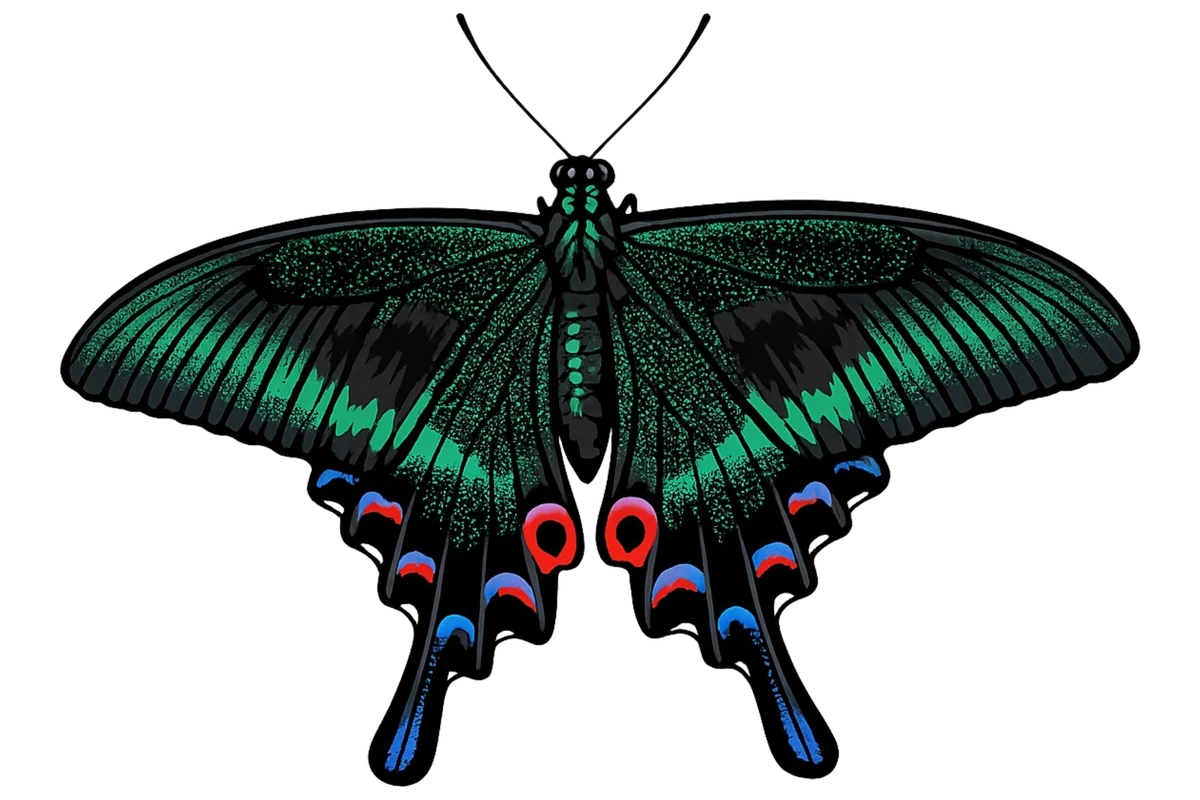
Alpine black swallowtail
Papilio maackii
The alpine black swallowtail carries an intensely patterned dark surface whose green and blue reflections reward a change of light. It is also an unusually good doorway into plant chemistry: the cues a female uses to select a host are not the same thing as a caterpillar’s ability to eat it.
Explore the guide →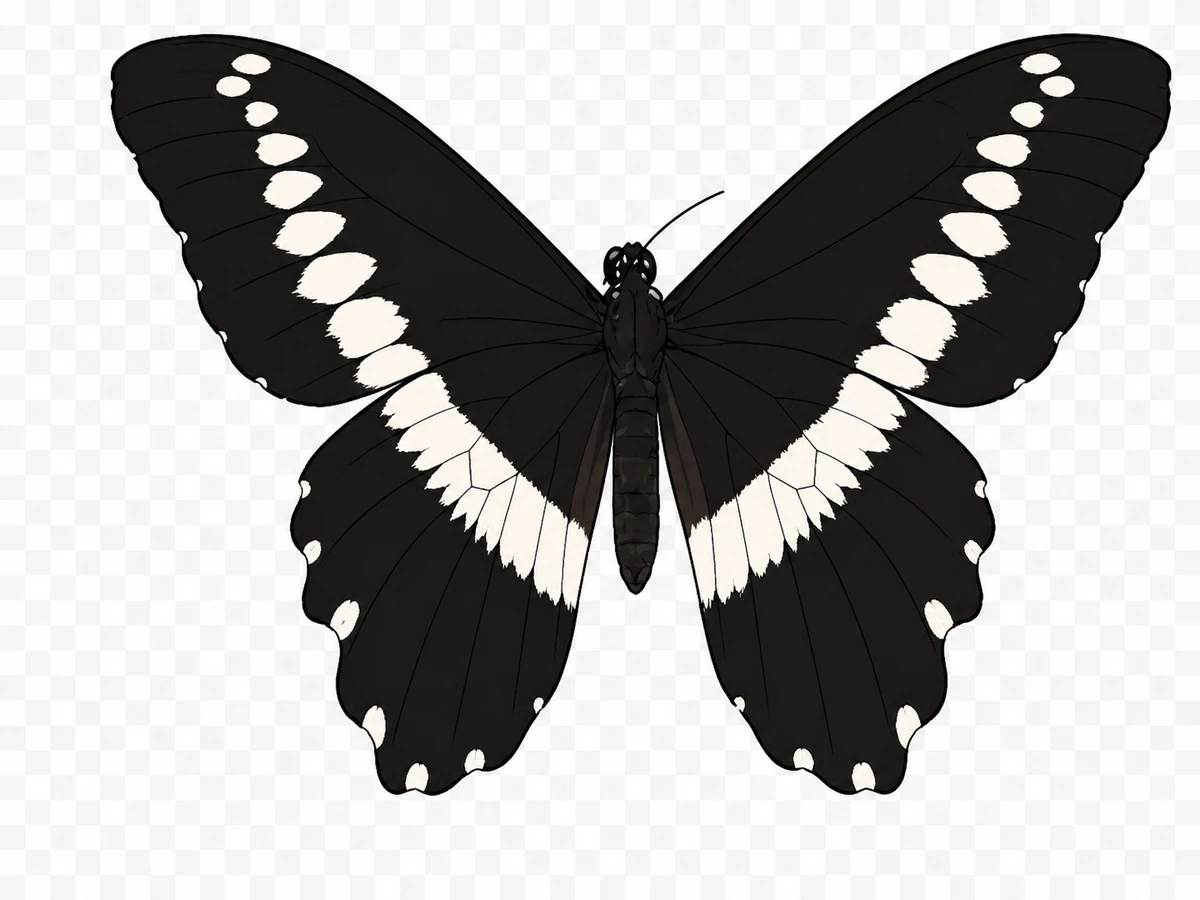
Common Mormon
Papilio polytes
The common Mormon is more than a single black-and-white wing pattern. Different female forms make it a celebrated subject of mimicry research, connecting a butterfly seen in gardens with the genes and developmental processes that shape its adult appearance.
Explore the guide →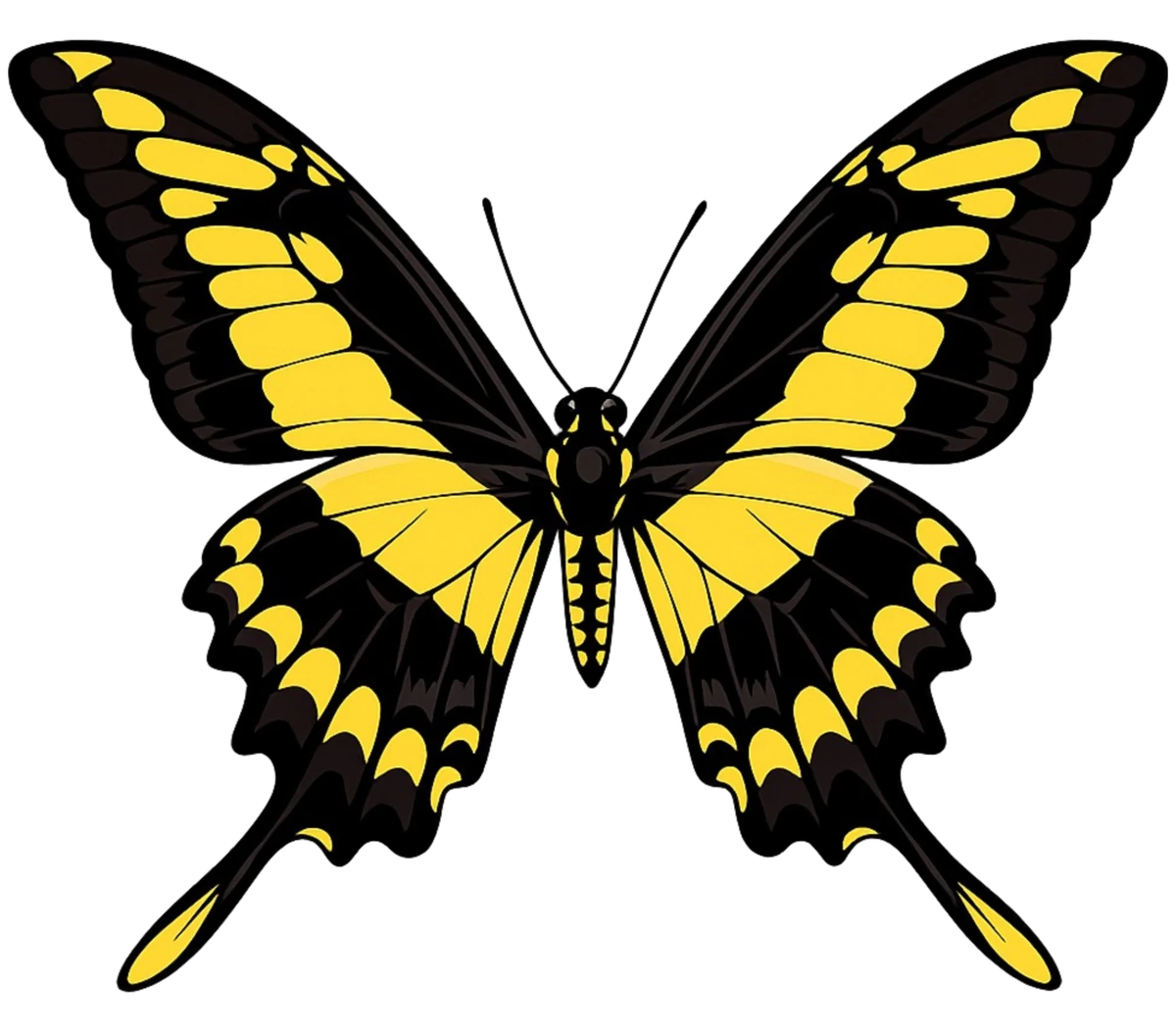
King Swallowtail
Papilio thoas
A bold American swallowtail with pale yellow markings, and a caterpillar whose outward resemblance and hidden defensive organ tell a very different visual story.
Explore the guide →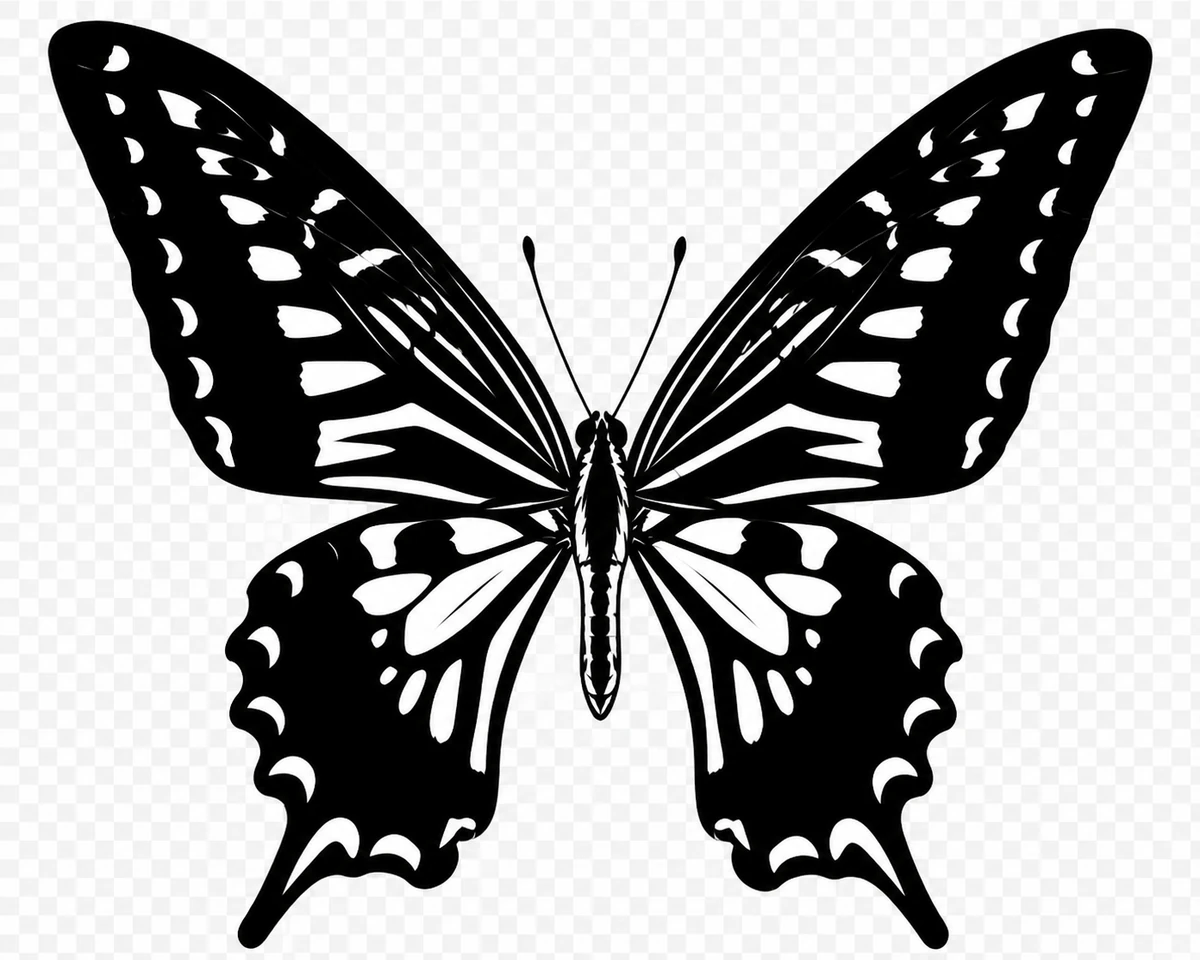
Asian Swallowtail
Papilio xuthus
A cream-and-dark East Asian swallowtail with warm hindwing accents, and a research history that reaches from citrus leaves to the neural processing of color.
Explore the guide →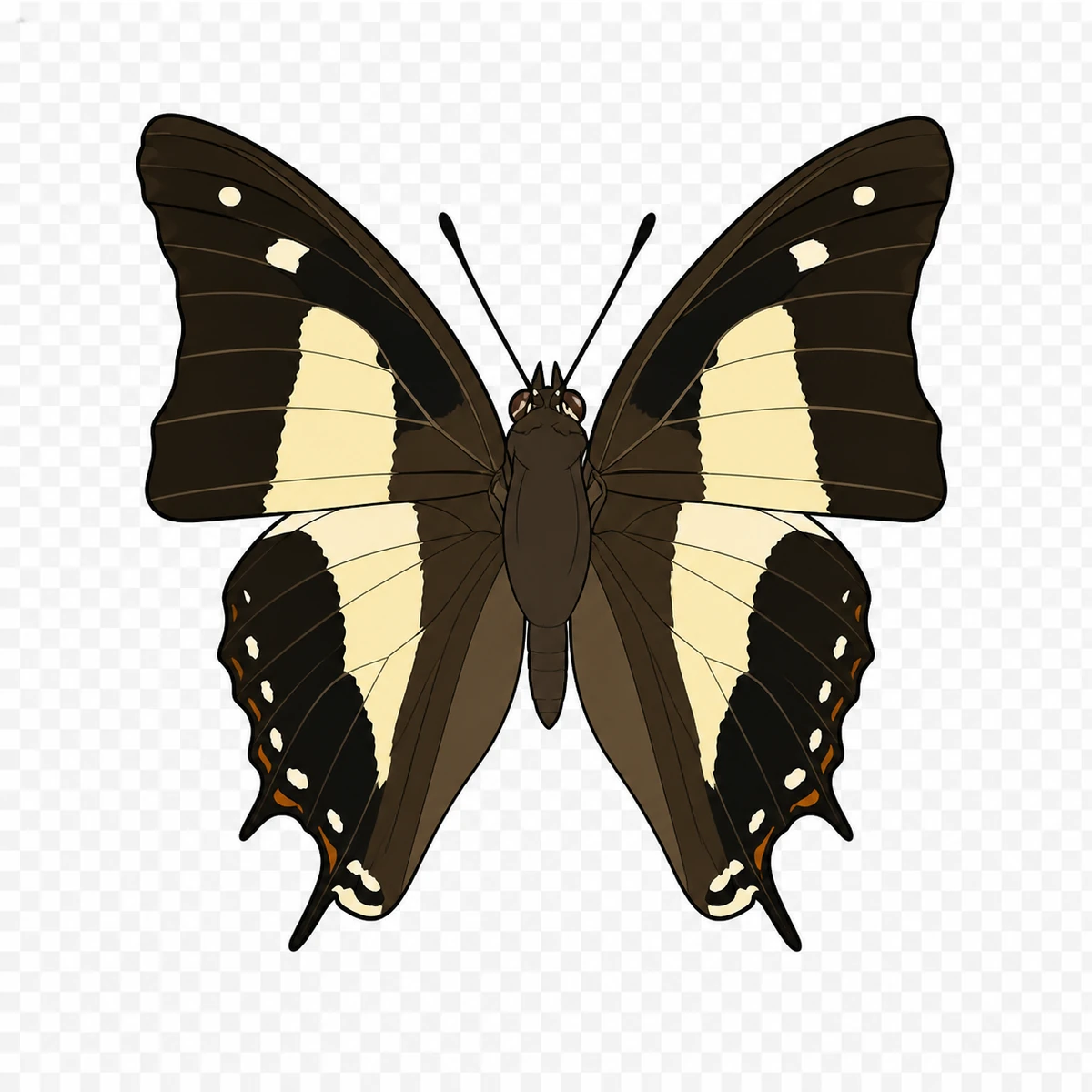
Common Nawab — the athamas group
Polyura athamas
A green-banded nawab whose familiar collection label opens a fascinating taxonomic story: genus placement and species boundaries are two different questions.
Explore the guide →
Little Yellow
Pyrisitia lisa
A small American yellow butterfly whose warm-season travels, low flight and legume-feeding caterpillars make an ordinary-looking field a busy habitat.
Explore the guide →
Great Purple Emperor
Sasakia charonda
An East Asian woodland emperor, with light-dependent purple on male wings and a Japanese history that links leaf litter, research and a national butterfly.
Explore the guide →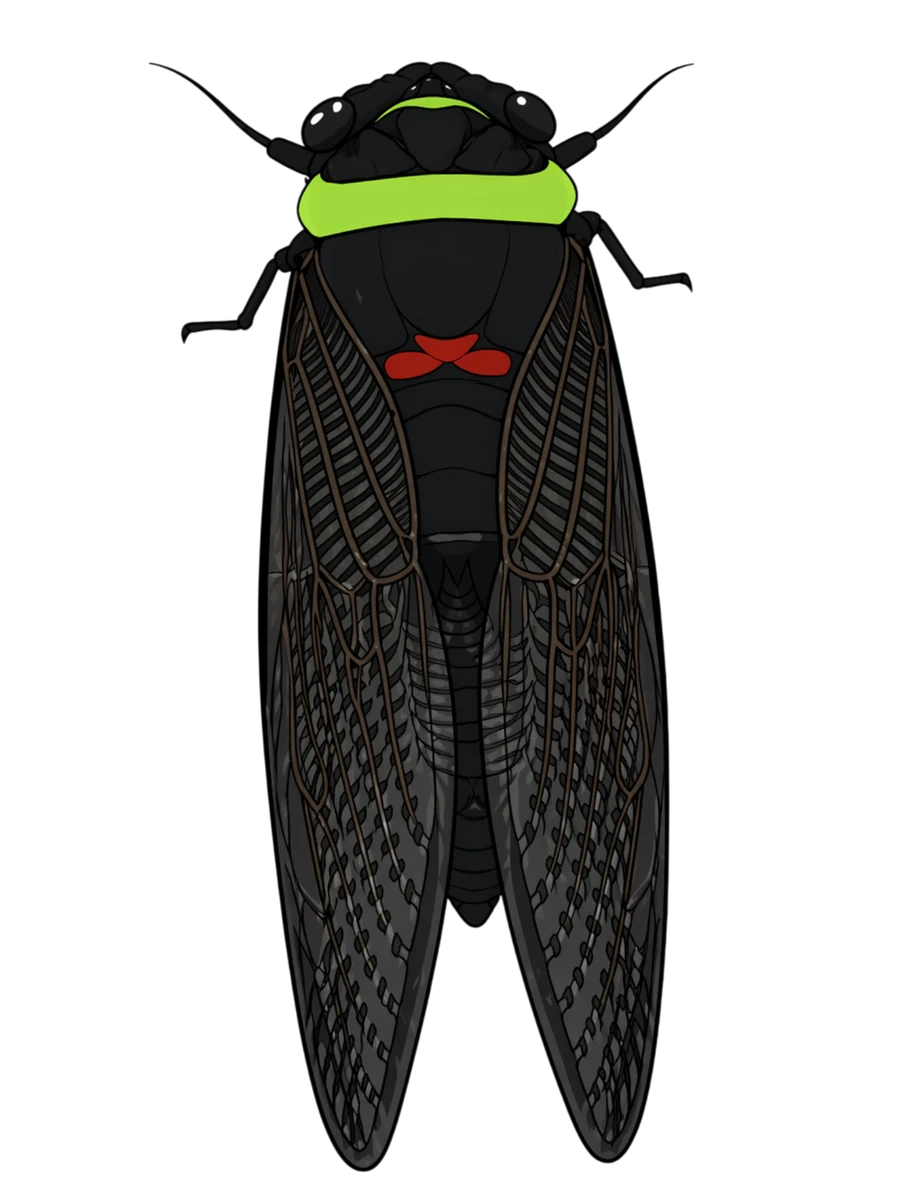
Yellow-banded Cicada
Tacua speciosa
A large forest cicada whose bright collar stands out against a dark body. Malaysian field records add a daytime portrait, while its naming history explains a misleading old Indian attribution.
Explore the guide →
Blue Tiger
Tirumala hamata
Pale blue markings form a lattice across dark wings, while seasonal gatherings and long-distance movements make this butterfly’s range a changing story.
Explore the guide →
Distantalna splendida
Distantalna splendida
Known in older collections as Tosena splendida, this cicada connects semi-opaque wings with a long history of museum records from Asia.
Explore the guide →
Vagrant butterfly
Vagrans egista
A warm orange upper surface and a more intricate underside give the vagrant two different visual voices. Australian life-history observations add spiny caterpillars, silver-marked pupae and unusual egg placement to the story of this widely named brush-footed butterfly.
Explore the guide →
Large cruiser
Vindula erota
A cruiser in the collection brings warm colour and a broad wing surface into focus. Behind that composed adult lies a South and Southeast Asian butterfly with passionflower-family caterpillar hosts and adult feeding observations that extend beyond the usual nectar scene.
Explore the guide →