
Luminary Oddities · Natural history & art
Distantalna splendida
Distantalna splendida
Hemiptera / Cicadidae
Known in older collections as Tosena splendida, this cicada connects semi-opaque wings with a long history of museum records from Asia.
Explore this insect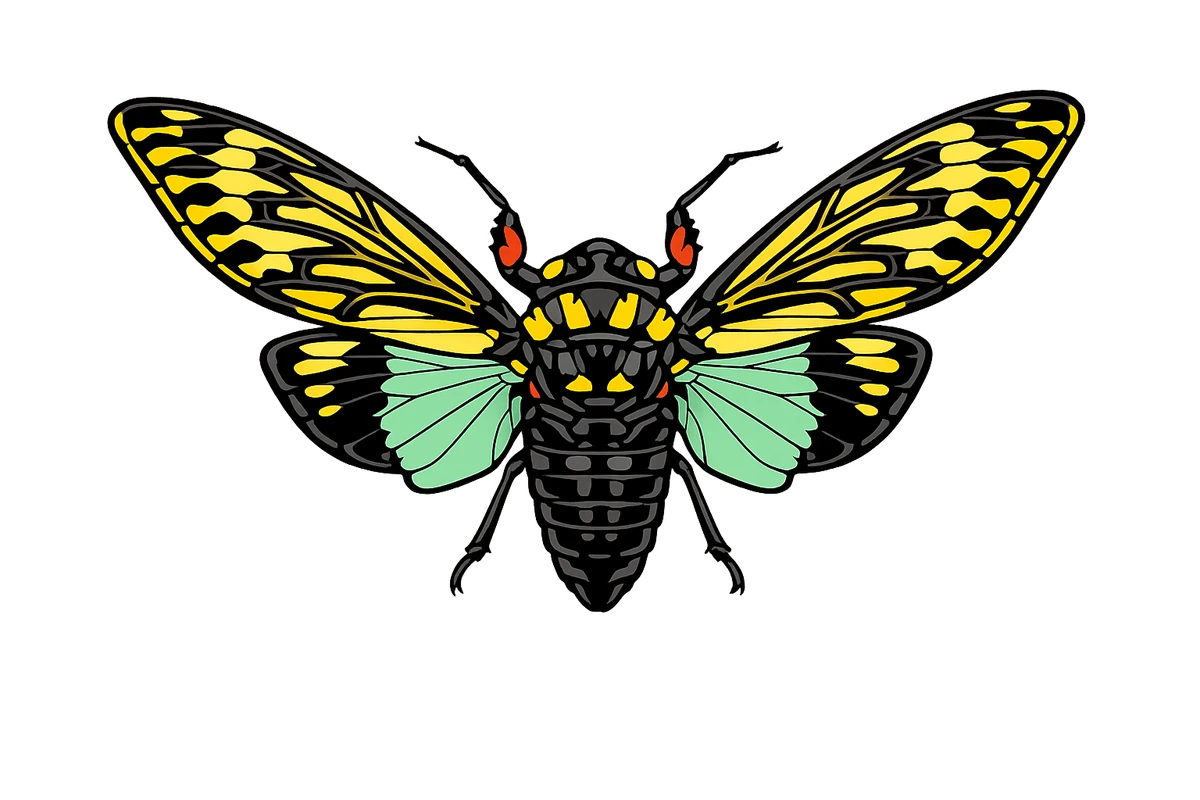
At a glance
- Current name ↘
- Distantalna splendida is the selected combination. [1]
- Older label ↘
- Originally described as Tosena splendida. [1]
- Wing character ↘
- The historic account describes semi-opaque wings. [3]
Meet the species
This cicada is now placed in Distantalna. The Catalogue of Life treatment links Distantalna splendida with the original combination Tosena splendida, so both names lead to this guide. A change of genus is not evidence that there are two separate animals in the collection. It is a change in the scientific arrangement of the same named species. [1]
Look closely
Semi-opaque means the wing is neither uniformly transparent nor an entirely solid-looking sheet. In a specimen image, compare the lighter outer areas, the veins and the background visible through the membrane. Historic color vocabulary should be read in its context: a description written from preserved material is not a modern color calibration for every living insect. [3]
Range and habitat
The museum-based catalogue records material from the Khasi Hills and Myanmar. Its compiled distribution also includes India, Yunnan in China, Thailand and Vietnam. Collection localities are valuable evidence of occurrence; they should not be transformed into an exact continuous range, a single preferred habitat or the collection site of the framed specimen. [2]
Life in stages
For cicadas generally, development proceeds from egg through nymphal stages to a winged adult. There is no caterpillar and no pupal stage. Underground nymphal feeding and the final molt are useful family-level background for looking at a mounted adult. The sources selected for splendida do not establish its full underground duration, emergence calendar or a universal number of years per generation. [4]
Food and host plants
A root-feeding nymph and a sap-feeding adult are part of the general cicada story, but that background does not identify splendida’s particular host plants. A collection record may preserve the location of an adult without recording feeding. The distinction between a perch, a feeding plant and a plant supporting early development is essential when interpreting insect observations. [4]
A living insect
The living cicada belongs to a family well known for sound signals. Specialized male sound-producing structures provide the general mechanism described by the museum. A species-specific calling schedule or a description of splendida’s song needs identified acoustic evidence. A title, a colorful wing or another Tosena recording cannot supply that information. [4]
A remarkable detail
The useful discovery here is the relationship between a beautiful object and a durable museum label. A preserved adult can remain available for study while its genus changes and new relationships are proposed. Following Tosena splendida into Distantalna splendida makes the old evidence discoverable instead of discarding it. The name bridge is part of the scientific story carried by the collection. [1][2]
Connections in nature
The compiled occurrence records put the insect in a wider Asian landscape, while the general cicada account introduces plant-fluid feeding and life below ground. Those two levels should remain distinct. A collection catalogue cannot by itself establish the preferred tree, the amount of sap consumed or the effect of the species on a forest. These questions call for observations of living populations. [4][2]
Names and discovery
Distant described splendida in 1878 under Tosena. The selected modern taxonomic treatment preserves that original combination alongside Distantalna. Such cross-references are practical tools for reading older literature: a search only for the newest name can miss historically important work. The Atlas keeps the older label searchable without presenting it as a second current species page. [1]
Conservation context
A species account and a conservation assessment answer different questions. This guide does not assign a global threat category from the presence of specimens in collections or shops. A documented locality establishes an occurrence; it does not measure population size or trend. When learning more about conservation, check that an assessment concerns the same taxon, place and date. The collection or breeding history of an individual specimen must be established separately from the species’ natural range.
Reading the specimen
Dorsal means the upper surface; ventral means the underside. A reverse view can reveal information hidden by a spread upper view, but it represents the same animal. Compare orientation before comparing pattern. The pose, lighting and background of a mount can emphasize some features and conceal others. Neither a color-matched illustration nor an attractive spread photograph supplies a collecting locality, a sex determination or a subspecies identification by itself.
In the artwork
The saved listing offers Midnight and Holo editions. Those differences concern the composition and presentation around the specimen. A reflective background can change how a partly translucent wing looks in a photograph, which is why edition information belongs with the artwork image. It does not establish a biological color form, sex or separate species.
Care for the artwork
Place a framed specimen where you can enjoy its details in indirect light. Keep it away from damp rooms, radiators and abrupt changes of temperature. Handle the frame by its edges and keep the case closed; a wing, antenna or leg is more vulnerable than the surrounding glass suggests. Clean only the exterior, following the frame maker’s instructions, and avoid spraying liquid toward seams. If you notice loose fragments, moisture inside the case or signs of insect activity, photograph the change and seek conservation advice instead of opening the mount or applying a household pesticide.
Questions worth asking
Are Tosena splendida and Distantalna splendida different artworks? They are historical and selected current scientific combinations; individual editions remain separate works. Is every wing area completely clear? The historical account describes semi-opacity. Does a museum locality establish the shop specimen’s origin? It establishes the museum specimen’s record. Does this guide assign a 13- or 17-year cycle? No species-specific duration is supported here.
Explore the sources
The linked records serve different purposes: taxonomy establishes the name used here, field observations describe a place and population, and experiments explain a tested mechanism. Read those scopes alongside the photographs. A locality in a scientific paper belongs to its study material, not automatically to the insect behind a particular artwork.
- GBIF / Catalogue of Life: Distantalna splendida ↗
Catalogue of Life via GBIF · Accessed 2026-10-09
Accepted Distantalna splendida (Distant, 1878), original combination Tosena splendida; Ayuthiini, Distantalnina.
- Price and colleagues 2016: cicadas of the Indian subcontinent ↗
Price and colleagues; Biodiversity Data Journal (2016) · Accessed 2026-10-09
Pages 29–30 cover Distantalna splendida. Museum material from Khasi Hills and Myanmar; compiled distribution includes India, Yunnan, Thailand and Vietnam.
- Distant: Fauna of British India, cicadas ↗
Distant; Fauna of British India · Accessed 2026-10-04
Historical description of splendida includes semi-opaque wings. Historical colour terms need careful modern paraphrase.
- Australian Museum: Cicadas ↗
Australian Museum · Accessed 2026-10-09
Cicada-level background only. Do not transfer Australian emergence schedules to Asian species.
Artworks in the collection
Explore the framed works and digital art connected with this insect. Etsy shows current availability, options and prices.
- Midnight & Holo editions ↗Framed work
Continue exploring
Sources checked 2026-10-09. Artwork © Scott Schubr / Luminary Oddities.
Return to the Entomological Atlas ↑