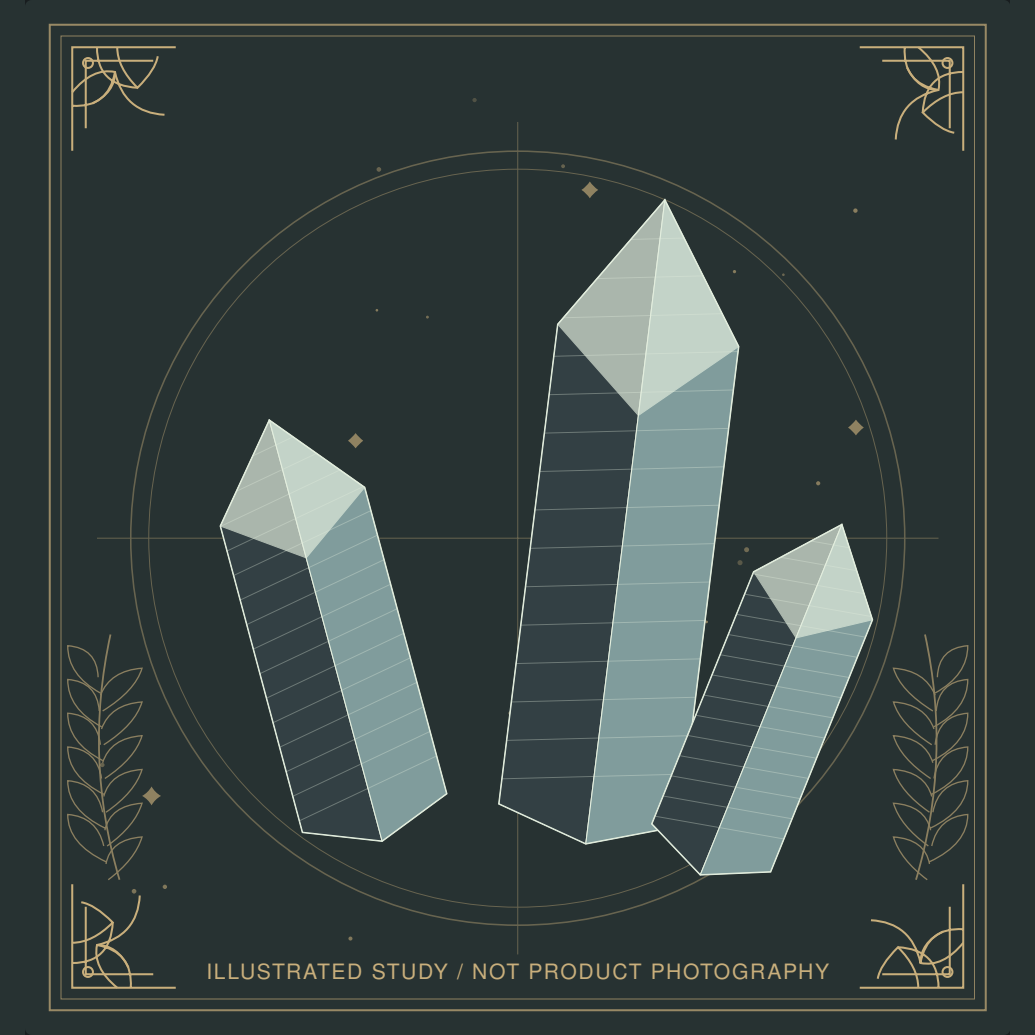
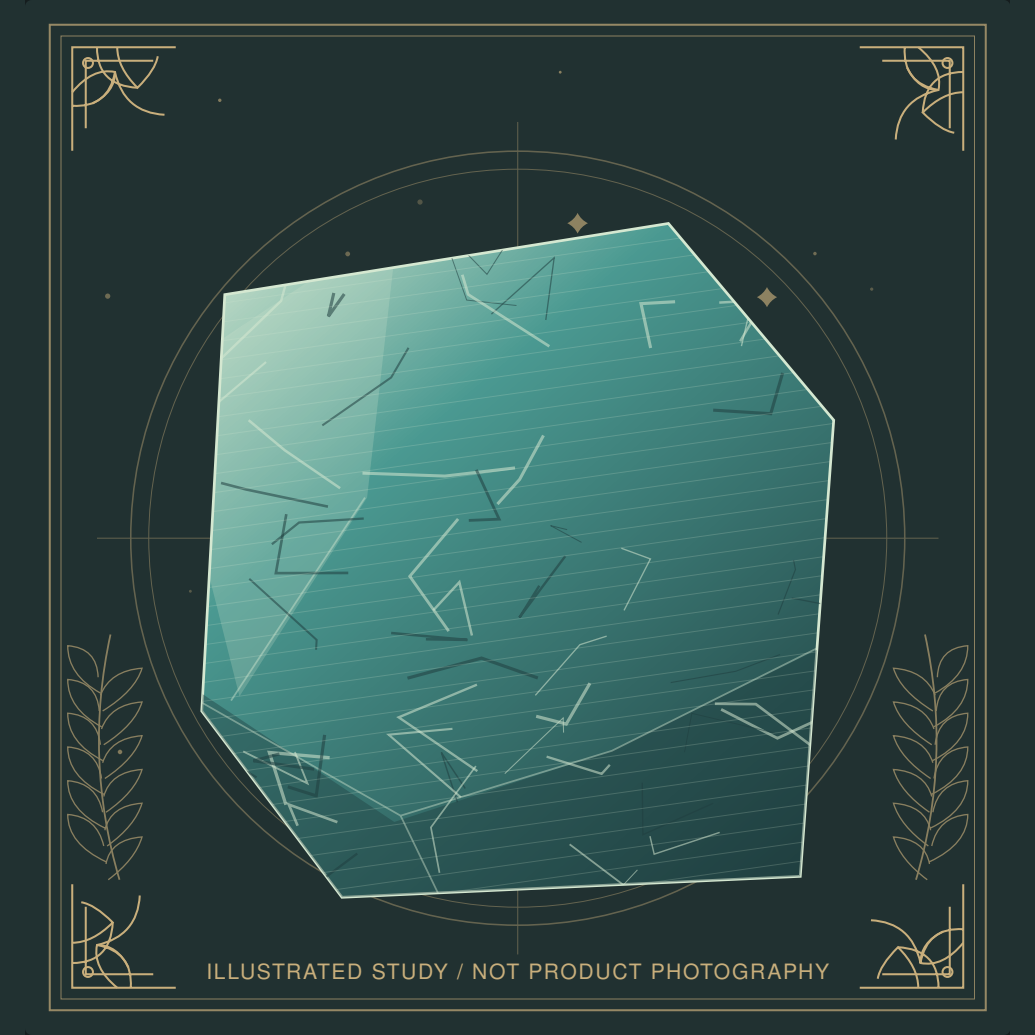
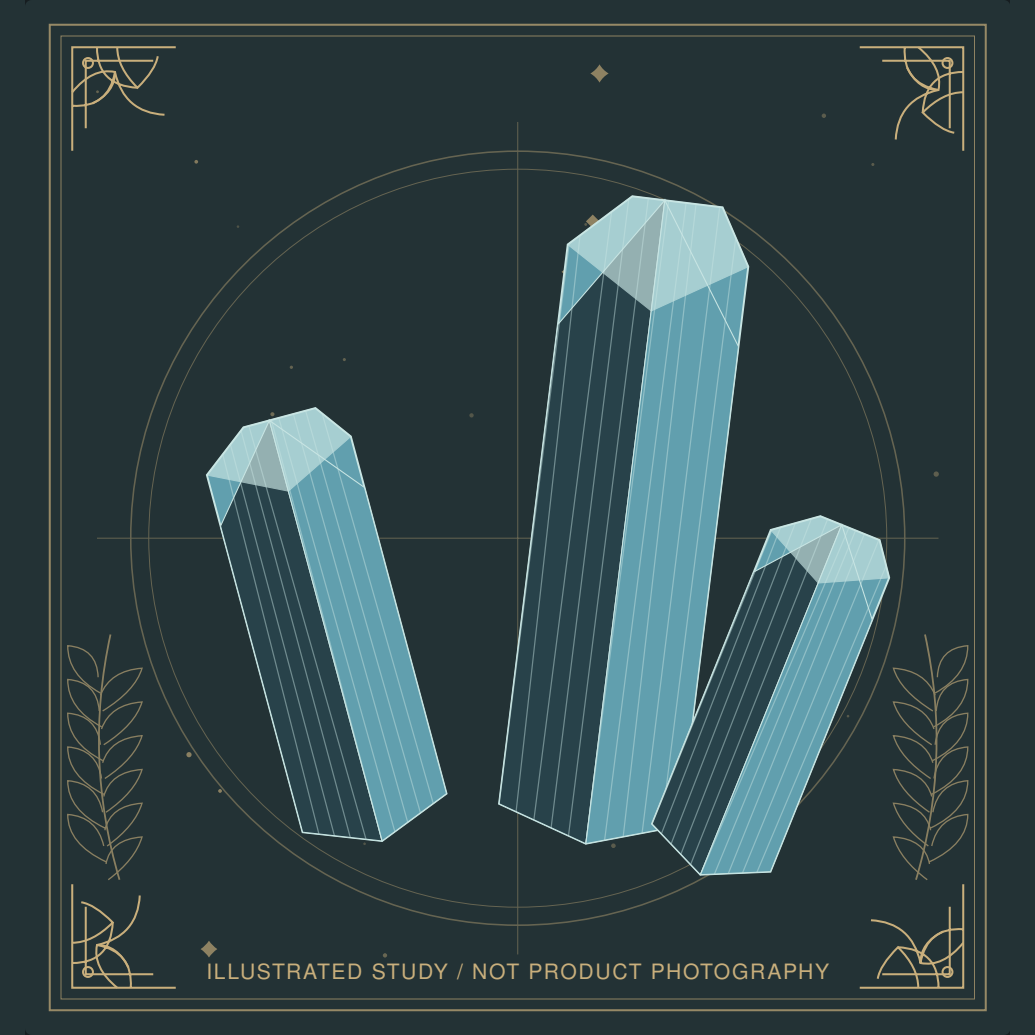
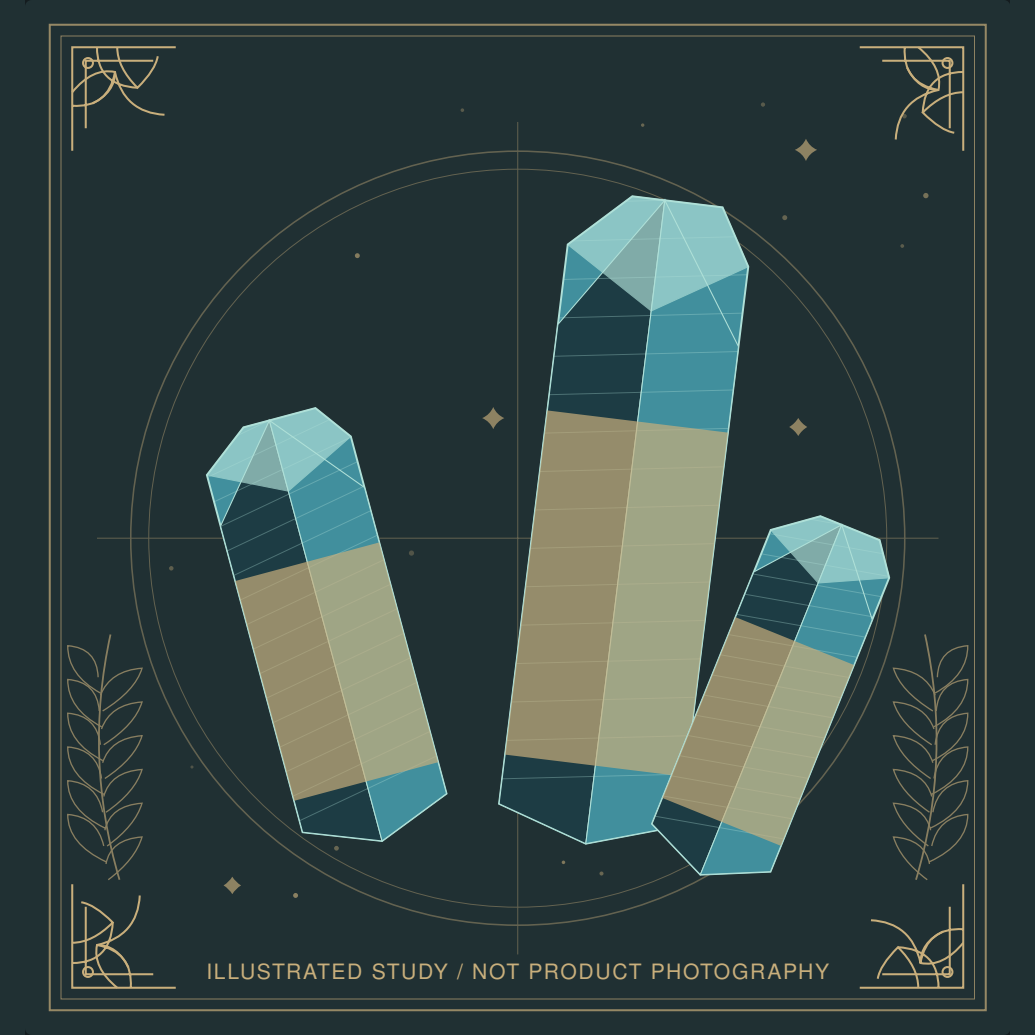
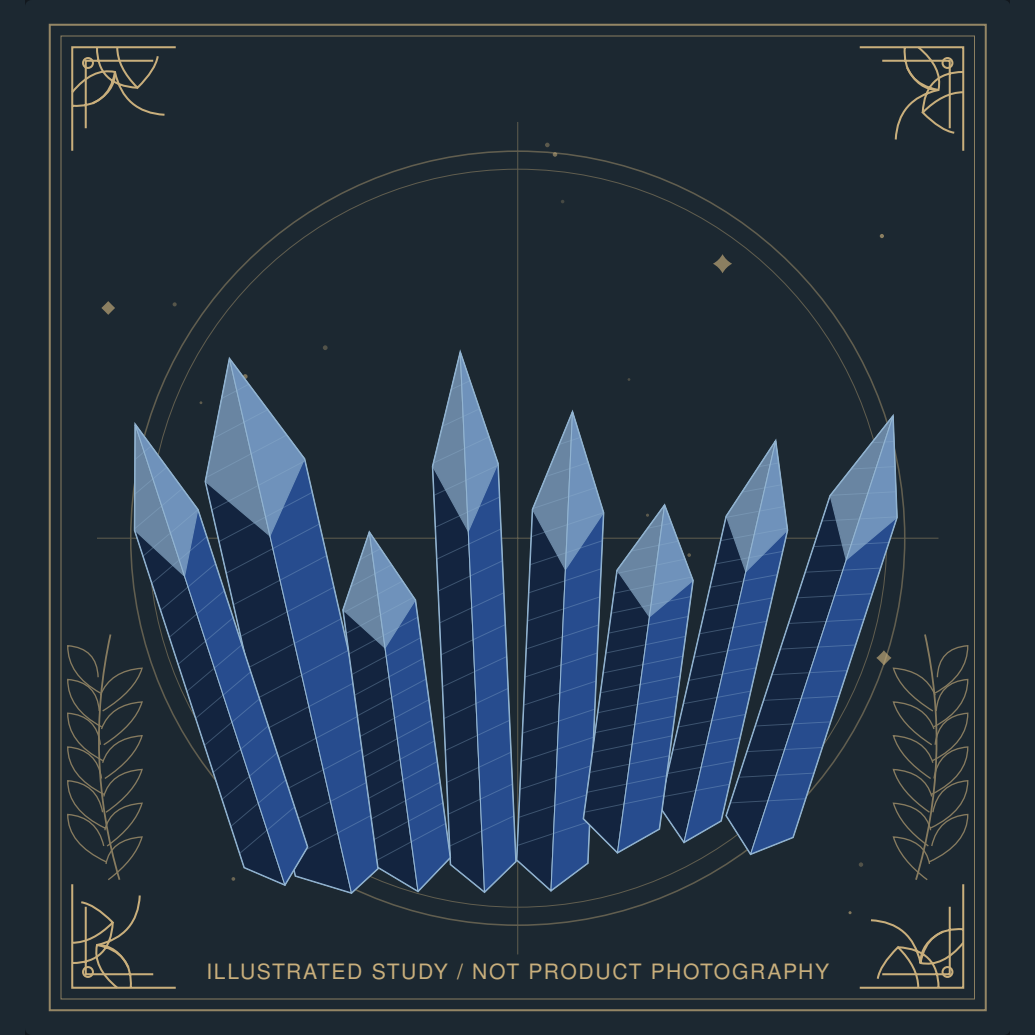
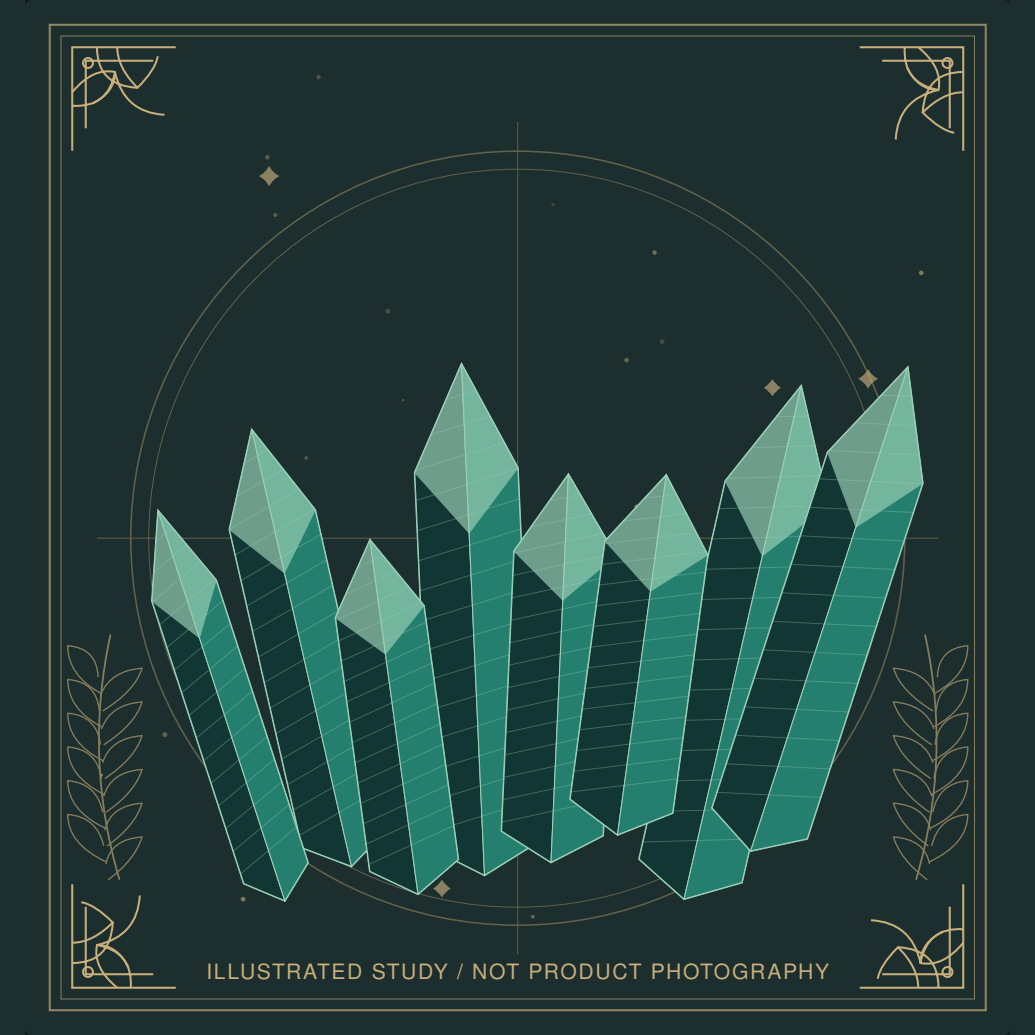
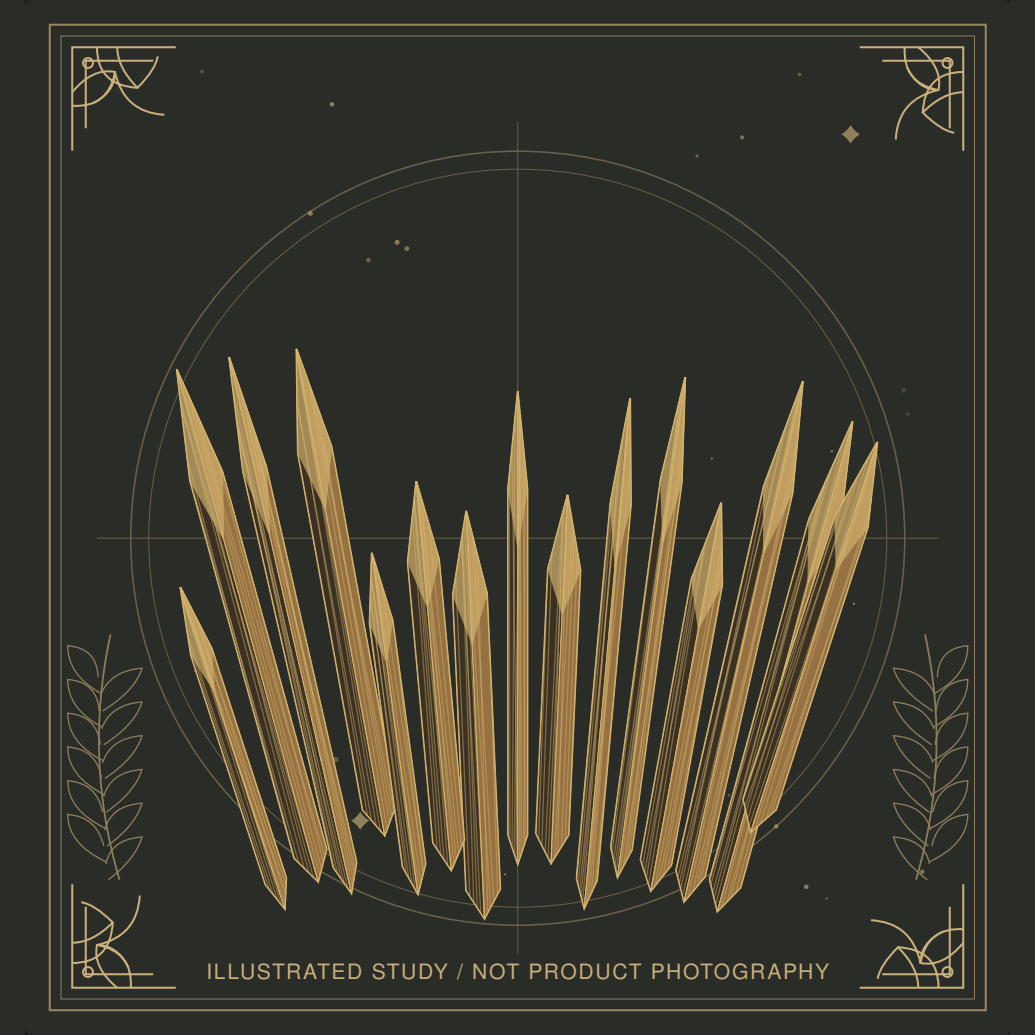
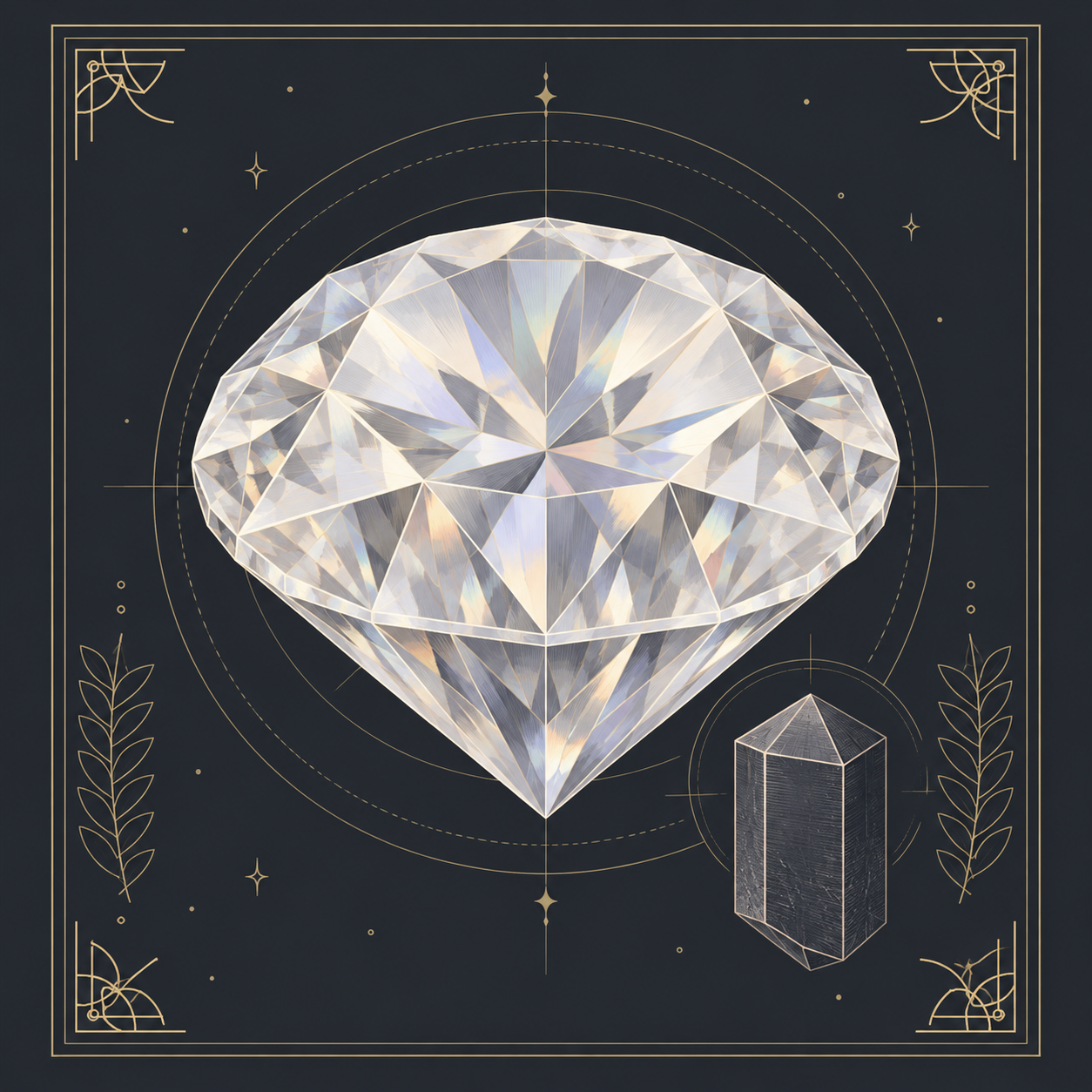
Rock crystal is colorless, visibly crystalline quartz. A clear point may contain white clouds, internal cracks or mineral inclusions and still be quartz. Its transparent interior and outer growth faces tell different parts of its history. A smooth polished tower exposes the interior while replacing the natural surface with a manufactured shape.
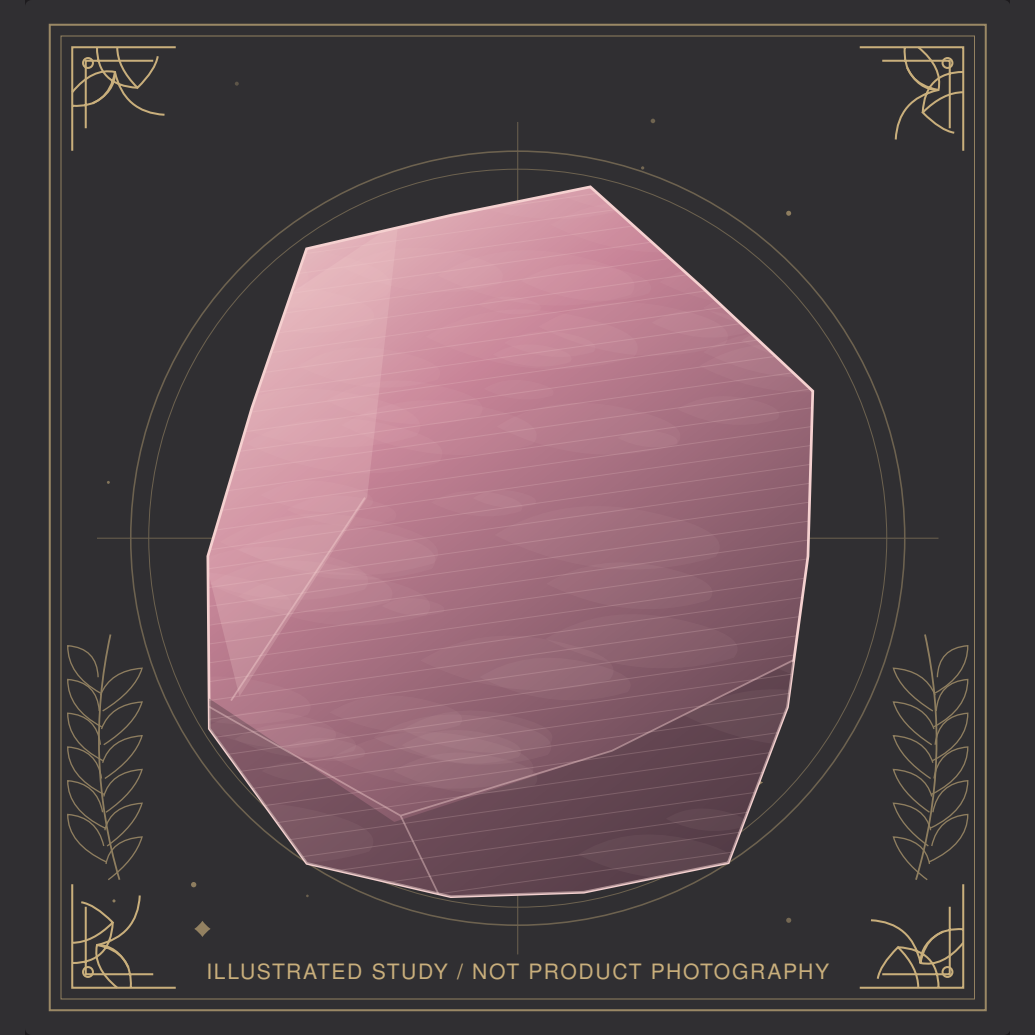
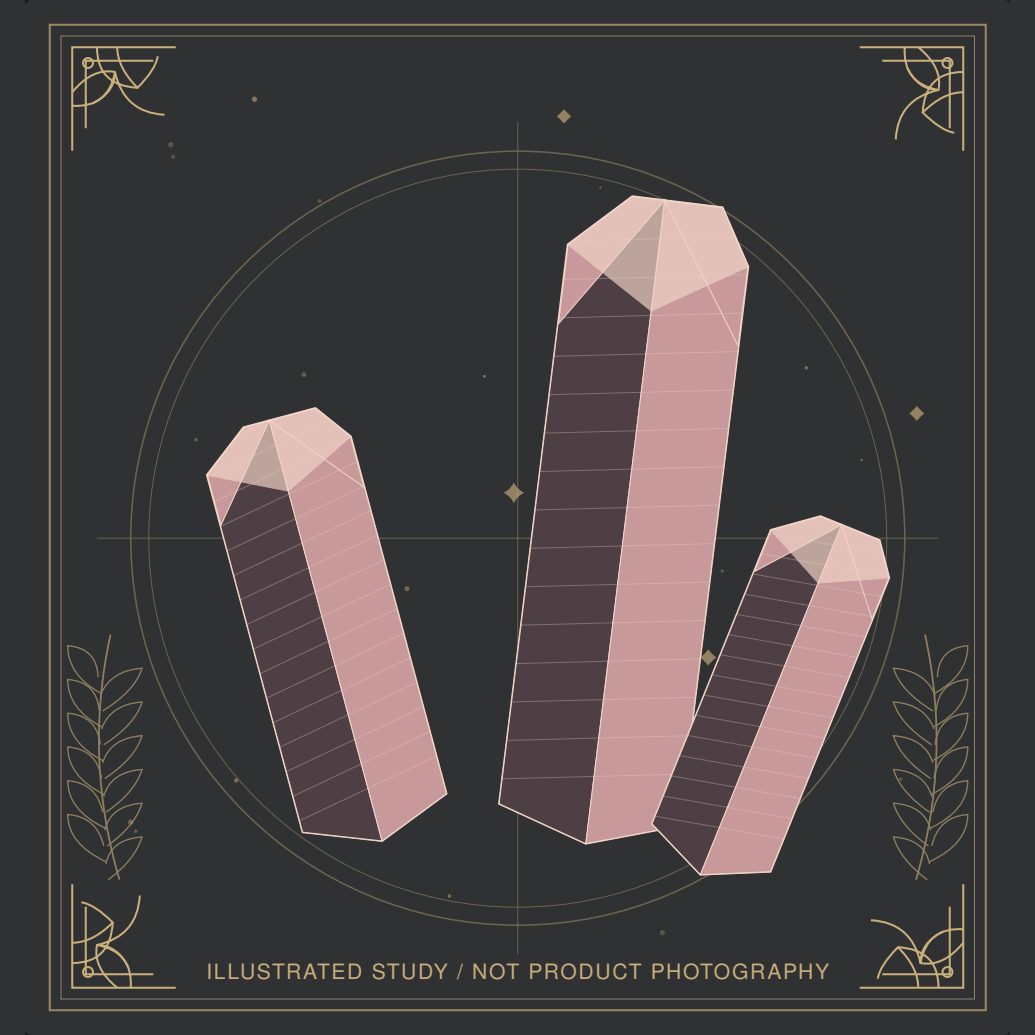
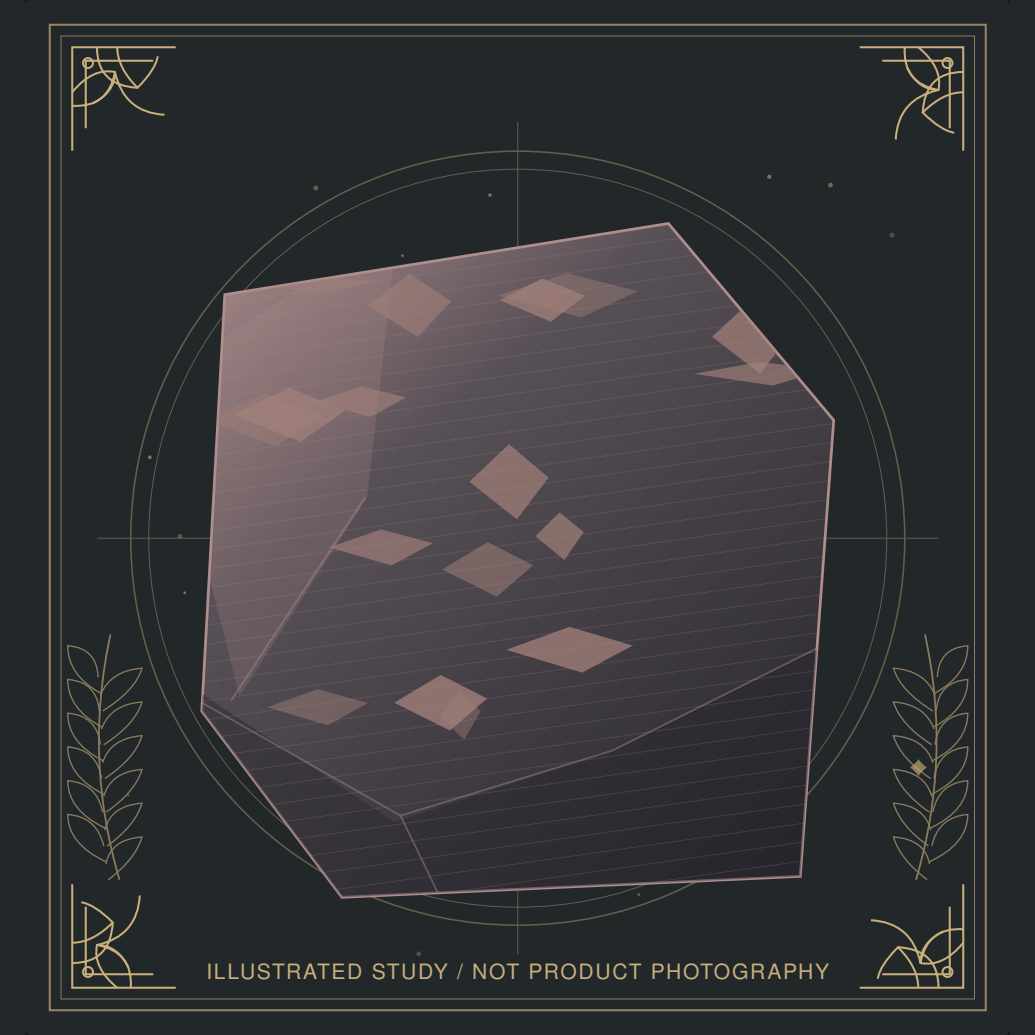
Typical rose quartz is a translucent pink mass with irregular surfaces and a softly clouded interior. Pale blush, richer rose color and a carved shape describe appearance and workmanship. The usual material does not grow as the generic pointed crystal sometimes shown in decorative imagery.
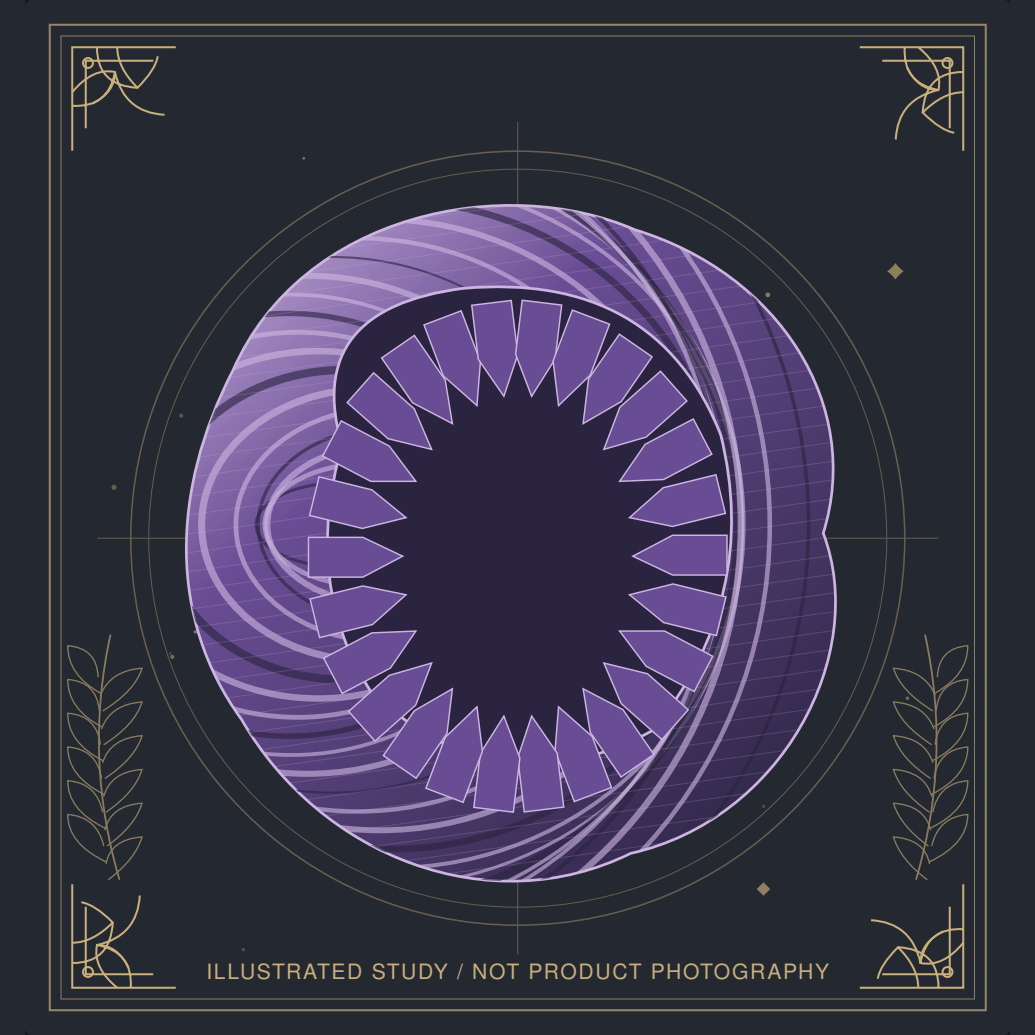
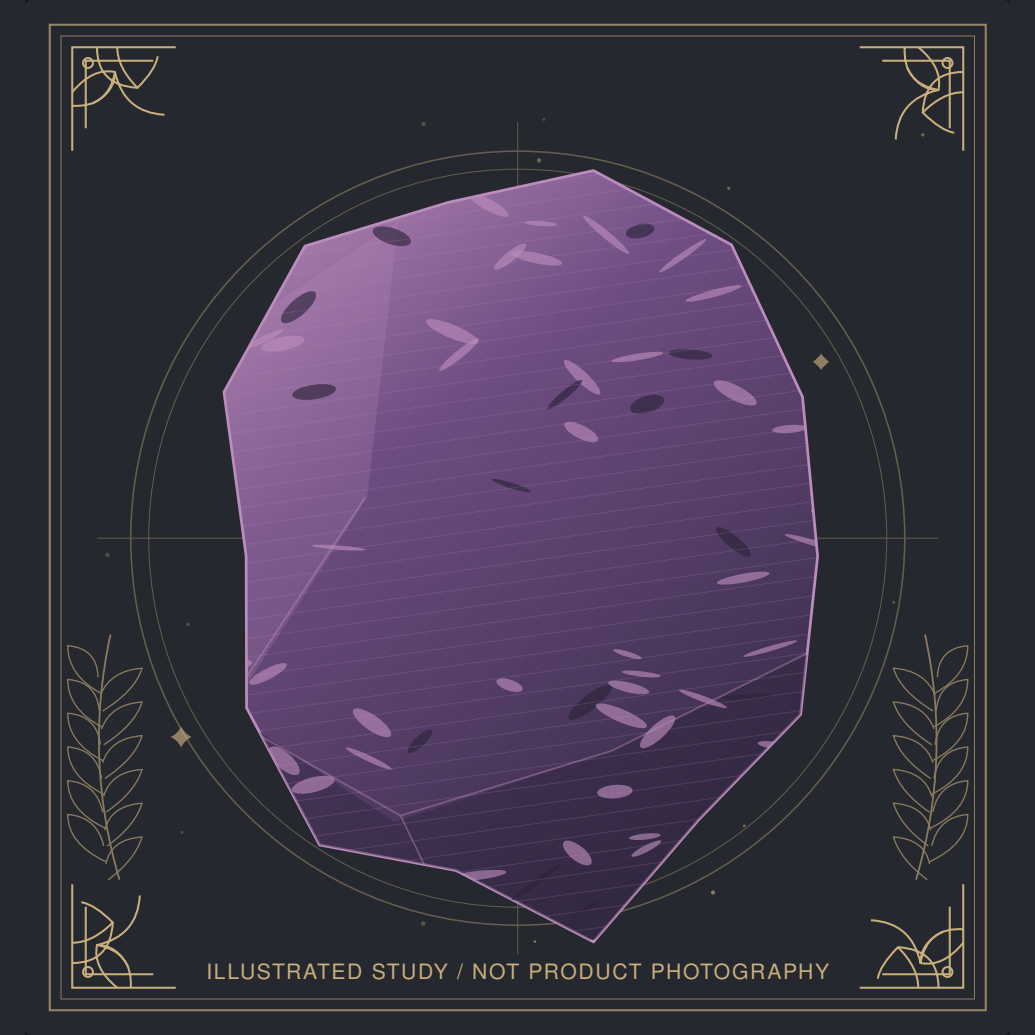
Amethyst is purple quartz, from pale lavender to deep violet. Pale or colorless zones can share a crystal with dark violet areas. A geode contains a cavity lined by many crystals rather than one enormous amethyst crystal. Rough clusters and polished banded pieces reveal different parts of that architecture.
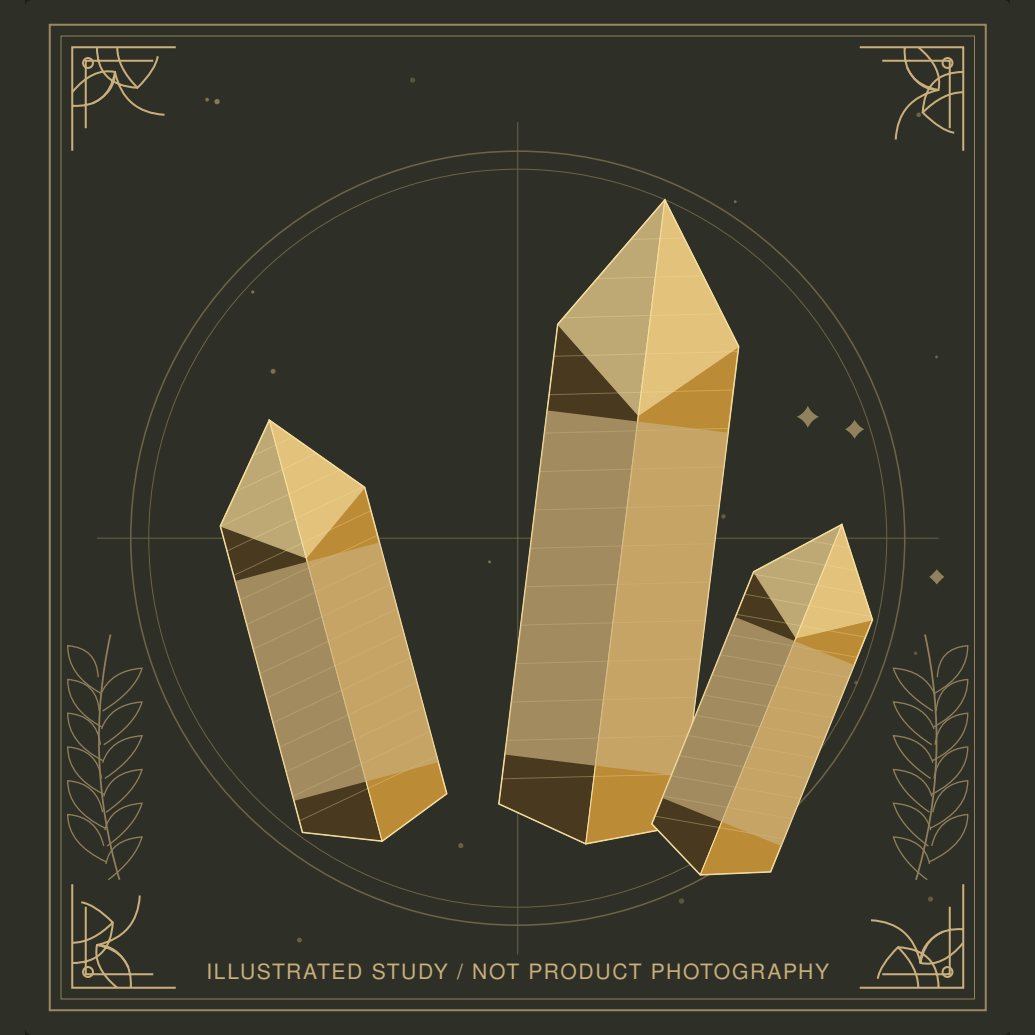
Citrine is yellow-to-orange quartz. A honey crystal and an orange cluster can share quartz identity while having different color histories. The defining material questions are what mineral is present and whether the current color arose geologically or through treatment.
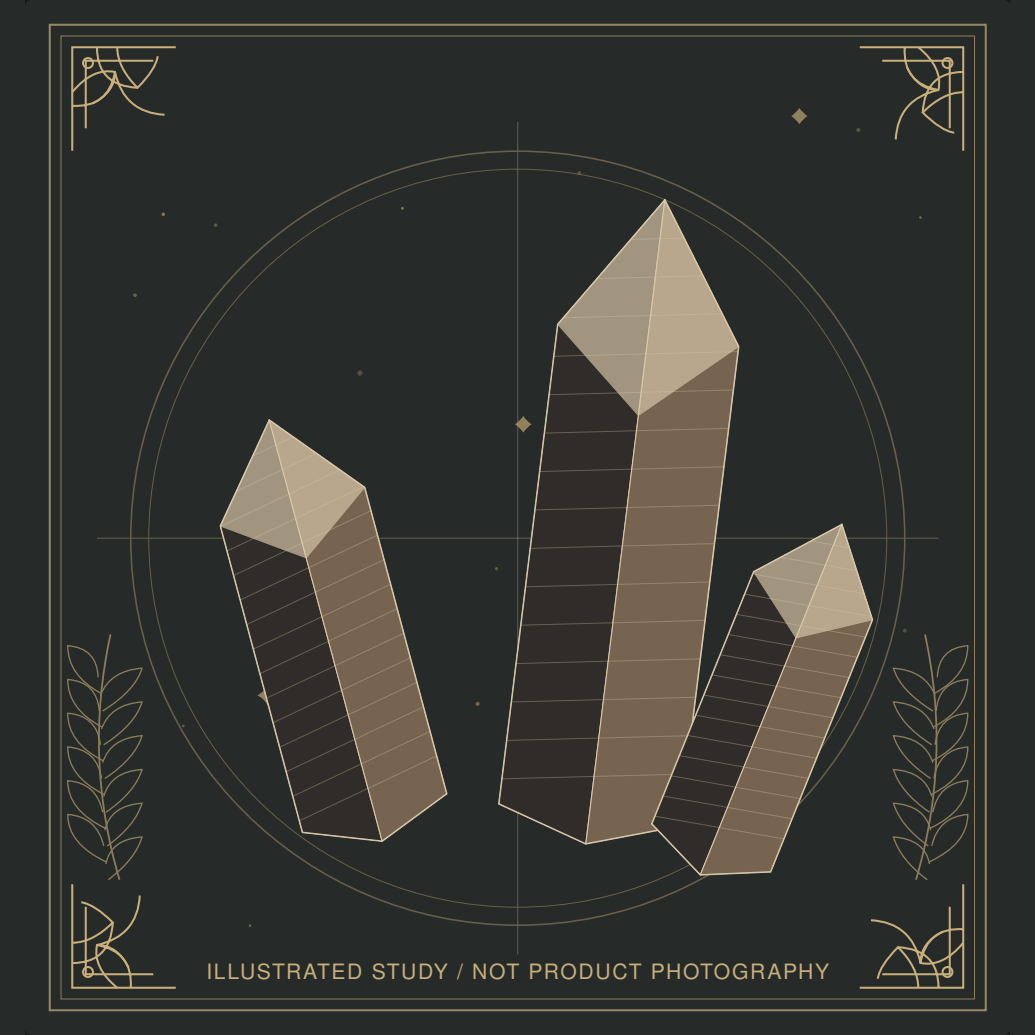
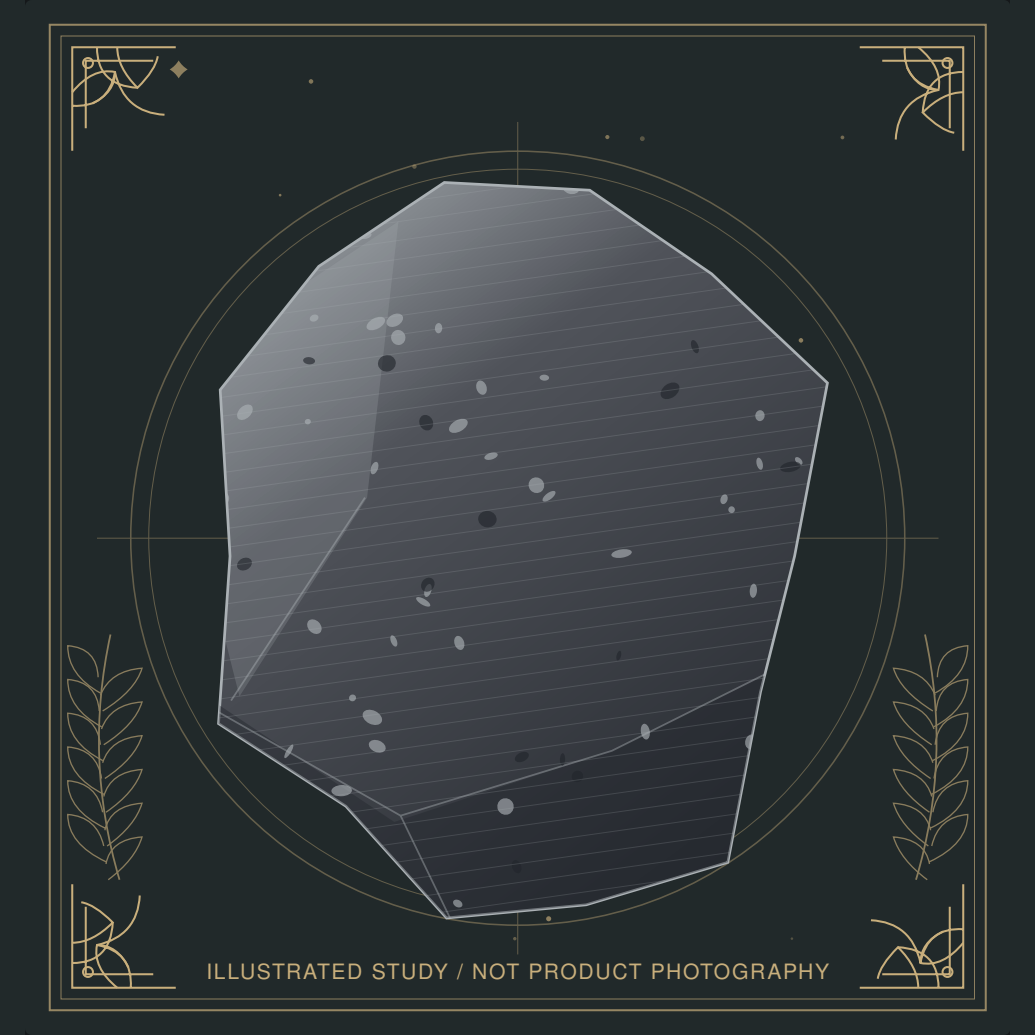
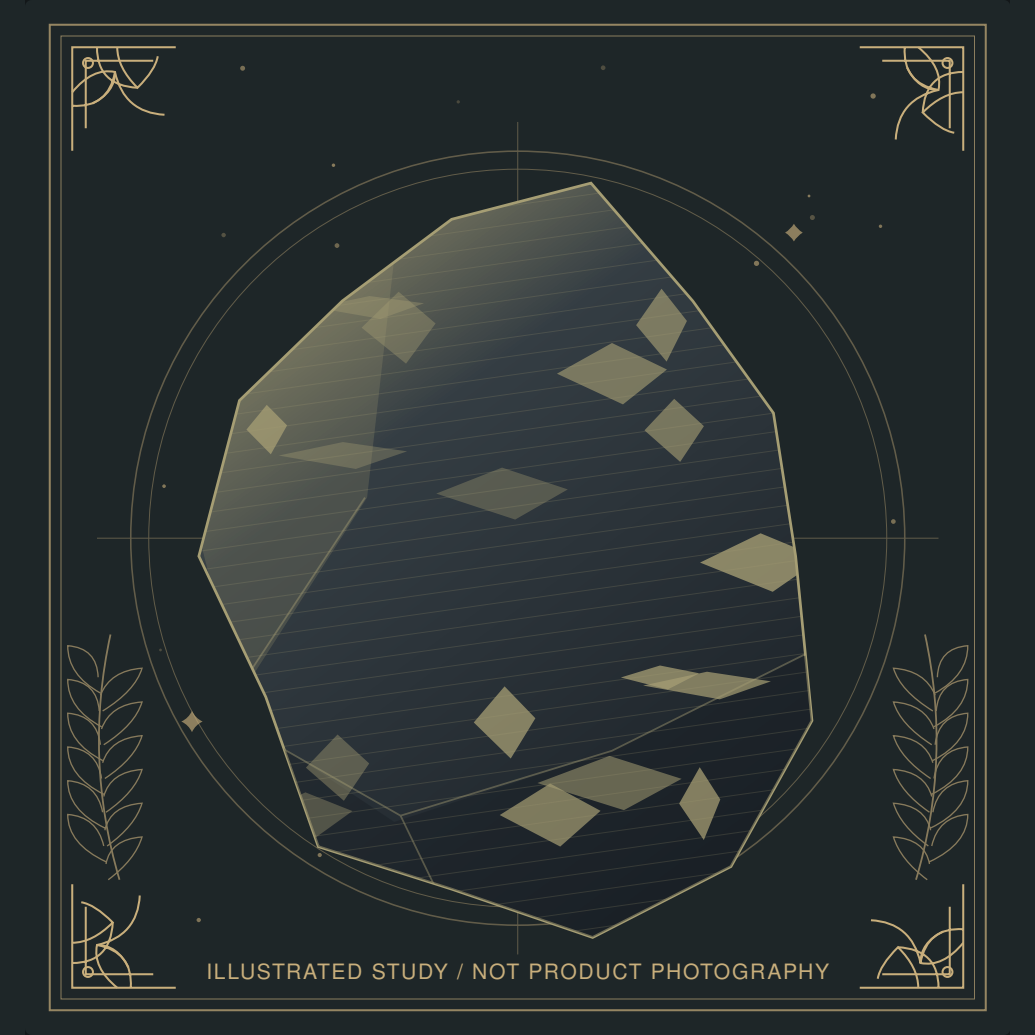
Smoky quartz ranges from a gray-brown veil to almost black. A thin edge may transmit light even when the centre looks opaque. Morion is an established name for very dark material. The smoky color is within the quartz, distinct from an iron-colored surface coating.
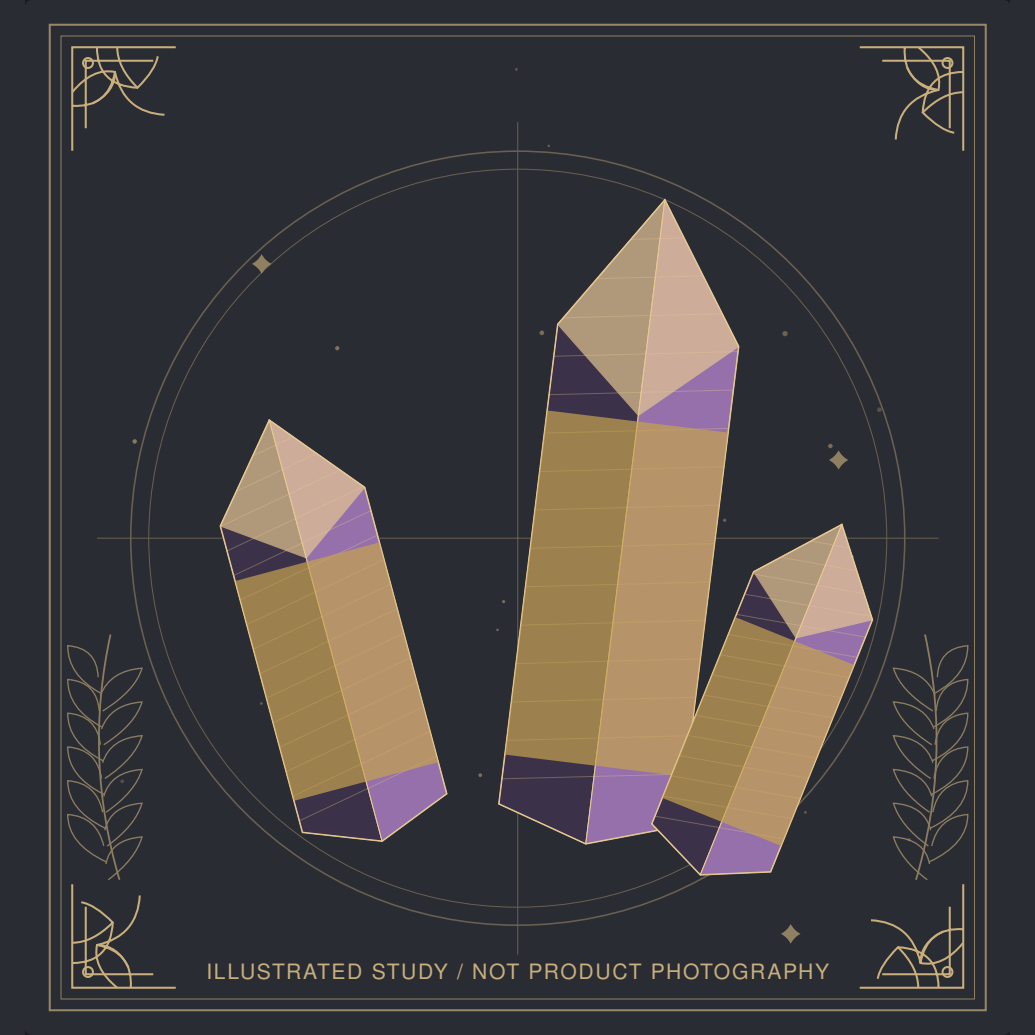
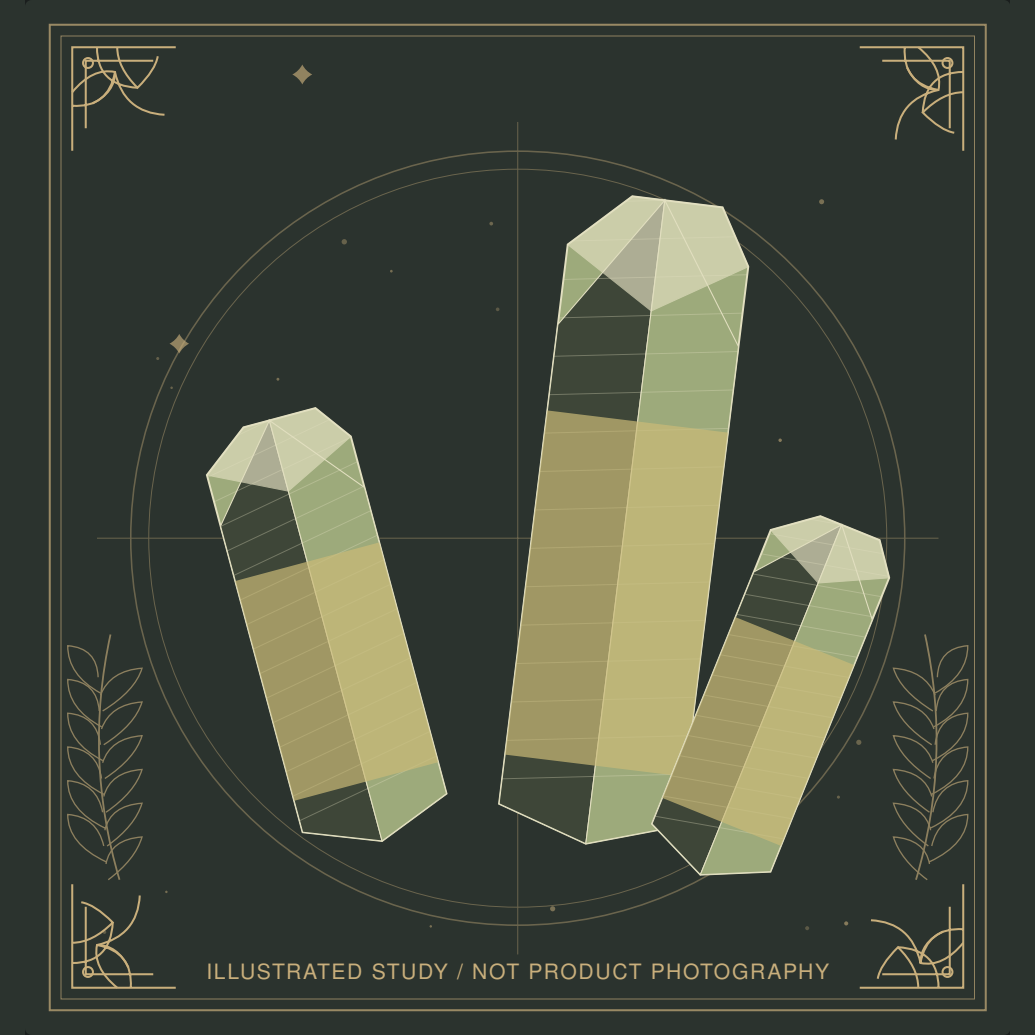
Quartz combining amethyst-purple and citrine-yellow/orange zones.
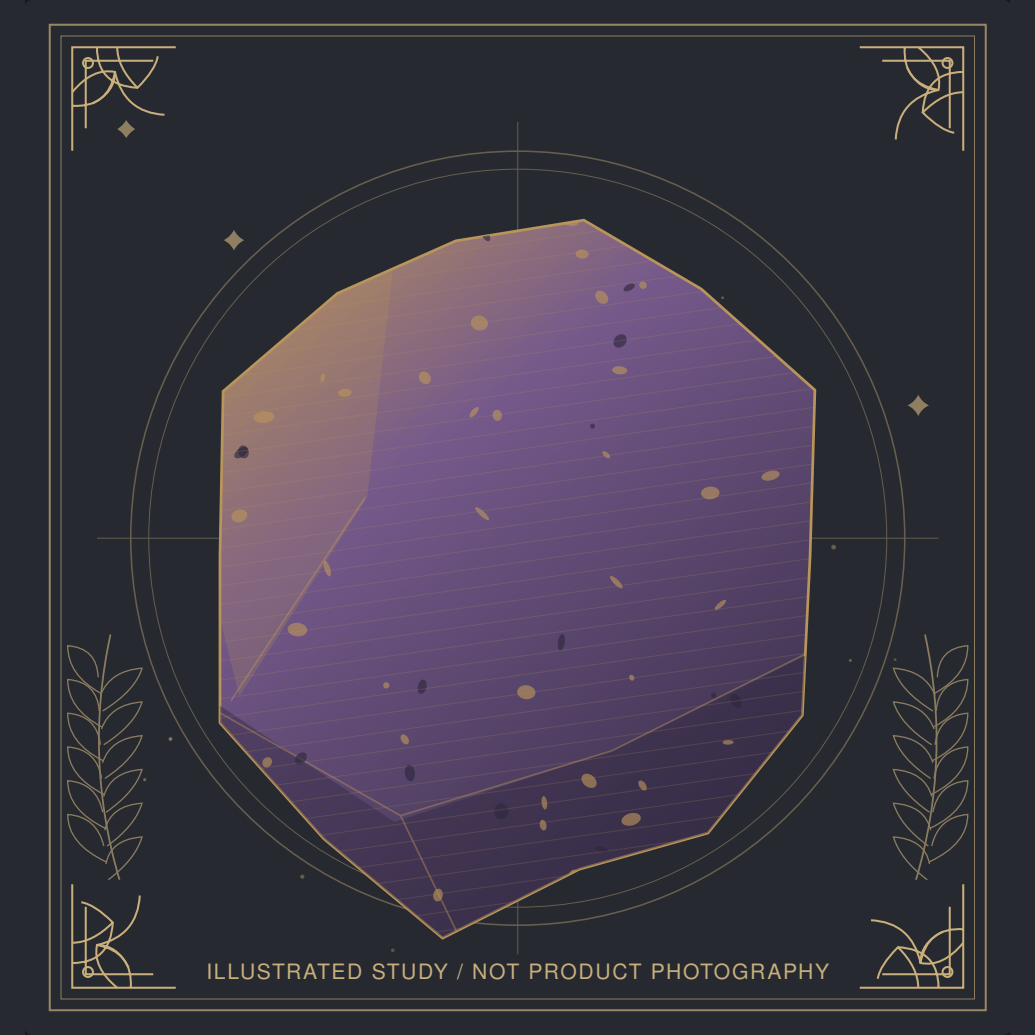
Ametrine combines purple and yellow-orange zones within one quartz crystal. It is not two unrelated minerals physically joined together. A cutting orientation can create a clean division in a finished gem, while rough reveals a more complex arrangement.
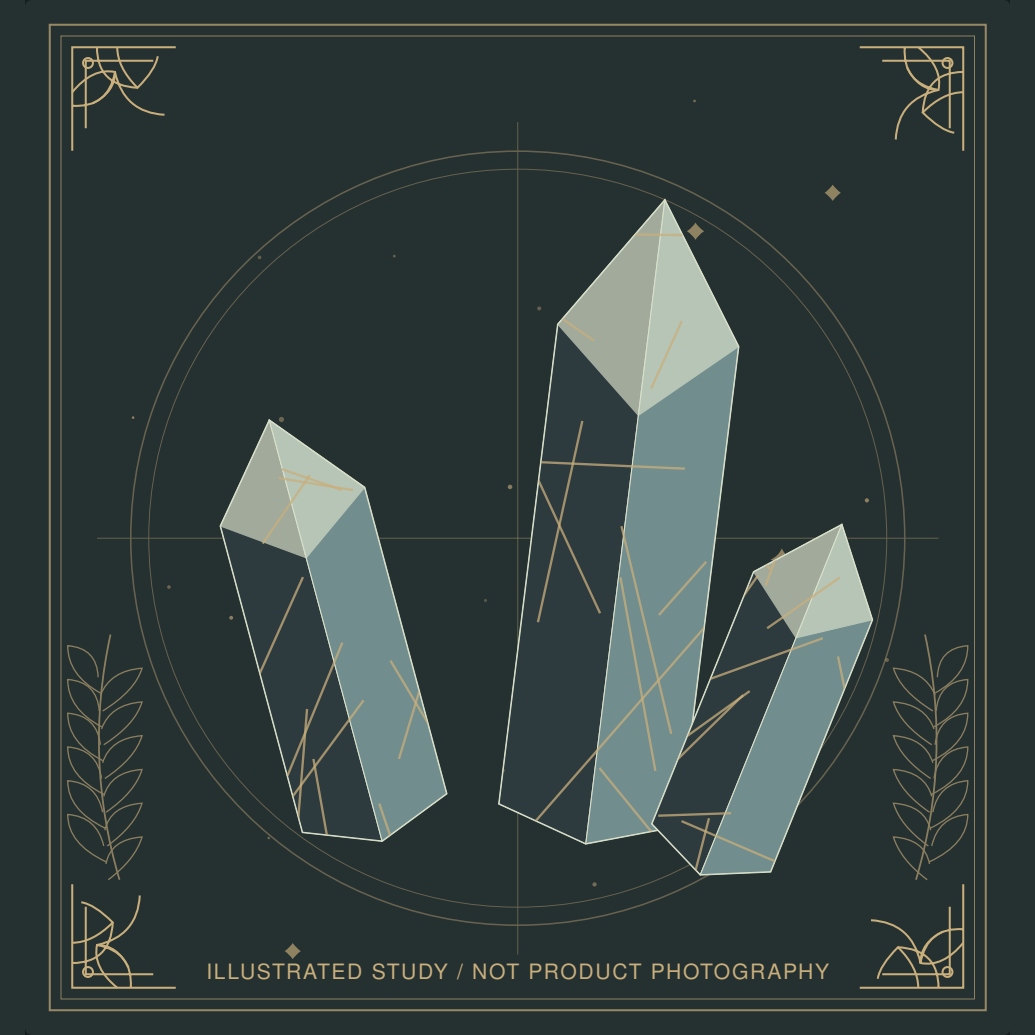
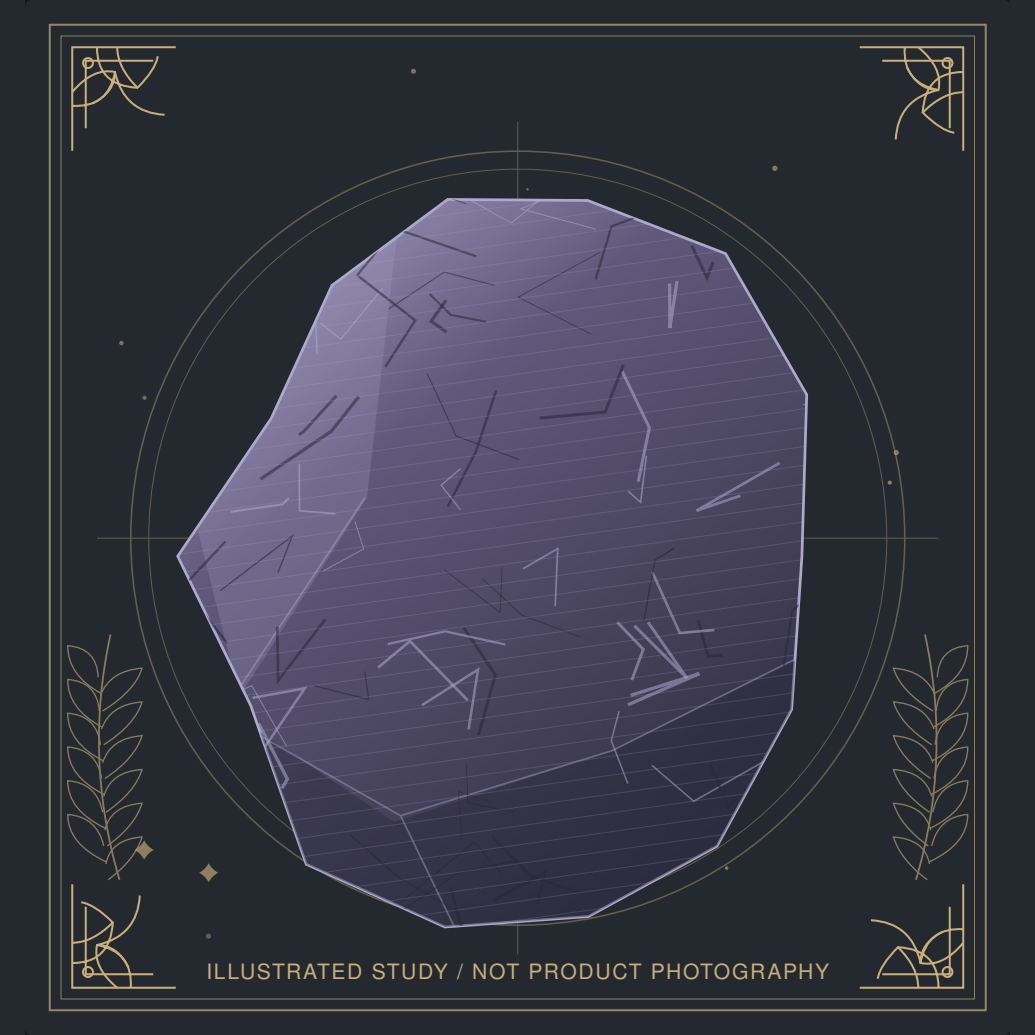
Quartz containing other minerals or visible growth features.
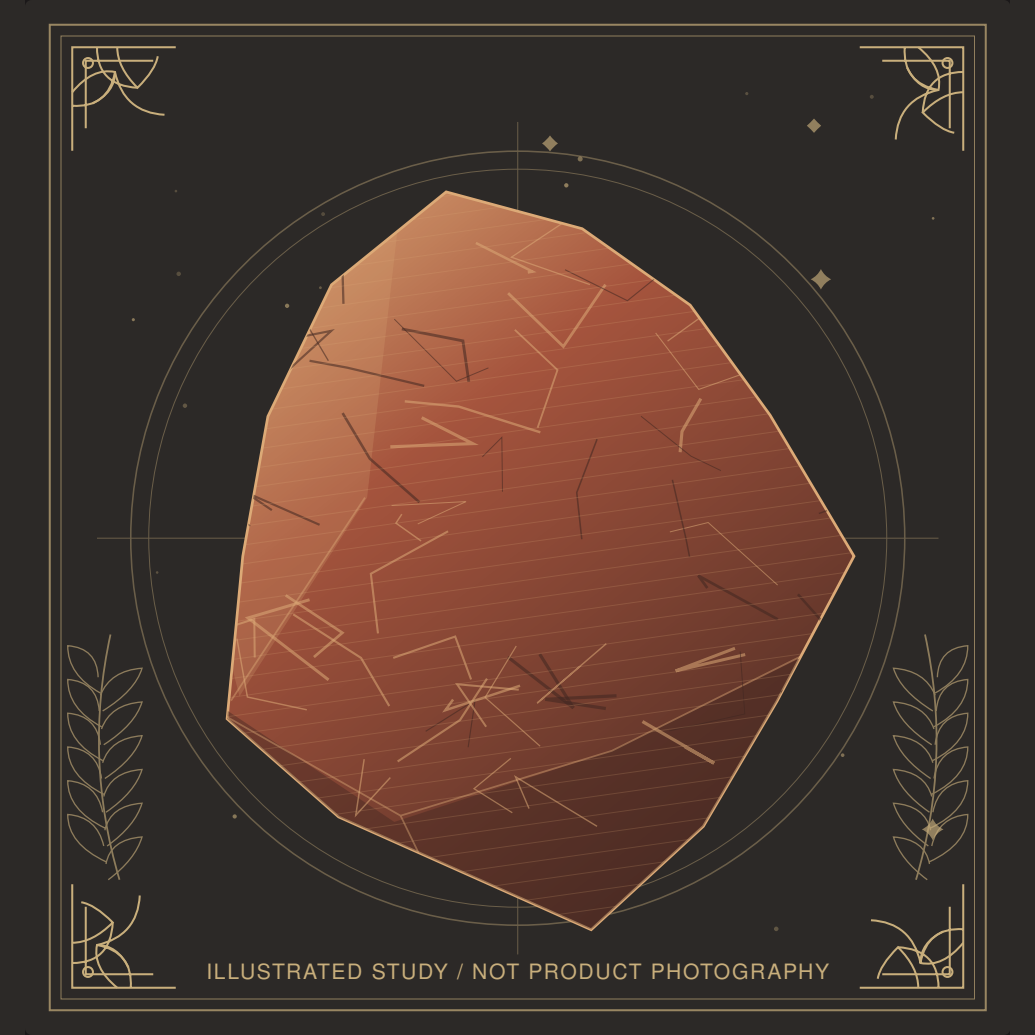
Included quartz is a comparison category for quartz containing visible minerals, fluids or growth features. Gold needles, black rods and green gardens are not one inclusion species. The host provides a window, but naming what appears inside requires more than recognizing an evocative pattern.
Aventurescent quartz-rich material with reflective inclusions.
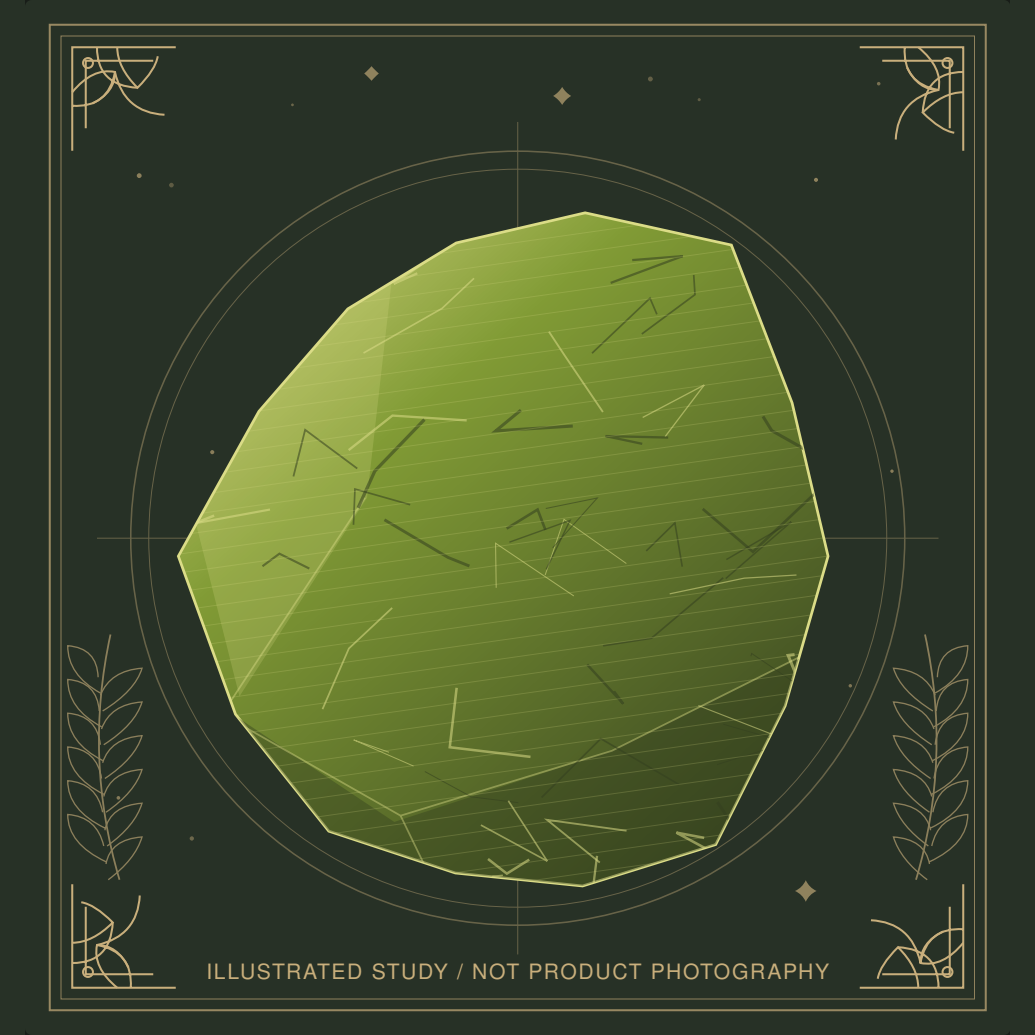
Aventurine is a quartz-rich material with reflective inclusions producing scattered glitter. Green is familiar, but red, orange, blue and yellow retail materials also occur. Its small glints differ from the broad colored flash of some feldspars and the single moving band of tiger’s eye.
Chatoyant quartz-rich material associated with fibrous amphibole textures.
Tiger’s eye displays a silky band of reflected light that moves as the viewing angle changes. Gold-brown material is familiar, with blue material and mixed tiger-iron rocks offering useful comparisons. This directional optical effect is chatoyancy.
Trade material with chatoyant fibrous inclusions in microcrystalline quartz.
Pietersite is a trade material with turbulent blue, gold and brown chatoyant patches. The fibers appear to turn in different directions rather than maintain tiger’s eye’s orderly band. This is a silica-rich inclusion material, not a separately approved mineral species.
Patterned, commonly banded chalcedony, a fine-grained silica material.
Agate is patterned fine-grained silica, commonly recognized by visible bands and some translucency. A slice can expose repeated outlines around a former cavity. Locality names and visual pattern names are useful for comparison, but do not create additional mineral species.
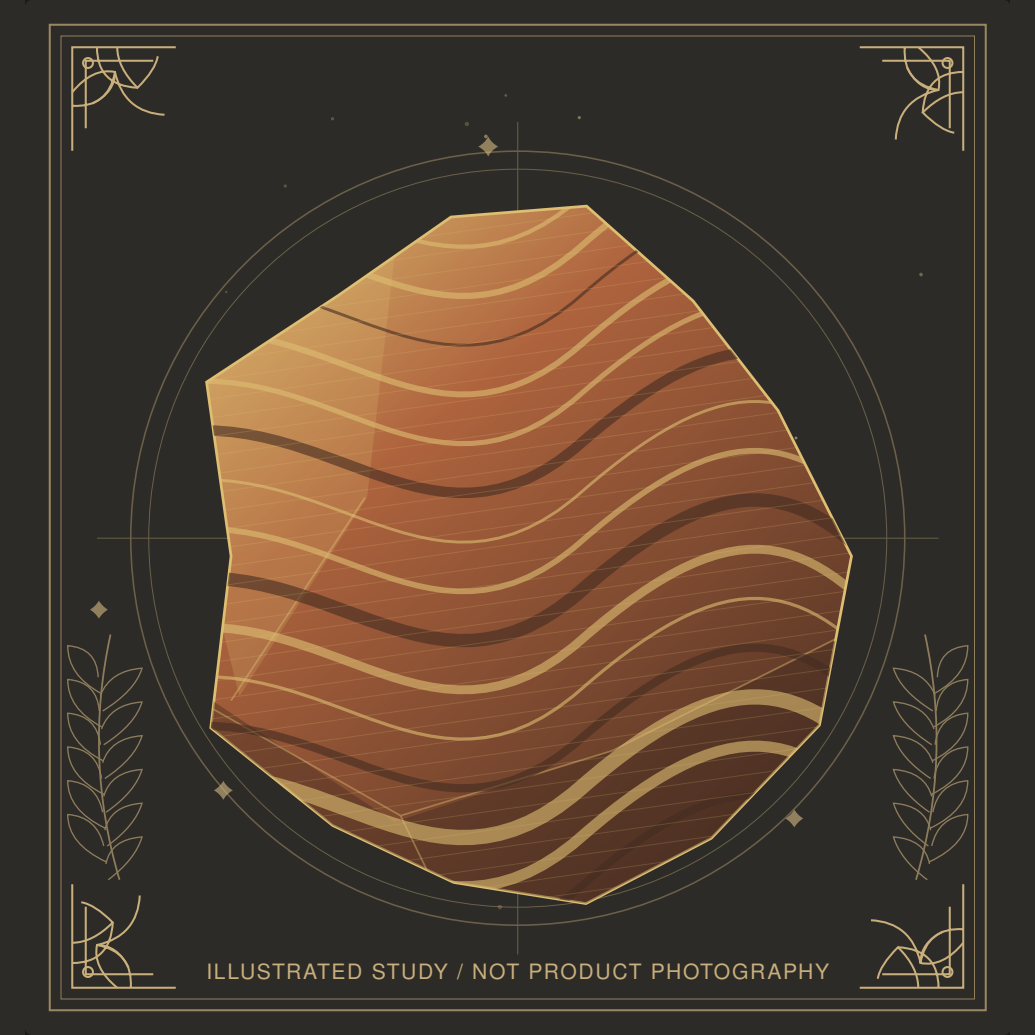
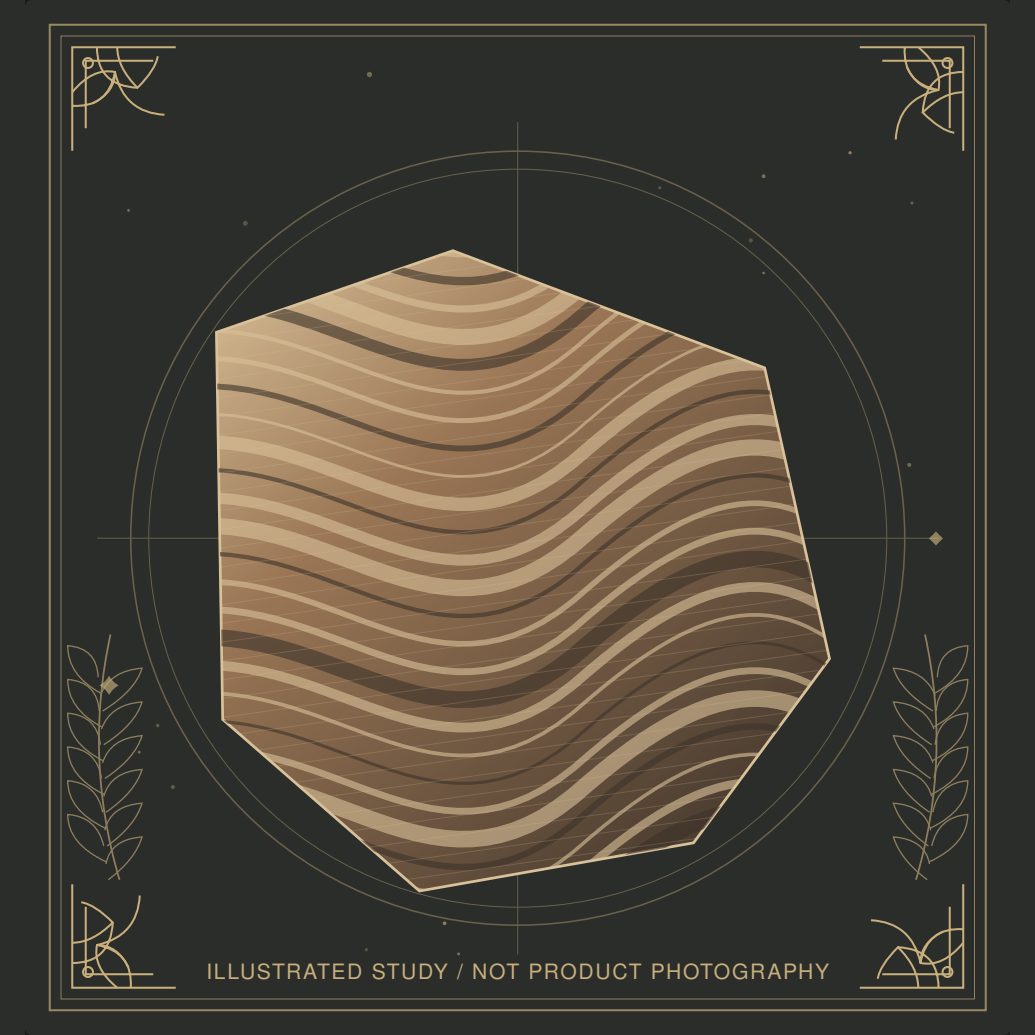
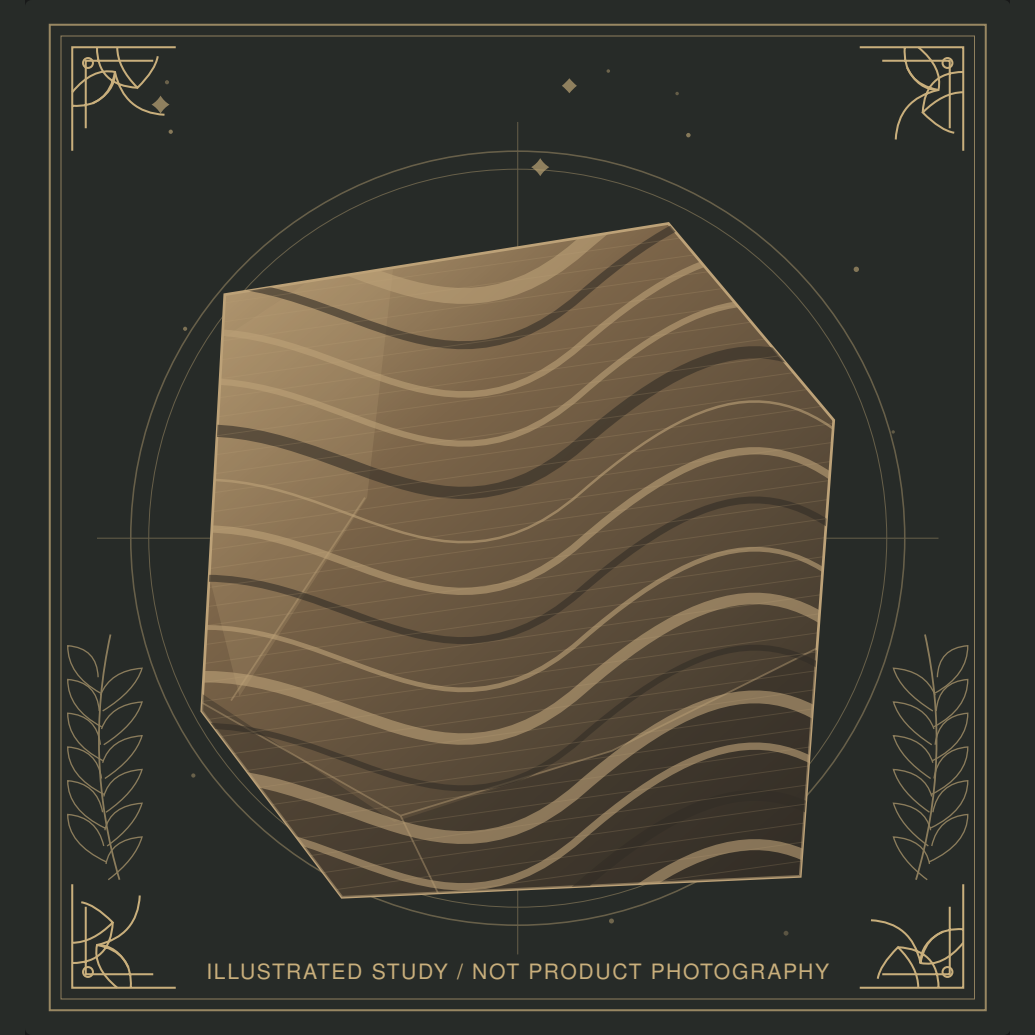
Blue lace agate combines pale blue chalcedony with white lace-like bands. The soft blue and repeated waves distinguish its visual character from an unbanded blue tumble. A small polished piece may show only a fragment of a much larger pattern.
Chalcedony with mineral inclusions resembling moss or branches.
Moss and tree agate contain mineral patterns that resemble small gardens or branches. The resemblance is descriptive: no plant needs to be present. Tree-agate retail material often emphasizes green marks against a paler field, while a more translucent background can make moss-like inclusions appear deeper.
Dendritic agate contains branching inclusions in fine-grained silica. Dark twigs against a white, gray or translucent field create miniature landscapes. Dendritic describes a growth pattern, not a fossil tree or a single chemical species.
Carnelian is orange-to-red chalcedony, commonly translucent at a thin edge and smooth or waxy in its polished appearance. Its fine texture makes it suitable for small carvings and engraved surfaces rather than large visible pointed crystals.
Microcrystalline/fibrous silica aggregate; includes many named gem varieties.
Chalcedony is a fine-grained silica aggregate, not one large visible quartz crystal. In narrower gem usage the name often denotes relatively even blue, white or gray material, while the wider family includes many patterned varieties such as agate and carnelian.
Chrysoprase is green chalcedony, valued for apple-green color and gentle translucency. It lacks aventurine’s conspicuous scattered glitter and is not jade simply because it is green. An even surface and a mottled interior can share the same broad material identity.
Green chalcedony/jasper material with red markings.
Classic bloodstone places red marks against a deep green silica-rich background. Heliotrope is an established alternative name. The red spots suggested blood to observers, but they are mineral coloration rather than blood or fossil organic matter.
Parallel-banded chalcedony; sardonyx includes sard-colored bands.
Onyx and sardonyx are layered chalcedony materials. Straight or nearly parallel contrasting bands offer a carver a deliberate relationship between image and ground. Sardonyx includes reddish-brown layers; the retail name onyx also needs separation from softer banded carbonate.
Opaque, impure, fine-grained silica-rich material; retail use of the name is broader.
Jasper is a broad name for opaque silica-rich material, usually patterned or colored by fine components. Red, yellow, brown and contrasting bands make the category visually expansive. The shop use of jasper stretches beyond strict silica identity, so a pattern name needs its own material explanation.
A lapidary trade name associated with orbicular silica-rich material from Madagascar.
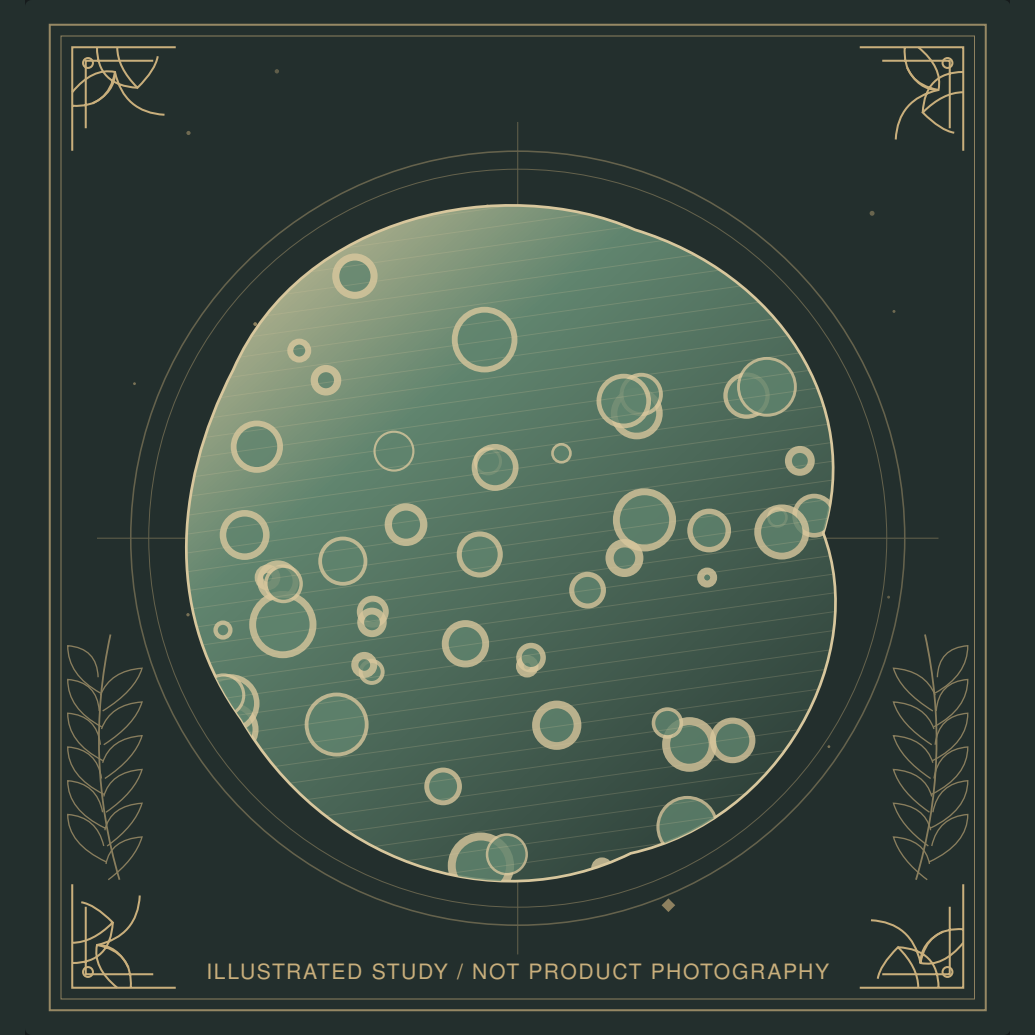
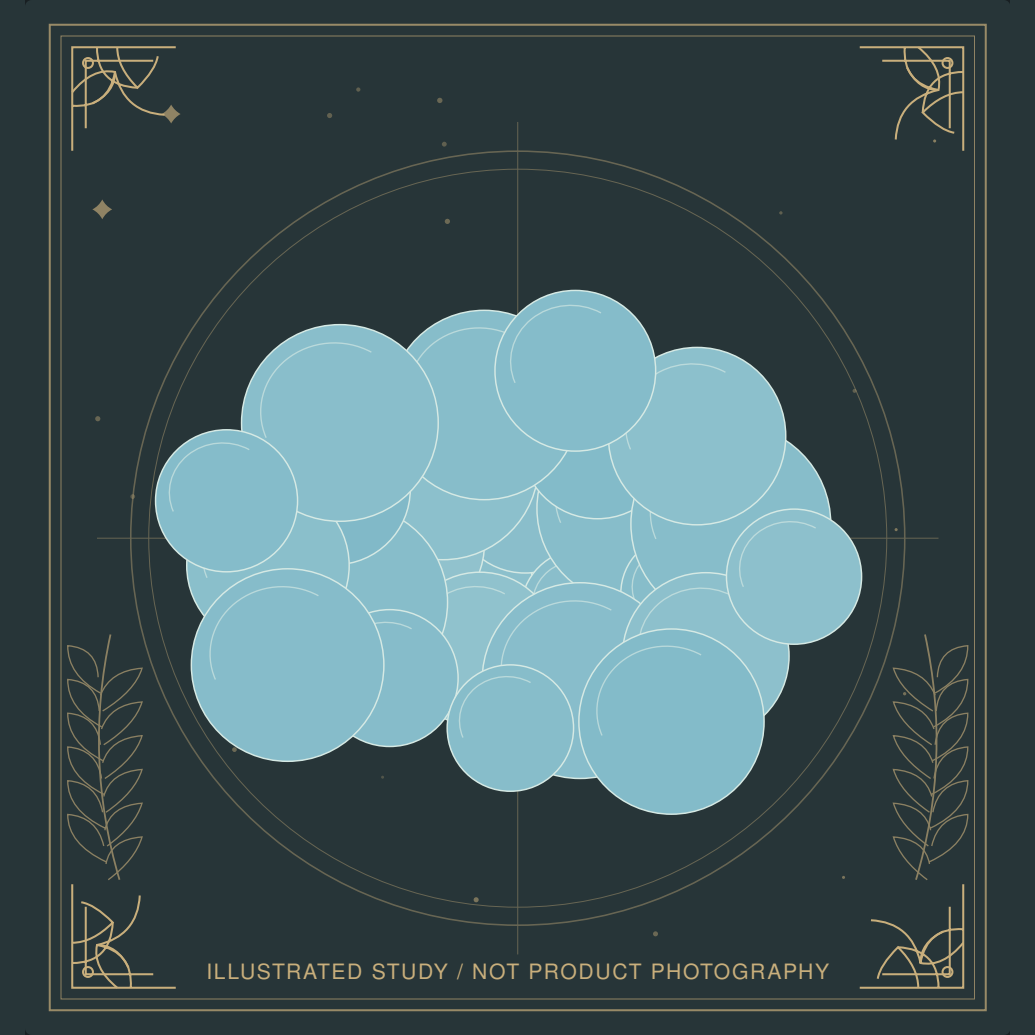
Ocean jasper is a trade category associated with orbicular silica-rich material from Madagascar. Rounded spots, concentric outlines, cavities and color fields create its characteristic visual rhythm. The circles are mineral patterns, not proof of a specific numbered vein or coastal collection story.
Silicified radiolarian sedimentary material from Western Australia.
Mookaite is an Australian decorative rock with cream, ochre, red and wine-colored fields. Its opaque polish can resemble familiar jasper, but the material’s specific rock context is more useful than treating the name as a new mineral crystal.
Amazonite is green-to-blue-green microcline, a potassium feldspar. Blocky fragments and pale streaks give it a different architecture from green chalcedony. Its color does not identify jade or turquoise, even when a polished shape resembles those stones.
A plagioclase feldspar variety known for labradorescence.
Labradorite is plagioclase feldspar, frequently with a gray body and a blue, green or gold flash. The broad flash changes with angle and lighting. A motionless photograph can show a vivid view or a subdued one without either representing the entire appearance.
Moonstone is a gem designation for feldspar with a floating, billowing sheen called adularescence. White, peach, gray and dark trade forms share a luminous appearance but require material-specific identification. The sheen is an optical structure, not light emitted by the stone.
Feldspar gem material with reflective inclusions, sometimes showing aventurescence.
Sunstone is a feldspar gem with reflective inclusions producing glitter or a warm shimmering appearance. A bright orange body is not its only form. The inclusion type and feldspar composition vary among documented sources.
Norwegian igneous rock rich in feldspar that can show blue-silver iridescence.
Larvikite is a dark coarse-grained igneous rock whose feldspar grains can flash silver-blue. A polished piece contains intergrown minerals; it is not one large labradorite crystal. Architectural slabs make the whole-rock texture especially easy to see.
Borosilicate mineral supergroup / black tourmaline focus
Tourmaline is a chemically diverse borosilicate supergroup. Black striated prisms provide a familiar crystal-shop silhouette, but pink, green, blue and multicolored gems show a much wider range. Color names and mineral species answer different questions.
Jade is a gem-material name encompassing distinct tough aggregates, principally jadeite jade and nephrite. It is not defined simply by green color. White, lavender, dark and differently colored jade can all occur, and the mineral type should remain explicit whenever an example is identified.
Serpentine-group minerals and serpentine-rich rock
Serpentine names a mineral group, while serpentinite is a rock dominated by serpentine minerals. Green carving material can include antigorite or lizardite, but a decorative photograph cannot establish its precise components. The group also includes fibrous chrysotile, making a species-level distinction consequential.
Garnet is a mineral group, not only a red gemstone. Equant crystals, massive material and orange or green gems show its breadth. Shared crystal structure links compositions that can differ substantially in chemistry and appearance.
Peridot is gem-quality olivine, usually yellow-green through olive green. Rough can occur as grains in a darker volcanic host rather than a long pointed crystal. Its green appearance differs from many gems whose color chiefly depends on trace components.
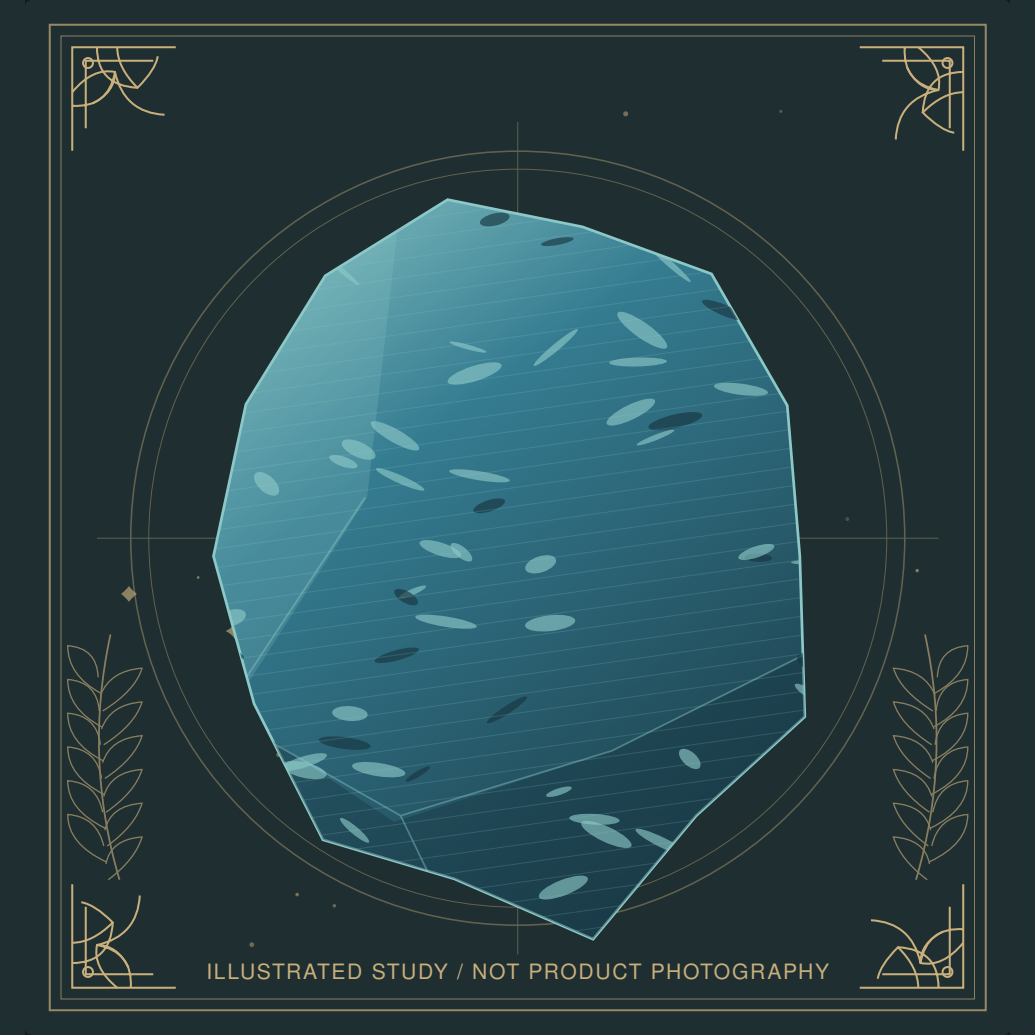
Aquamarine is blue-to-blue-green beryl. Pale transparent prisms retain an architectural hexagonal form; an opaque matrix piece can look quite different from a finished gem. Sea-colored imagery describes its appearance rather than its place of formation.
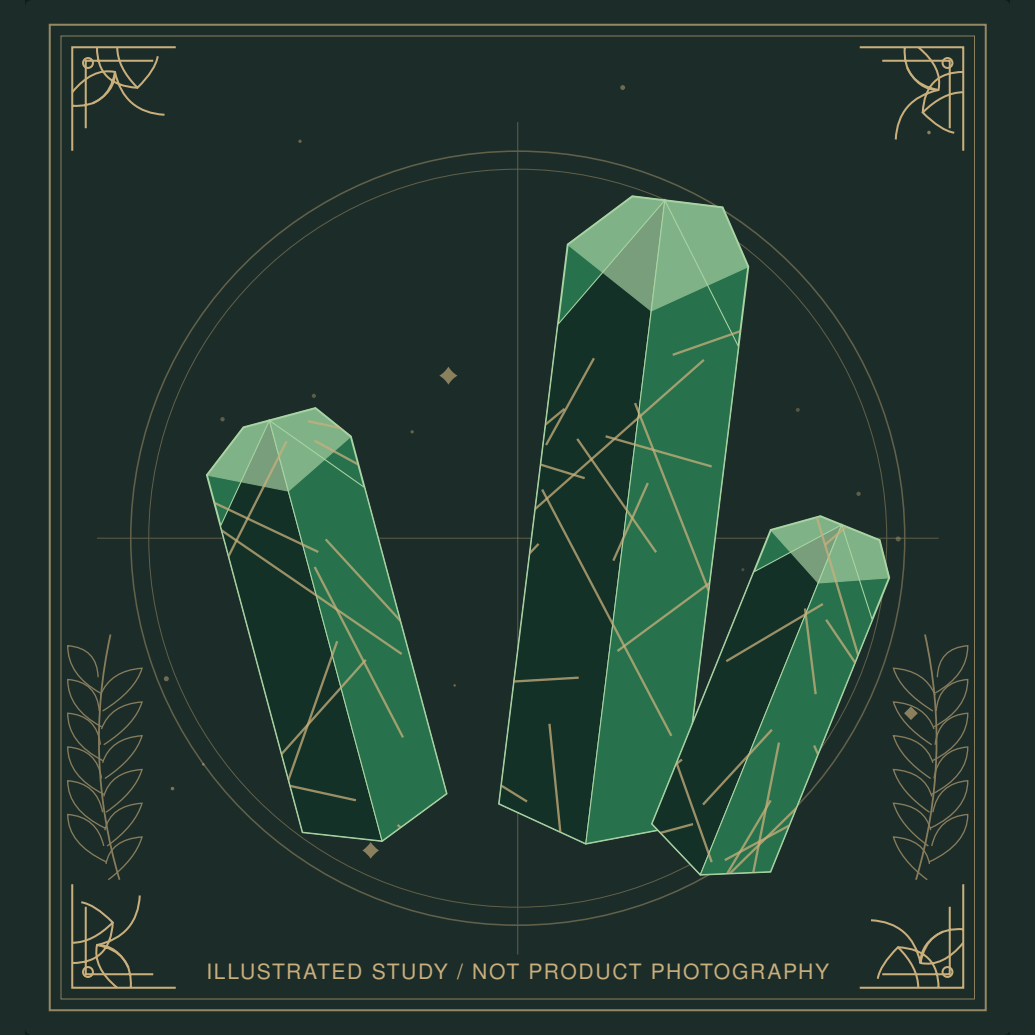
Emerald is the green gem variety of beryl. Visible inclusions and fractures can be part of its geological record, while matrix retains relationships lost in a faceted stone. Not every pale green beryl is automatically identified as emerald.
Morganite is pink-to-peach beryl, often pale enough that a larger mass displays its color more strongly. A transparent gem and a rough architectural crystal show different aspects of the same mineral framework. It is neither rose quartz nor pink glass.
Beryl family material outside the dedicated aquamarine, emerald and morganite pages.
The extended beryl family connects colorless goshenite, golden heliodor and green beryl with better-known aquamarine, emerald and morganite. These gem names usually sort color appearances within one mineral species. The comparison reveals how shared structure can support different visual identities.
Kunzite and hiddenite are gem varieties of spodumene. Pink-to-violet kunzite and green hiddenite share elongated crystal forms and a lithium-bearing pyroxene framework. The paired names do not mean their color causes or spiritual associations are identical.
Aluminium silicate mineral, polymorphous with andalusite and sillimanite.
Kyanite is an aluminium silicate frequently recognized by long blue blades. Fans, intergrown blades and dark aggregates express habit rather than a new mineral species. Color varies, so blue is characteristic but not a complete identification.
Gem-quality cordierite, often violet-blue and strongly pleochroic.
Iolite is gem-quality cordierite, often violet-blue with strongly different colors in different viewing directions. This property is pleochroism. The changing hue is not the same phenomenon as a rainbow flash produced by layered feldspar.
Andalusite; chiastolite is the cross-patterned inclusion variety.
Andalusite is an aluminium silicate; chiastolite is its inclusion-patterned variety with a dark cross visible in a cut section. The internal cross is different from two whole crystals intersecting as a staurolite twin.
Calcium aluminium silicate, often pale green and botryoidal.
Prehnite is a calcium aluminium silicate, often pale green with rounded or botryoidal surfaces. A polished mass can appear softly cloudy; dark associated crystals add a very different texture. Rounded habit does not identify every component inside a piece.
Calcium aluminium iron silicate in the epidote group.
Epidote is a calcium aluminium iron silicate often recognized by pistachio-green prisms. It also occurs as a component of mixed rocks. Naming epidote in a piece does not make every part of the host the same mineral.
Zoisite mineral; tanzanite is blue-violet gem zoisite.
Zoisite is a calcium aluminium silicate with several familiar gem appearances. Blue-violet tanzanite, pink thulite and green ruby-bearing material belong in comparison, but a mixed rock is not one uniformly colored zoisite crystal.
Ruby and sapphire are gem varieties of corundum, aluminium oxide. Ruby is red; other gem colors fall under sapphire. A matrix specimen, a transparent cut gem and an opaque star cabochon reveal different appearances of this shared mineral.
Topaz is an aluminium silicate containing fluorine and hydroxyl, with colors extending beyond familiar commercial blue. Clear prisms and striated faces provide a more accurate rough silhouette than treating every specimen as a blue gem.
Fluorite is calcium fluoride, often seen as cubes or color-zoned masses. Purple, green, yellow and blue can share one piece. A broken octahedron and a naturally grown cube have different origins of shape.
Calcite is calcium carbonate, appearing as clear cleavage fragments, pointed crystals, rounded growths and banded carving stone. One mineral supports far more shapes than the familiar tumble. A rhombohedral fragment is not a cube despite its regular-looking faces.
A calcium-carbonate polymorph distinct from calcite.
Aragonite is calcium carbonate with a structure distinct from calcite. Star-like clusters, branches and banded masses show that one mineral can have many external forms. A radiating cluster is an aggregate rather than one simple pointed crystal.
Gypsum is hydrated calcium sulfate, with clear selenite, fibrous satin spar and fine-grained alabaster expressing very different textures. A clear plate and a silky wand can share a mineral species while deserving different variety labels.
Angelite is a trade name for blue-gray massive anhydrite. Its soft-looking opaque surface differs from a clear celestine cluster. The sky-like color and angelic name are appearance and naming features rather than chemical identity.
Celestine is strontium sulfate, also commonly called celestite. Pale blue crystal clusters are familiar, but the mineral occurs in other colors. A cavity-lined cluster preserves a relationship between crystals and host rather than one giant solid gem.
Barite, also spelled baryte, is barium sulfate. Broad plates, radiating groups and rose-like forms give it a wide visual range. Its substantial heft is a useful characteristic, but should not be replaced by a destructive test or guessed from an image.