
Clear plates and silken fibers
Gypsum: Selenite and Satin Spar
Hydrated calcium sulfate (CaSO4·2H2O).
Hydrated calcium sulfate mineral species with crystalline, fibrous and massive forms
Gypsum is hydrated calcium sulfate, with clear selenite, fibrous satin spar and fine-grained alabaster expressing very different textures. A clear plate and a silky wand can share a mineral species while deserving different variety labels.
Geology · Human history · Attributed traditions
Explore the specimen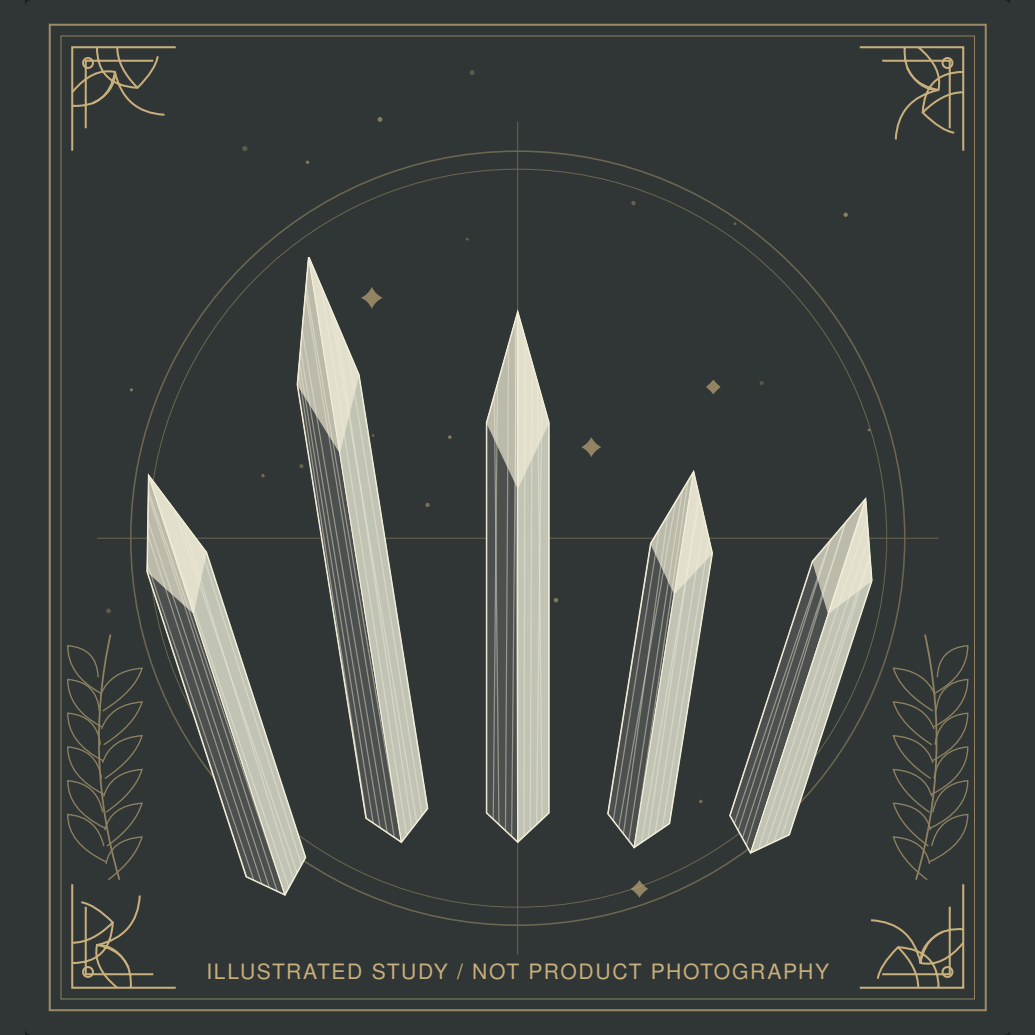
Material
Hydrated calcium sulfate (CaSO4·2H2O). [1]
Family
Calcium sulfate hydrate [1]
Appearance
Fine parallel fibers [1]
Traditions
Michelle Welch’s 2021 practitioner article uses selenite for symbolic clearing. [4]
In this guide
Visual identity
Gypsum is hydrated calcium sulfate, with clear selenite, fibrous satin spar and fine-grained alabaster expressing very different textures. A clear plate and a silky wand can share a mineral species while deserving different variety labels. [1]
Selenite conventionally denotes clear crystalline gypsum, satin spar denotes a fibrous aggregate with a silky directional sheen and alabaster denotes fine-grained massive material. All can share gypsum’s composition while looking and working differently. A broad clear plate, a silky white wand and an opaque carving therefore deserve separate visual accounts. Retail selenite language often spans these textures, so an informative label adds the actual form. The directional light in satin spar should not be drawn as the transparent interior of a selenite plate. [1]
Earth story: geology and formation
The Handbook of Mineralogy describes gypsum in evaporites and other sulfate-forming environments. Structural water distinguishes it from anhydrite. Desert roses can include sand within rosette-like growths, but similar roses also occur in barite; shape alone is not a species determination. The Handbook records gypsum in marine salt deposits, soils, caves and other sulfate-forming settings, including later hydration of anhydrite. It lists unusually large crystals from Naica in Mexico and cave formations in New Mexico. Such examples demonstrate varied growth spaces rather than one universal desert origin. A sand-bearing rose and a clear cave crystal can share mineral identity while preserving very different textures and environments. [1]
Gypsum is CaSO₄·2H₂O, with monoclinic symmetry, hardness around 1.5–2 and density approximately 2.31 grams per cubic centimetre. Structural water is part of its mineral definition. Clear plates, fibrous material and granular alabaster differ in texture but share the basic species. Cleavage surfaces can be pearly, and aligned fibers can appear silky. Low scratch resistance explains why a delicate rough crystal and a carved wand should not be treated as equivalent to a hard quartz point. Their material identity also remains different from manufactured clear glass. [1]
Gypsum is hydrated calcium sulfate, CaSO₄·2H₂O. Its water-bearing structure distinguishes it from anhydrite, which has the formula CaSO₄. The Handbook describes evaporite deposits, hydration of anhydrite and additional settings involving oxidation or cave processes. These routes explain why the same species can occur as a bedded material, an isolated transparent crystal or a fine-grained aggregate. A polished wand represents a selected textural form from this wider geological family, not the natural shape of every gypsum occurrence. [1][2]
Varieties and lookalikes
These names describe different levels of information: a mineral species, a visual variety, a crystal habit or a retail label. The distinctions below keep the recognizable shop vocabulary alongside its material explanation.
A desert rose is an aggregate form in which crystals and surrounding sediment can create petal-like structures. It is not a separate mineral species, and rose forms can also occur with barite, which has a very different density and composition. Clear gypsum and angelite provide another comparison: the latter is a trade name for blue-gray anhydrite. Their sulfate relationship does not make them the same hydrated mineral or give them identical hardness. The host identity and aggregate texture should both be preserved in the specimen description. [1][3][2]
- Clear selenite
- Transparent crystals or plates preserve a clear view of gypsum’s structure. The variety name should not be applied indiscriminately to all fibrous products. [1]
- Fibrous satin spar and selenite wands
- Parallel fibers produce a silky appearance. The popular retail wand name needs its satin-spar identification. [1]
- Alabaster
- Fine-grained gypsum used for carving has a different texture from a clear crystal. [1]
- Desert rose gypsum
- Sand-bearing rosettes require distinction from similar barite roses; a flower-like shape is not a mineral identification. [1]
Human story: history and naming
The mineral name connects with gypsum and plaster terminology. Alabaster working and clear-crystal collecting are different material uses. The modern spiritual use of the retail name selenite should not erase the textural distinction between clear plates and fibrous satin spar. [1]
The mineral’s plaster-related naming and alabaster texture connect it with working and manufacture, while enormous clear crystals at localities such as Naica give it a striking collecting and geological history. These are different presentations of one hydrated sulfate species. A clear natural crystal, fine-grained carving and fibrous retail wand should not be blended into a single imagined historical object. The present trade can preserve the evocative selenite name while explaining which physical form has actually been cut and polished. [1]
Meaning and practice: attributed traditions
Michelle Welch’s 2021 practitioner article uses selenite for symbolic clearing. That correspondence is contemporary and uses retail language; many wands sold under the name are satin spar. It does not establish that gypsum physically removes unwanted energy or needs to be used as a medical treatment. [4]
An optional clearing reflection is to choose one ordinary task that simplifies a space. The stone can mark the intention; the practical action performs the change.
Welch’s 2021 article uses selenite in a contemporary clearing framework. That attributed symbolism can be recorded alongside the distinction between clear gypsum and satin spar. A participant might use the object as a reminder to pause, put a space in order or begin a meditation deliberately. Such choices give the activity a human context. They do not demonstrate that calcium sulfate removes an invisible substance from another stone, and the physical condition of the soft object remains relevant whatever intended symbolic role it carries. [4]
Material identity and trade terminology
A silky fibrous wand is usually described as satin spar rather than clear selenite. Alabaster is a fine-grained form. Gypsum’s low hardness and cleavage matter to a specimen description, while a desert rose still needs identification as gypsum or barite. A polished shape is manufactured, even when its material is natural. [1]
Gypsum’s hardness around 1.5–2 is a defining practical difference from quartz and many common shop crystals. A smooth worked surface can be scratched easily, and its cleavage and fibrous textures contribute to fragility. Water handling also deserves a material-specific account rather than a generic crystal-cleansing instruction. A decorative wand is a physical gypsum object whether it is used for symbolism or display. Its vulnerability is not removed by the transparent, silky or celestial vocabulary applied to it. [1]
Sources and related specimens
The references below distinguish mineral identification and physical properties from historical interpretation and practitioner symbolism. A cited material category describes a kind of stone; it does not certify the identity, treatment or provenance of an untested individual retail specimen.
- Handbook of Mineralogy: Gypsum
Mineralogical Society of America · Mineral composition, structure, physical properties and occurrence · Accessed October 9, 2026
- Handbook of Mineralogy: Anhydrite
Mineralogical Society of America · Mineral composition, structure, physical properties and occurrence · Accessed October 9, 2026
- Handbook of Mineralogy: Barite
Mineralogical Society of America · Mineral composition, structure, physical properties and occurrence · Accessed October 9, 2026
- Michelle Welch: 14 Crystals for Clearing, Protecting, and Transmuting (2021)
Llewellyn Worldwide · Contemporary practitioner symbolism and retailer terminology; distinct from mineralogical evidence · Accessed October 9, 2026