
Salt in cubes
Halite
Sodium chloride mineral, occurring in evaporite deposits.
Mineral species; ornamental specimens may include other minerals
Halite is the mineral sodium chloride, NaCl.
Geology · Human history · Attributed traditions
Explore the specimen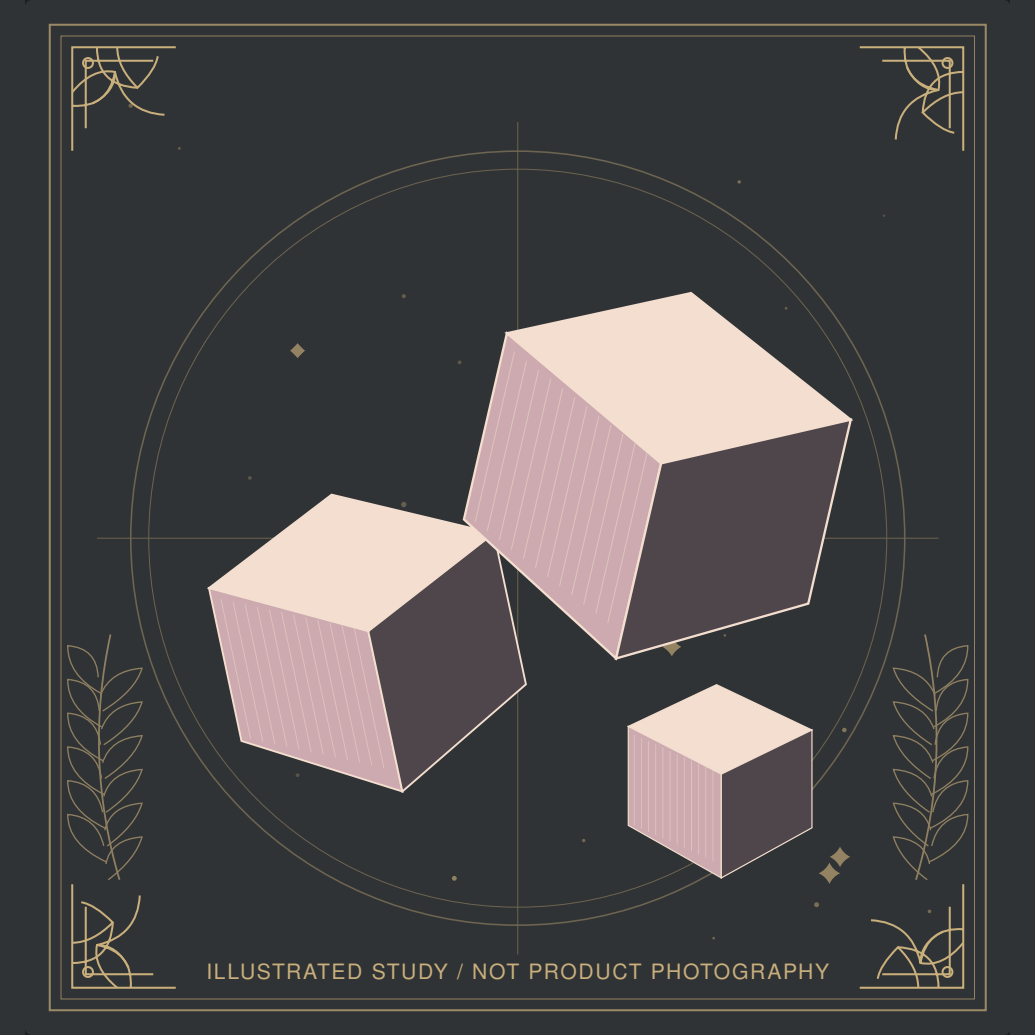
Material
Sodium chloride mineral, occurring in evaporite deposits. [1]
Family
Sodium chloride [1]
Appearance
Sodium chloride in cubes, massive salt and colored specimens. [1]
Meaning & tradition
Kynes: salt and prosperity, a modern correspondence. [2]
In this guide
Visual identity & plain-language name
Halite is the mineral sodium chloride, NaCl. Cubic growth and massive rock-salt material show different forms of the same basic identity. A lamp, sphere or slab is a manufactured object made from geological raw material, rather than a naturally grown lamp-shaped crystal. [1]
Earth story: formation, structure & color
The Handbook gives cubic structure, perfect cubic cleavage, hardness 2–2.5 and water solubility. Evaporation of saline waters can produce extensive deposits, while other occurrences are documented. Pure material is colorless or white; colored specimens reflect additional constituents or structural effects rather than different spiritual species. [1]
Halite is crystalline sodium chloride, NaCl. Its cubic structure commonly produces cubes, but octahedral, skeletal, granular and massive forms also occur in the Handbook record. Perfect cubic cleavage creates breakage surfaces that can resemble original growth faces. A tidy cube should therefore be described carefully: crystal habit and cleavage are different parts of the object's physical history. [1]
The mineral is very soft, Mohs 2–2.5, with density about 2.17 and ready water solubility. A thick carved block can look robust while remaining susceptible to dissolution and mechanical damage. Colorless and white pure material contrasts with gray, yellow, orange, pink, red, blue and purple appearances in the reference. Color does not select a universal impurity or a mine. An ornamental salt product may also contain other evaporite minerals and processing residues; its complete identity is not automatically laboratory-pure NaCl. [1]
Large evaporite deposits develop as saline waters concentrate and salts precipitate. The Handbook also documents volcanic sublimates, surface efflorescences, cave deposits and tiny crystals inside fluid inclusions. These different settings explain why halite can be a thick bed, a delicate crust or a microscopic constituent in another mineral. A retail Himalayan label and a pink hue cannot establish the exact geological source or purity of a particular lamp. [1]
Varieties & look-alikes
Compare clear cubes, hopper crystals, pink material, blue specimens and massive rock salt. Sylvite and other evaporite minerals can occur nearby but have distinct identities. A Himalayan product label includes an origin claim needing documentation. A carved salt object should retain both mineral and manufacturing descriptions. [1]
- Pink rock salt
- Pink is a documented halite appearance but not a complete identity, purity or origin test. A massive ornamental product can contain inclusions or associated minerals. Its color does not prove that it came from a particular mine or is suitable for eating. Keep the material determination and supported source independently recorded. [1]
- White halite
- White to colorless halite may occur as crystals, granular material or massive salt. Cubic outlines can reflect growth or cleavage. Preserve those observations without assuming every white cube is sodium chloride. The softness and water solubility are important to display and storage, while destructive or taste-based tests are unnecessary on an unidentified specimen. [1]
- Himalayan salt lamp material
- A lamp combines salt material with carving and an electrical product. The geographical marketing word requires source evidence and cannot identify purity or certify performance. The mineral category remains separate from lighting and personal symbolism. Preserve product instructions and provenance; the rock's attractive glow does not demonstrate air cleaning or a therapeutic effect. [1]
Human story: objects, names & cultural context
The name comes from a Greek word for salt. The mineral’s geological account concerns deposition and preservation. Familiar household salt uses do not automatically establish the source or purity of a decorative specimen, and the presence of a lamp fixture adds its own product history. [1]
The scientific name derives from a Greek salt word. Salt's broad human use and the specific biography of a decorative object should remain separate accounts. A carved lamp has a maker, source and electrical assembly history beyond the sodium chloride material. The Handbook's recorded deposit localities provide mineralogical context, but older regional wording should not be used to assign modern political geography or a precise mine to an unprovenanced product. A documented supplier and product record are more useful for that object-specific history. [1]
Meaning & practice: attributed traditions
Sandra Kynes includes salt in prosperity correspondences in her 2018 account. This is modern spiritual interpretation. [2]
An editorial prosperity intention can connect the object to a concrete household habit, such as reviewing one recurring expense. The reminder is personal; sodium chloride does not guarantee abundance.
Material truth: trade names & treatments
Water solubility makes prolonged wet cleaning and high moisture poor assumptions for a display specimen. Decorative salt is not automatically food-grade material. A lamp produces light through its electrical component; the mineral name alone does not establish claims about air treatment or bodily effects. Retain the product’s appropriate condition and electrical instructions. [1]
Himalayan salt lamp is a manufactured-product description and origin claim, not a new mineral species. Pink material does not establish air-purification performance or a spiritual mechanism. Treat an ornamental salt object as a specimen or product rather than assuming it has food-grade suitability. Solubility makes washing and soaking inappropriate for maintaining its form. A lamp also needs its own electrical instructions; mineral identification cannot certify its wiring, source or suitability for a wet location. [1]
Record whether the object is a natural cube, a cut block, a carved lamp or granular material. Note visible inclusions and surface changes without tasting an unknown mineral specimen. Photographs can preserve fragile faces before further dissolution obscures them. Keep provenance and product information with the object, particularly when a commercial name implies a region or special performance. An owner can assign prosperity or abundance symbolism deliberately, while the geological account remains about sodium chloride, precipitation and the condition of the actual material.
Sources & related specimens
The Handbook establishes mineral properties and occurrence, while Kynes records modern symbolism. Compare gypsum and other evaporite materials for why similar decorative use does not imply identical chemistry.
- Handbook of Mineralogy: Halite
Mineralogical Society of America · Identity and natural history · Accessed October 9, 2026
- Sandra Kynes: 365 Days of Crystal Feng Shui for Your Home (2018)
Llewellyn Worldwide · Sandra Kynes’s contemporary crystal-placement and intention framework · Accessed October 9, 2026