
Pale blue geode light
Celestine
Strontium sulfate (SrSO4).
Strontium sulfate mineral species
Celestine is strontium sulfate, also commonly called celestite. Pale blue crystal clusters are familiar, but the mineral occurs in other colors. A cavity-lined cluster preserves a relationship between crystals and host rather than one giant solid gem.
Geology · Human history · Attributed traditions
Explore the specimen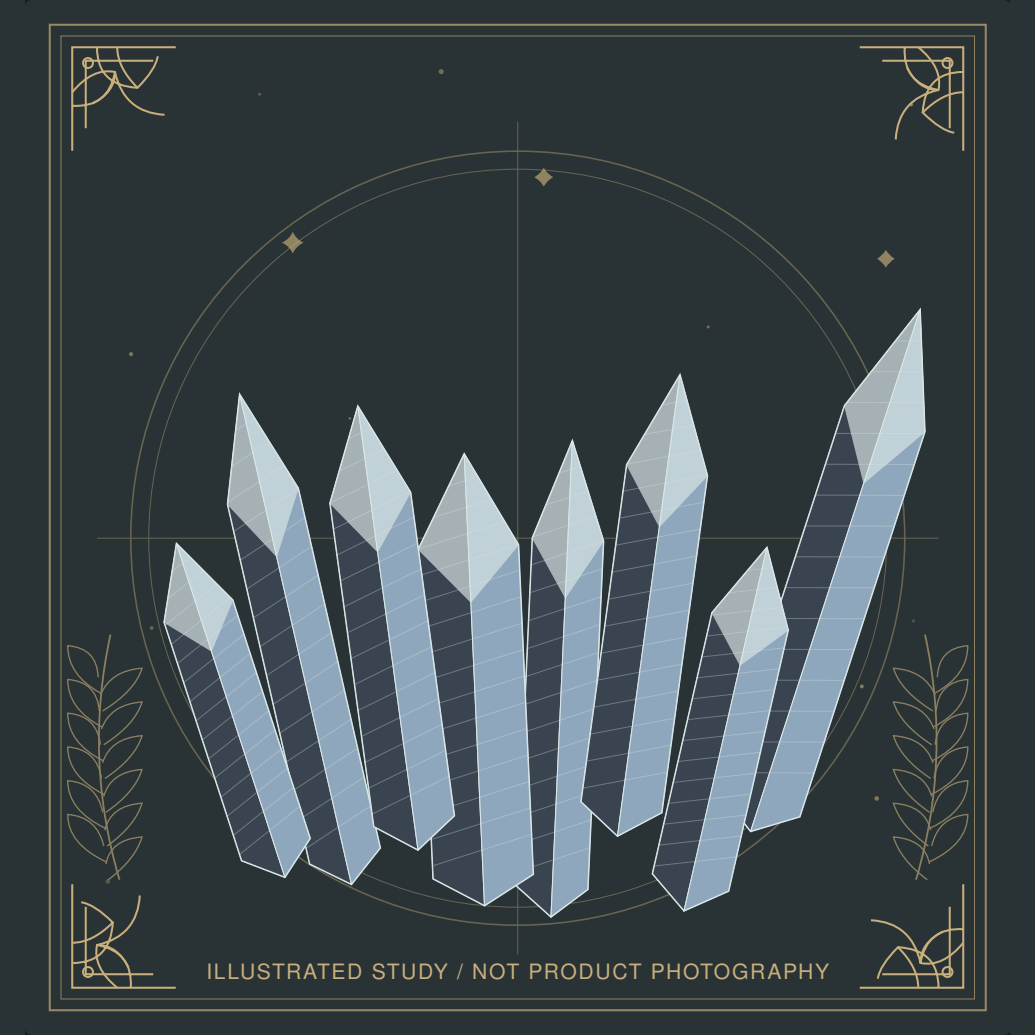
Material
Strontium sulfate (SrSO4). [1]
Family
Strontium sulfate [1]
Appearance
Angular faces and fractures [1]
Traditions
Margaret Ann Lembo’s 2013 chart places celestite with communication, expression and inspiration themes. [5]
In this guide
Visual identity
Celestine is strontium sulfate, also commonly called celestite. Pale blue crystal clusters are familiar, but the mineral occurs in other colors. A cavity-lined cluster preserves a relationship between crystals and host rather than one giant solid gem. [1]
Pale sky blue is familiar, but the species can also be nearly colorless or show other subtle colors. Glassy crystal faces and a cavity-lined cluster create a different visual presentation from a uniform opaque blue carving. The points are naturally developed faces where preserved, while a sawn edge or polished base is a later intervention. Its relatively high density can feel surprising for a delicate-looking pale crystal. Appearance and heft are useful observations, but neither alone identifies every sulfate or carbonate lookalike. [1]
Earth story: geology and formation
The Handbook of Mineralogy describes orthorhombic crystals and a relationship with barite through the sulfate series. Different chemistry can produce similar forms. Its density and cleavage distinguish it from blue quartz or glass, but a photograph cannot determine those properties conclusively. The Handbook records celestine precipitated by strontium-bearing groundwater or brines in cavities and fissures, as well as sedimentary and hydrothermal occurrences. It lists Sakoany in Madagascar and Crystal Cave on Ohio’s South Bass Island among specimen localities. These examples clarify the diversity of cavity settings. A blue geode does not automatically establish either source or a single deposit age. [1]
Celestine is SrSO₄ with orthorhombic symmetry, hardness 3–3.5 and measured density approximately 3.97 grams per cubic centimetre. Perfect cleavage in one direction and good cleavage in another contribute to fragility along particular planes. Its crystals can be transparent or translucent, with glassy faces and pearly cleavage surfaces. Pale blue is characteristic of many familiar clusters but colorless, white and other appearances are recorded. The strontium sulfate identity differs from calcium sulfate angelite even when a shop photograph presents both against similar blue palettes. [1]
Celestine is strontium sulfate, SrSO₄, with orthorhombic symmetry. The Handbook records sedimentary occurrences, cavities in carbonate rock and hydrothermal settings. Strontium-bearing fluids and the surrounding geology matter to where the mineral is deposited. It may occur with calcite, gypsum, barite or other minerals, but a pale cluster’s particular associates require identification. The sulfate formula distinguishes it from calcium-sulfate anhydrite and from barium-sulfate barite, despite visual overlaps among clear or lightly colored crystals. [1][2][3]
Varieties and lookalikes
These names describe different levels of information: a mineral species, a visual variety, a crystal habit or a retail label. The distinctions below keep the recognizable shop vocabulary alongside its material explanation.
Celestite and celestine are alternative names for the same mineral, rather than two distinct blue species. Madagascar cavity specimens and other source-labelled goods need their provenance recorded independently of the color. Blue calcite and angelite provide important shop comparisons with different compositions and habits. A cluster-like form is not interchangeable with a compact carving, because the exposed crystals, matrix and fractures affect handling. The familiar celestial vocabulary should not obscure these physical distinctions among the pale-blue objects displayed together. [1][4][2]
- Celestite
- An established alternate name for celestine. The spelling difference does not create a mineralogical distinction. [1]
- Blue celestine clusters
- Multiple crystals share a host surface or cavity. Each crystal’s growth and the aggregate’s overall form are different observations. [1]
- Celestine geodes
- A cavity-bearing host may show a lining of celestine. The geode name does not independently identify the mineral lining. [1]
Human story: history and naming
Its name reflects a celestial or sky-blue appearance. That naming history explains the evocative vocabulary without proving an angelic or celestial power. A labeled historical collection specimen would supply a more specific human history than an untraceable universal legend. [1]
The name’s sky-related meaning records how the familiar blue appearance influenced mineral naming. The Handbook lists recognized sources including Sakoany in Madagascar and the South Bass Island locality in Ohio. These provide specific collecting contexts rather than proof of angelic traditions. A labelled specimen can preserve its own collection story through those places, while an unlabelled blue cluster cannot recover a source simply by sharing the typical appearance. Supported naming and locality information are valuable historical context even without a documented ancient ritual use. [1]
Meaning and practice: attributed traditions
Margaret Ann Lembo’s 2013 chart places celestite with communication, expression and inspiration themes. The chart is a contemporary spiritual source. Its interpretation sits alongside, rather than explains, the mineral’s pale blue appearance. [5]
An optional expression reflection can begin with one thought that deserves a clear sentence, using the sky-colored cluster as a visual cue.
Lembo gives celestite communication, expression and inspiration themes within her light-blue color system. Those correspondences sit alongside similar themes for compositionally different materials. A participant may use the cluster as a visual focus while choosing to listen or reflect, but the shared symbolic lane does not imply that the crystals all operate through one physical mechanism. The mineralogical chapter separately explains strontium sulfate and its occurrence. The sky-blue name is meaningful imagery rather than evidence for a guaranteed celestial contact. [5]
Material identity and trade terminology
Celestite is an established alternative name, not another species. A blue cluster is not automatically celestine, and a geode label describes its arrangement rather than its chemistry. Known source and treatment should be recorded for the actual piece. [1]
The Handbook gives hardness 3–3.5, density about 3.97 grams per cubic centimeter and good cleavage. Substantial heft therefore coexists with a comparatively soft, vulnerable crystal. Narrow projections can chip under impact, and a matrix-supported cavity may still contain loose or fractured pieces. A hard-looking glassy face is not evidence of quartz hardness. The actual object should be described in terms of mineral, matrix and condition rather than implying that density, transparency or a celestial name certifies exceptional durability. [1][6]
Sources and related specimens
The references below distinguish mineral identification and physical properties from historical interpretation and practitioner symbolism. A cited material category describes a kind of stone; it does not certify the identity, treatment or provenance of an untested individual retail specimen.
- Handbook of Mineralogy: Celestine
Mineralogical Society of America · Mineral composition, structure, physical properties and occurrence · Accessed October 9, 2026
- Handbook of Mineralogy: Anhydrite
Mineralogical Society of America · Mineral composition, structure, physical properties and occurrence · Accessed October 9, 2026
- Handbook of Mineralogy: Barite
Mineralogical Society of America · Mineral composition, structure, physical properties and occurrence · Accessed October 9, 2026
- Handbook of Mineralogy: Calcite
Mineralogical Society of America · Mineral composition, structure, physical properties and occurrence · Accessed October 9, 2026
- Margaret Ann Lembo: Colors, Enlivening the Rainbow Body (2013)
Llewellyn Worldwide · Contemporary practitioner symbolism and retailer terminology; distinct from mineralogical evidence · Accessed October 9, 2026
- Handbook of Mineralogy: Quartz
Mineralogical Society of America · Mineral composition, structure, physical properties and occurrence · Accessed October 9, 2026