
Heavy pale plates
Barite / Baryte
Barium sulfate (BaSO4).
Barium sulfate mineral species and aggregate forms
Barite, also spelled baryte, is barium sulfate. Broad plates, radiating groups and rose-like forms give it a wide visual range. Its substantial heft is a useful characteristic, but should not be replaced by a destructive test or guessed from an image.
Geology · Human history · Attributed traditions
Explore the specimen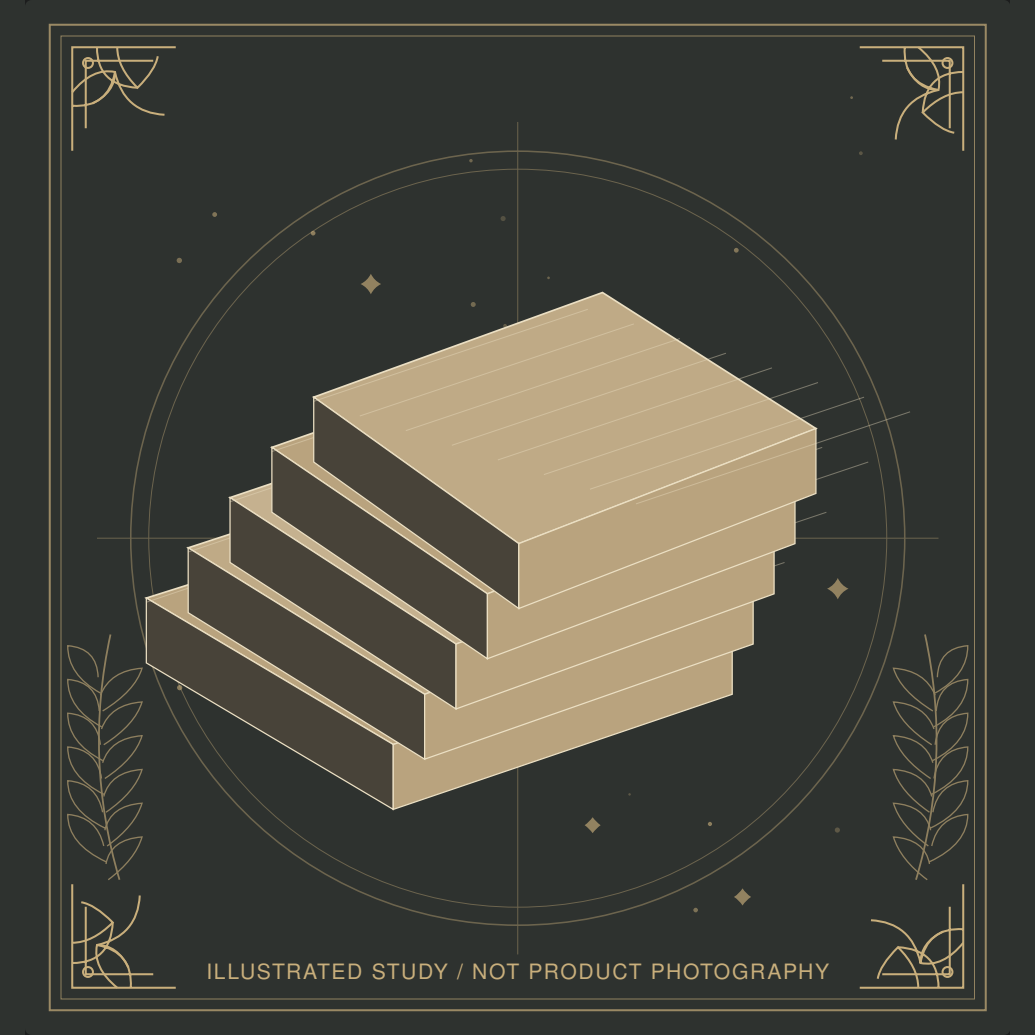
Material
Barium sulfate (BaSO4). [1]
Family
Barium sulfate [1]
Appearance
Lengthwise face markings [1]
Traditions
Sandra Kynes’s 2018 article includes barite among relationship-oriented correspondences. [4]
In this guide
Visual identity
Barite, also spelled baryte, is barium sulfate. Broad plates, radiating groups and rose-like forms give it a wide visual range. Its substantial heft is a useful characteristic, but should not be replaced by a destructive test or guessed from an image. [1]
Thin tabular crystals, crested aggregates and rose-like forms are recognizable presentations, while massive material can look quite different. Colorless, pale yellow, brownish or blue appearances do not define separate mineral species. A rose form concerns aggregate habit rather than a flower or a separate formula. Its density around 4.50 grams per cubic centimeter gives a substantial feel relative to many common shop stones. The contrast between a delicate-looking plate and considerable density is a material characteristic, not a reason to assume the crystal resists impact. [1]
Earth story: geology and formation
The Handbook of Mineralogy records orthorhombic symmetry, hardness 3–3.5 and density about 4.5 grams per cubic centimetre. Plate-like crystals and rose aggregates express different habits. Its sulfate relationship with celestine explains comparable forms without making the two compositions identical. The Handbook records barite in low-temperature mineral veins, weathered residual deposits and seafloor hydrothermal settings, among other environments. It lists associations including fluorite, calcite, dolomite and sulfides. A rose aggregate and a broad tabular cluster preserve different habits of the same sulfate mineral. The context is richer than a single desert-rose label, and its substantial density cannot independently reconstruct the source or authenticate a locality. [1]
Baryte is BaSO₄ with orthorhombic symmetry and comparatively high density, about 4.5 grams per cubic centimetre. Thin or thick plates, crested groups and rose aggregates appear among its habits. Its cleavage and brittleness explain why a heavy specimen need not resist breakage as strongly as its substantial feel suggests. White streak and glassy-to-resinous luster are recorded reference properties, independent of a blue or golden body color. Celestine has a related sulfate structure but different chemistry; gypsum roses share a resemblance while having another composition and lower density. [1]
Barite, also spelled baryte, is barium sulfate with orthorhombic symmetry. The Handbook describes low-temperature hydrothermal veins, sedimentary and limestone-related occurrences, carbonatites and submarine hydrothermal settings. Its broad occurrence account explains why a single decorative crystal form should not be assigned one universal deposit story. Calcite, fluorite, gypsum and sulfide minerals are among possible associations. A collector specimen with preserved matrix can document one relationship, while a loose cut piece usually reveals less of the geological setting. [1]
Varieties and lookalikes
These names describe different levels of information: a mineral species, a visual variety, a crystal habit or a retail label. The distinctions below keep the recognizable shop vocabulary alongside its material explanation.
Blue barite is a color description within the species where confirmed, while desert-rose barite describes a particular aggregate form. Gypsum can also form desert roses, so that familiar label alone is not a host identification. Celestine is another sulfate comparison, with strontium rather than barium as its principal cation. Color and habit can overlap across these materials, but density, chemistry and structure provide more specific evidence. A precise catalogue can retain the evocative rose name while stating which sulfate actually composes the specimen. [1][2][3]
- Barite and baryte
- Alternative spellings refer to the same mineral. An older label can use either without indicating a distinct composition. [1]
- Barite roses and desert rose barite
- Rosette-like aggregates require distinction from gypsum roses. Habit and species are independent descriptive questions. [1]
- Blue and golden barite
- Color variations do not create separate mineral species or certify a locality. The actual specimen should carry its own provenance. [1]
Human story: history and naming
The name relates to Greek heavy-related language, an appropriate reference to its density. The mineral’s documented naming is more firmly grounded than a generic claim of ancient dream or travel rituals. Barite and baryte are spelling variants rather than separate discoveries. [1]
The name’s heavy-related Greek derivation corresponds to the density that observers can recognize in a specimen. Barite and baryte are spelling alternatives within the same mineral account. The Handbook’s distribution and occurrence record provides concrete collecting and geological context beyond that etymology. A plate in a dated collection can have a particular acquisition history, but the species name alone cannot date a modern polished object. The documented mineral history is preferable to assigning an unsupported ancient dream-travel ceremony to every pale barite crystal. [1]
Meaning and practice: attributed traditions
Sandra Kynes’s 2018 article includes barite among relationship-oriented correspondences. This is a contemporary practitioner source. Its relatively heavy feel can inspire an editorial metaphor of steadiness, but the density is not evidence for the spiritual interpretation. [4]
An optional relationship reflection is to name one dependable commitment. The weight of a finished specimen can serve as a personal metaphor, not a promise of stability.
Kynes includes barite in relationship-oriented correspondences within her contemporary home practice. This is an attributed interpretive setting rather than a chemical consequence of barium sulfate. A participant may choose a theme of steadiness or consideration while looking at the specimen. Its heavy feel can inform a personal metaphor, but a metaphor should not be mistaken for evidence that density produces a relationship effect. Mineral composition, aggregate habit and modern intended meaning remain separate and useful parts of the object’s account. [4]
Material identity and trade terminology
Barite roses and gypsum desert roses have different chemistry and physical properties. A rose-like silhouette is not a species. Blue and golden labels describe appearance and require the same source and treatment information as white or brown material. [1]
Hardness 3–3.5 and good cleavage mean that barite’s relatively high density should not be read as exceptional toughness. Tabular edges can be fragile, and the performance of an aggregate also depends on attached matrix and existing breaks. Celestine provides a useful mineral comparison: both are orthorhombic sulfates, but barite contains barium and celestine contains strontium. Their familiar pale colors can overlap, while composition and measured properties establish distinct identities. A specimen’s heft is therefore useful context rather than a complete identification. [1][3]
Sources and related specimens
The references below distinguish mineral identification and physical properties from historical interpretation and practitioner symbolism. A cited material category describes a kind of stone; it does not certify the identity, treatment or provenance of an untested individual retail specimen.
- Handbook of Mineralogy: Barite
Mineralogical Society of America · Mineral composition, structure, physical properties and occurrence · Accessed October 9, 2026
- Handbook of Mineralogy: Gypsum
Mineralogical Society of America · Mineral composition, structure, physical properties and occurrence · Accessed October 9, 2026
- Handbook of Mineralogy: Celestine
Mineralogical Society of America · Mineral composition, structure, physical properties and occurrence · Accessed October 9, 2026
- Sandra Kynes: 365 Days of Crystal Feng Shui for Your Home (2018)
Llewellyn Worldwide · Contemporary practitioner symbolism and retailer terminology; distinct from mineralogical evidence · Accessed October 9, 2026