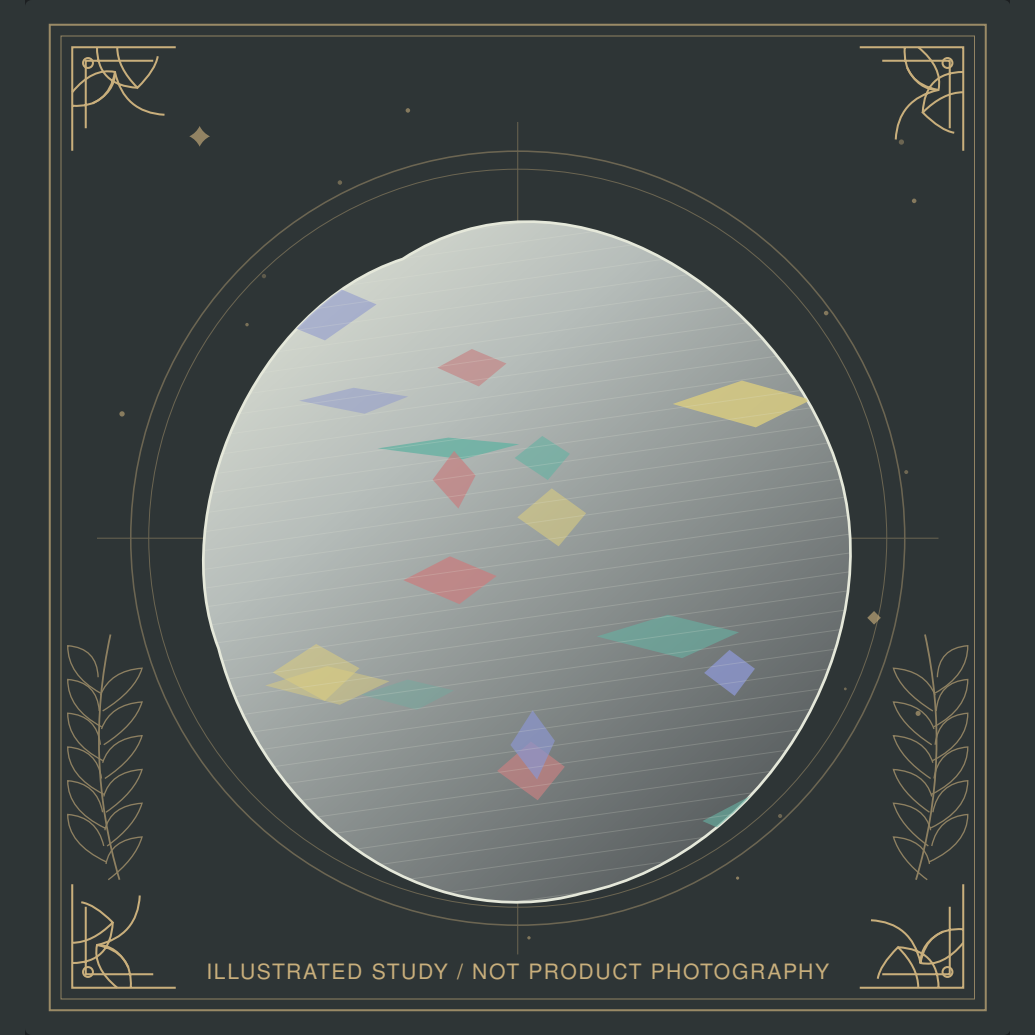
A play of color
Opal
Hydrated silica material; precious opal shows play-of-color and common opal does not.
Opal is hydrated silica.
Read the specimen guide
 Mila'sExotic Plants & CuriositiesA living collection by Luminary Oddities
The mineral atlas
Continue into rocks, unusual mineral specimens, and the wider crystal-shop assortment. The guides separate a rock assemblage from its constituent minerals and explain the evidence behind uncommon trade names.
20 specimens · Geology, history, and attributed traditions
A play of color
Hydrated silica material; precious opal shows play-of-color and common opal does not.
Opal is hydrated silica.
Read the specimen guide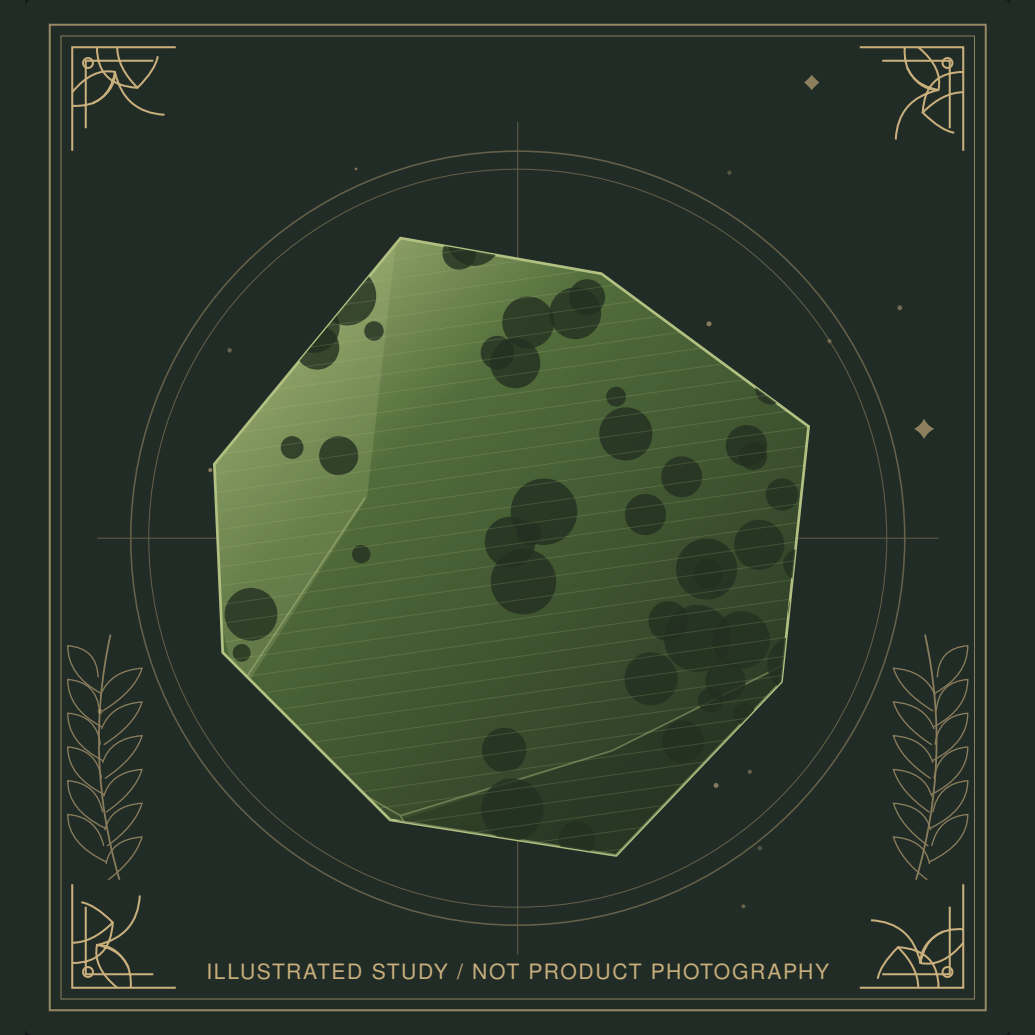
Impact glass landscapes
Natural impact-generated glasses derived from terrestrial material.
Moldavite belongs among tektites: natural glasses made from terrestrial material during a major impact event.
Read the specimen guide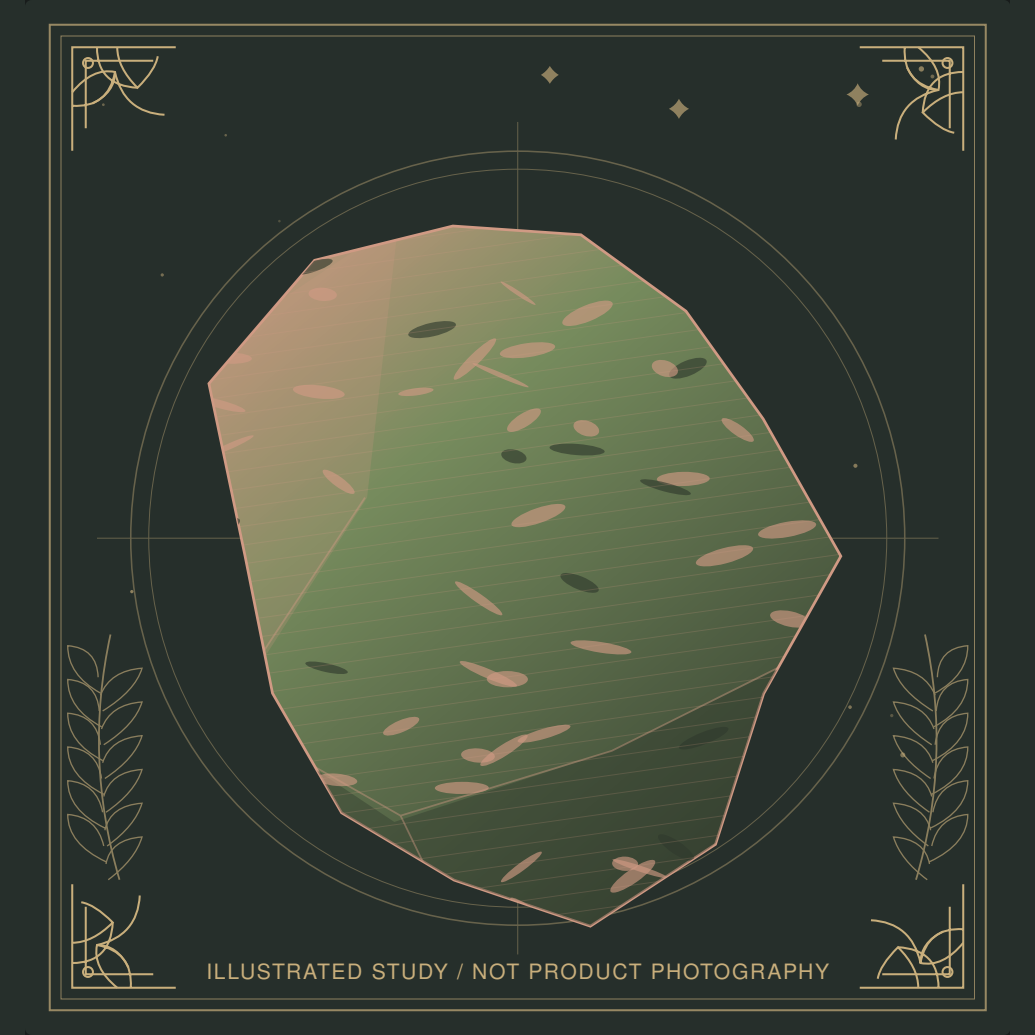
Green and salmon grains
Altered rock combining feldspar, epidote and commonly quartz.
Unakite is a mixed rock rather than one pink-green mineral.
Read the specimen guide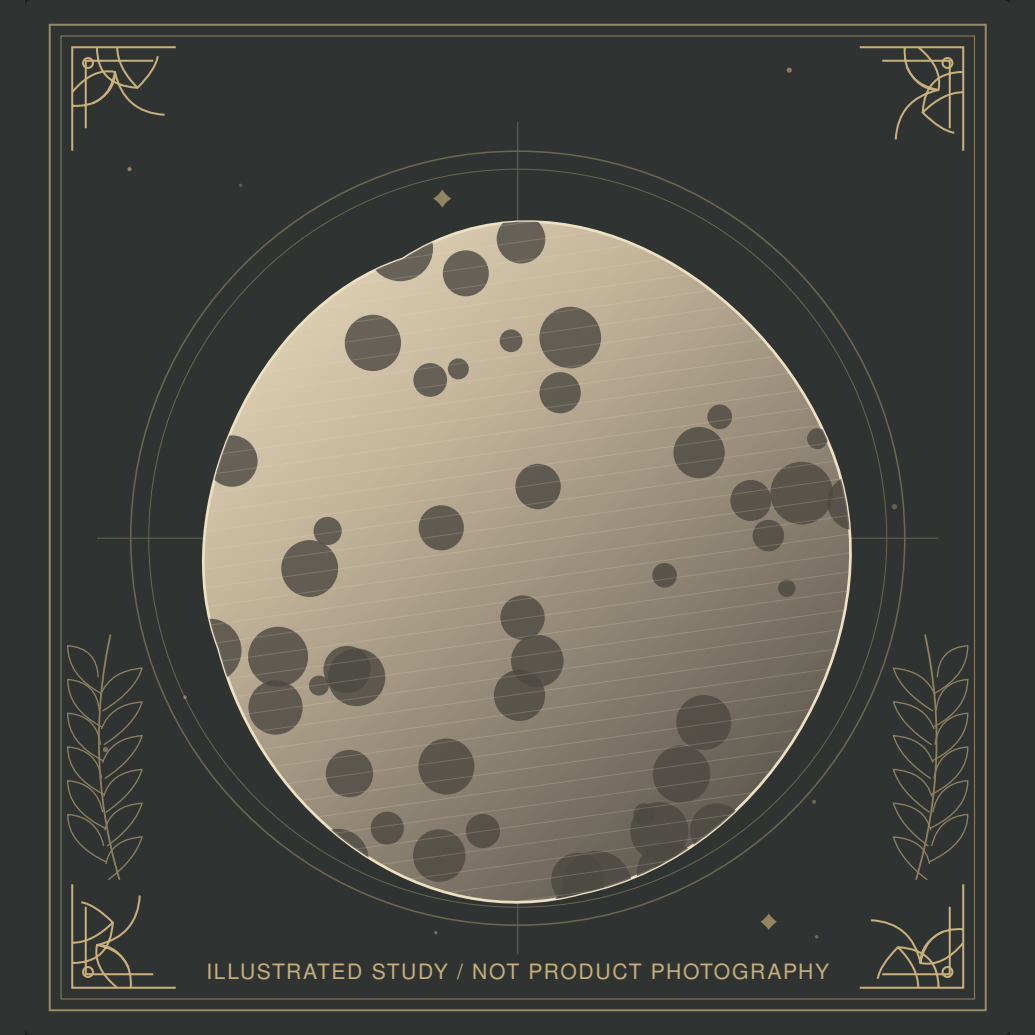
Dark spots pale ground
Spotted ornamental rock; analyzed trade samples contain a feldspar-quartz matrix with arfvedsonite-rich dark areas.
Dalmatian stone is a spotted decorative rock.
Read the specimen guide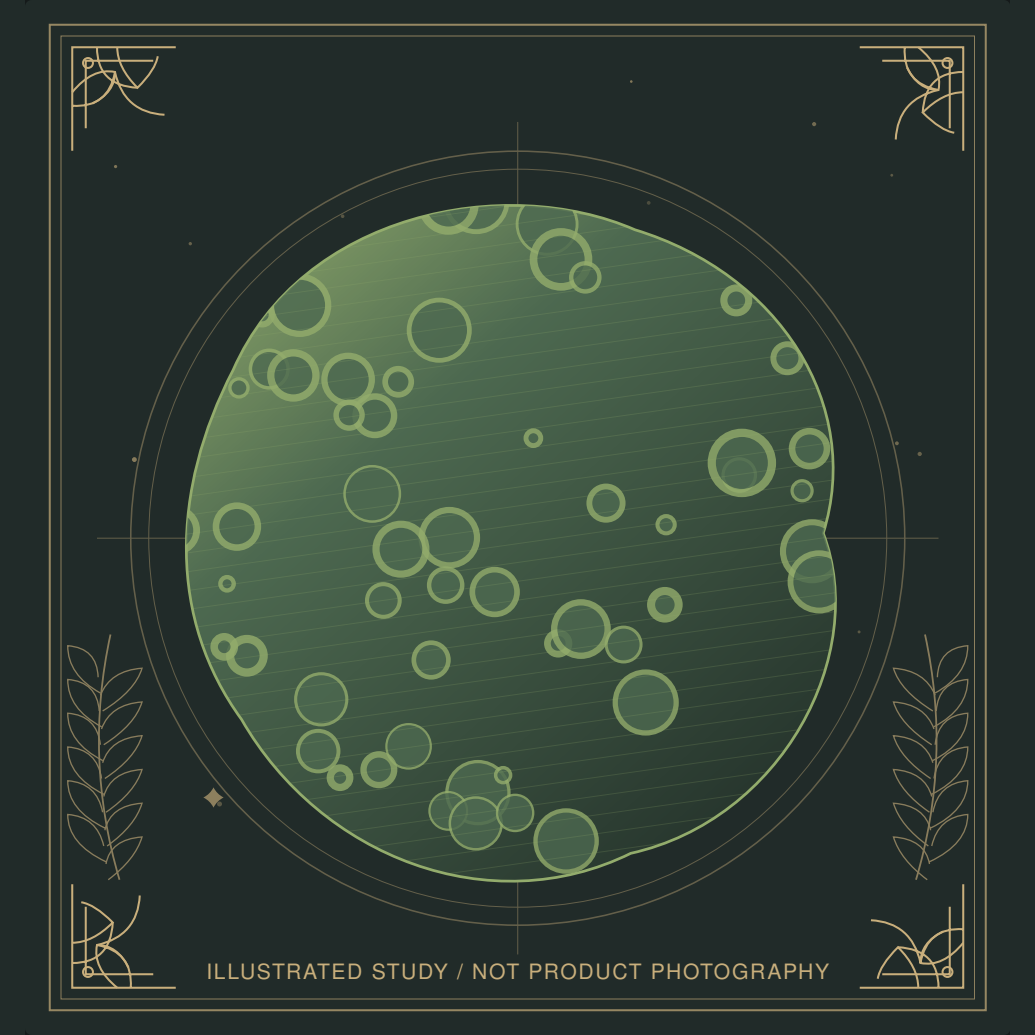
Dark green circles
Green-and-black orbicular rhyolitic rock in the documented trade material.
Kambaba stone is a green-black decorative trade material.
Read the specimen guide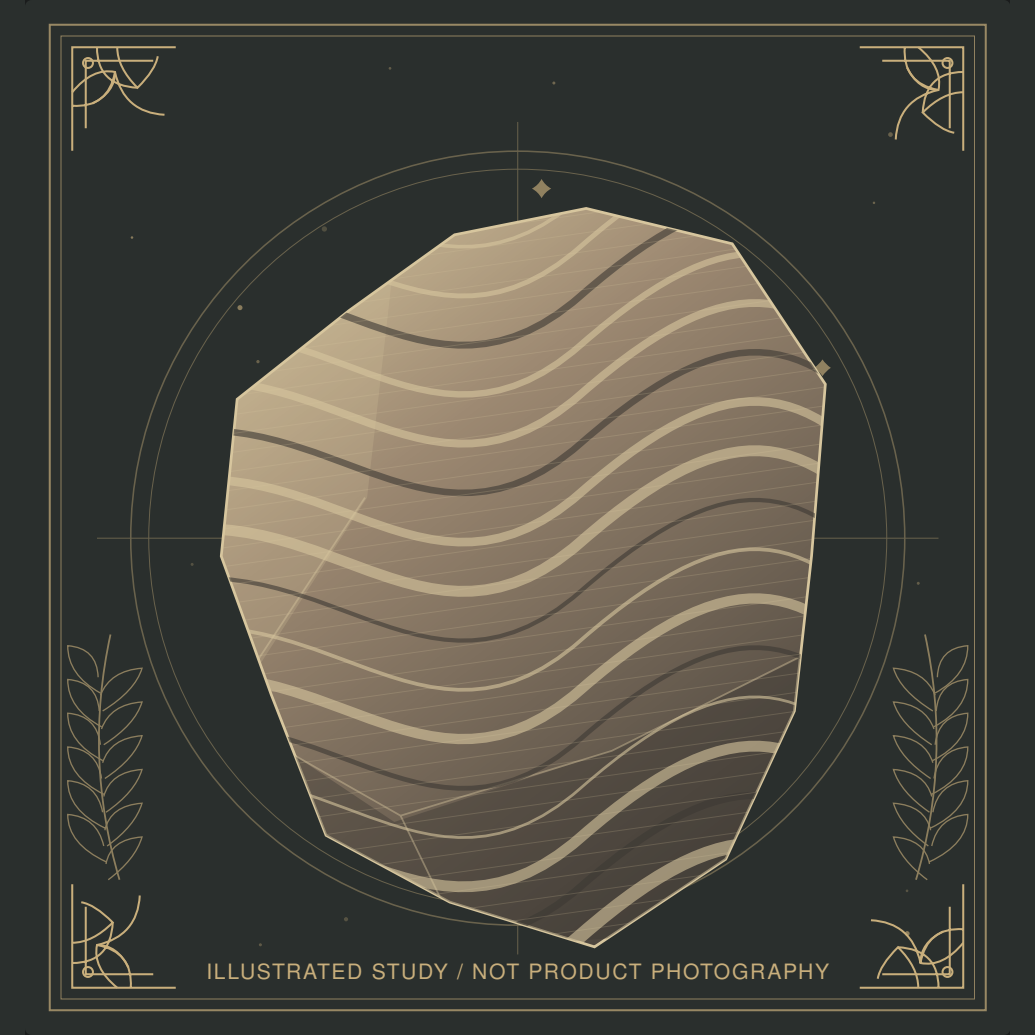
A volcanic color field
Silica-rich volcanic rock, with varied textures and mineral mixtures.
Rhyolite is a volcanic rock category, not one mineral species.
Read the specimen guide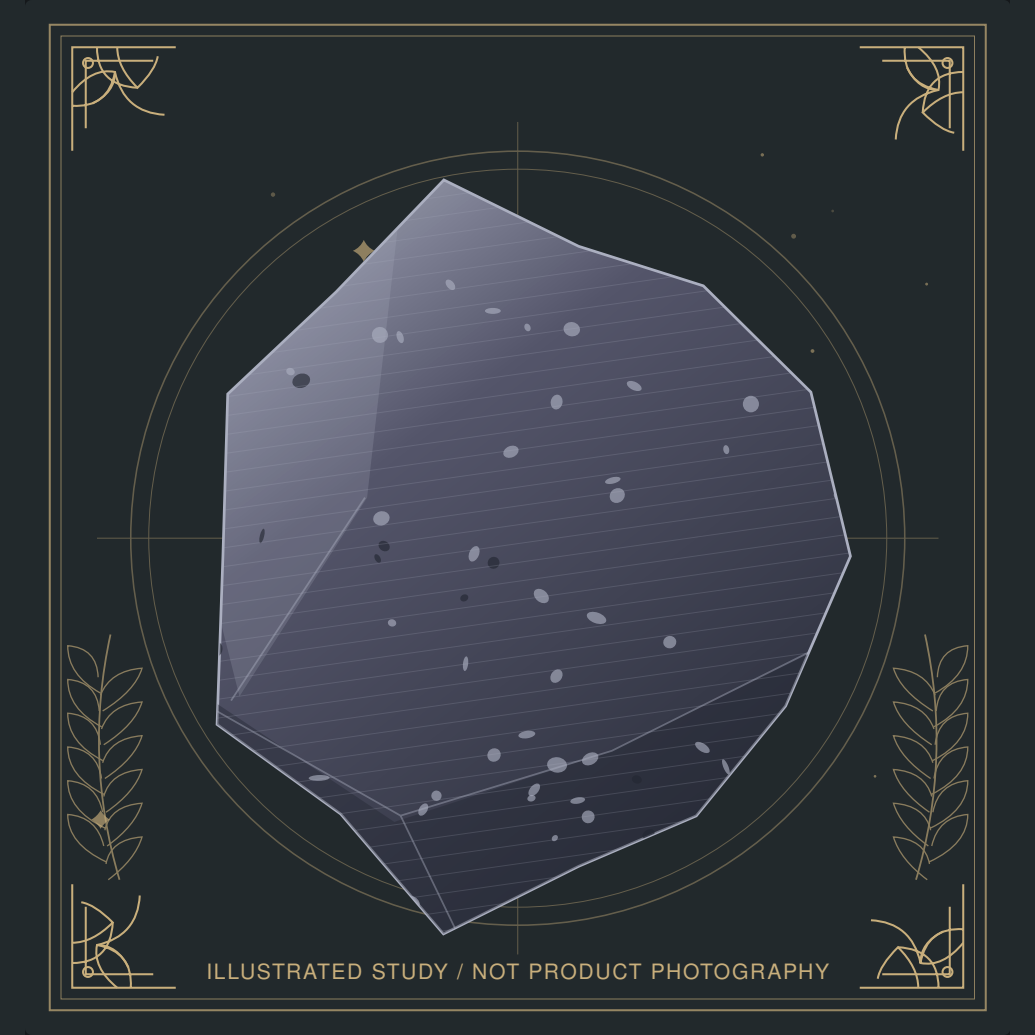
A coarse indigo mosaic
Gabbro is a coarse-grained mafic igneous rock; indigo gabbro is a trade label.
Gabbro is a coarse-grained mafic igneous rock.
Read the specimen guide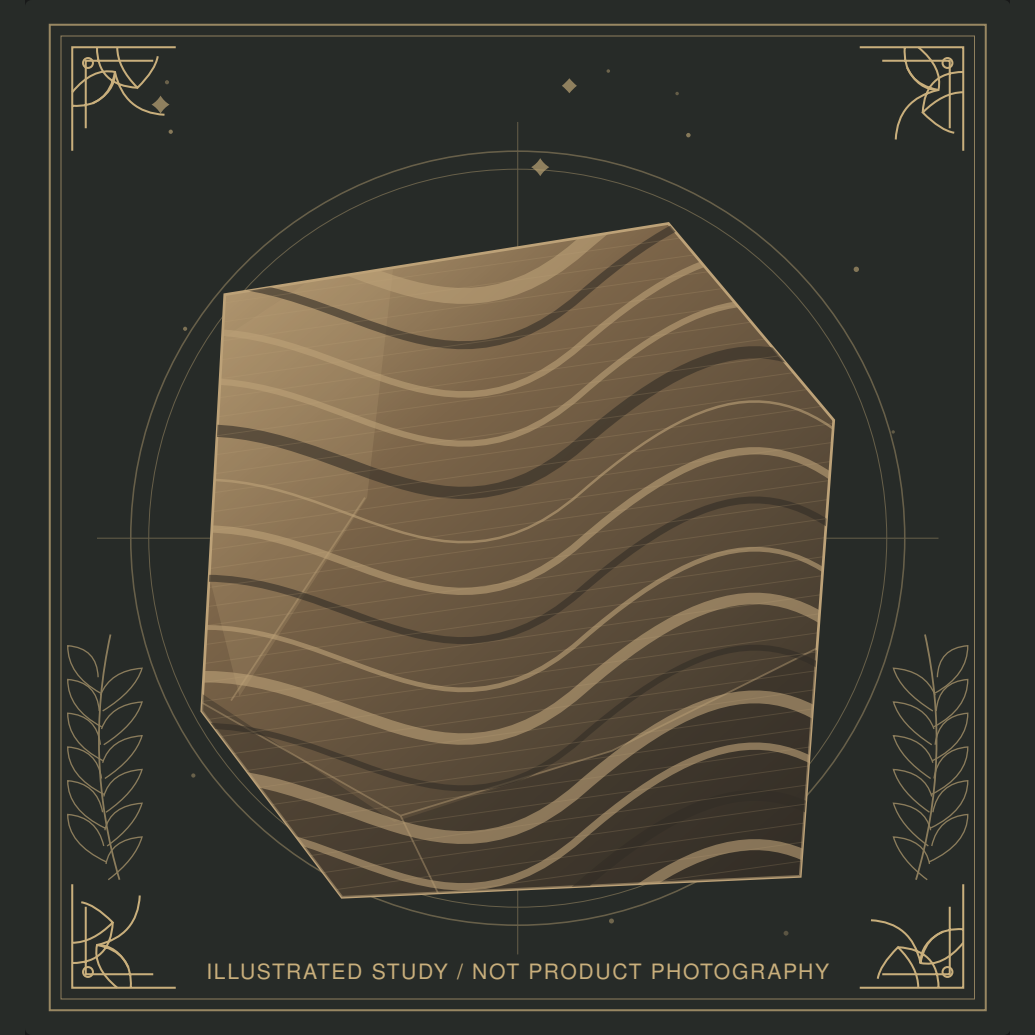
Bronze fiber light
Bronzy-shimmering orthopyroxene material associated with the enstatite–ferrosilite series.
Bronzite is a familiar ornamental name for iron-bearing orthopyroxene material in the enstatite–ferrosilite range.
Read the specimen guide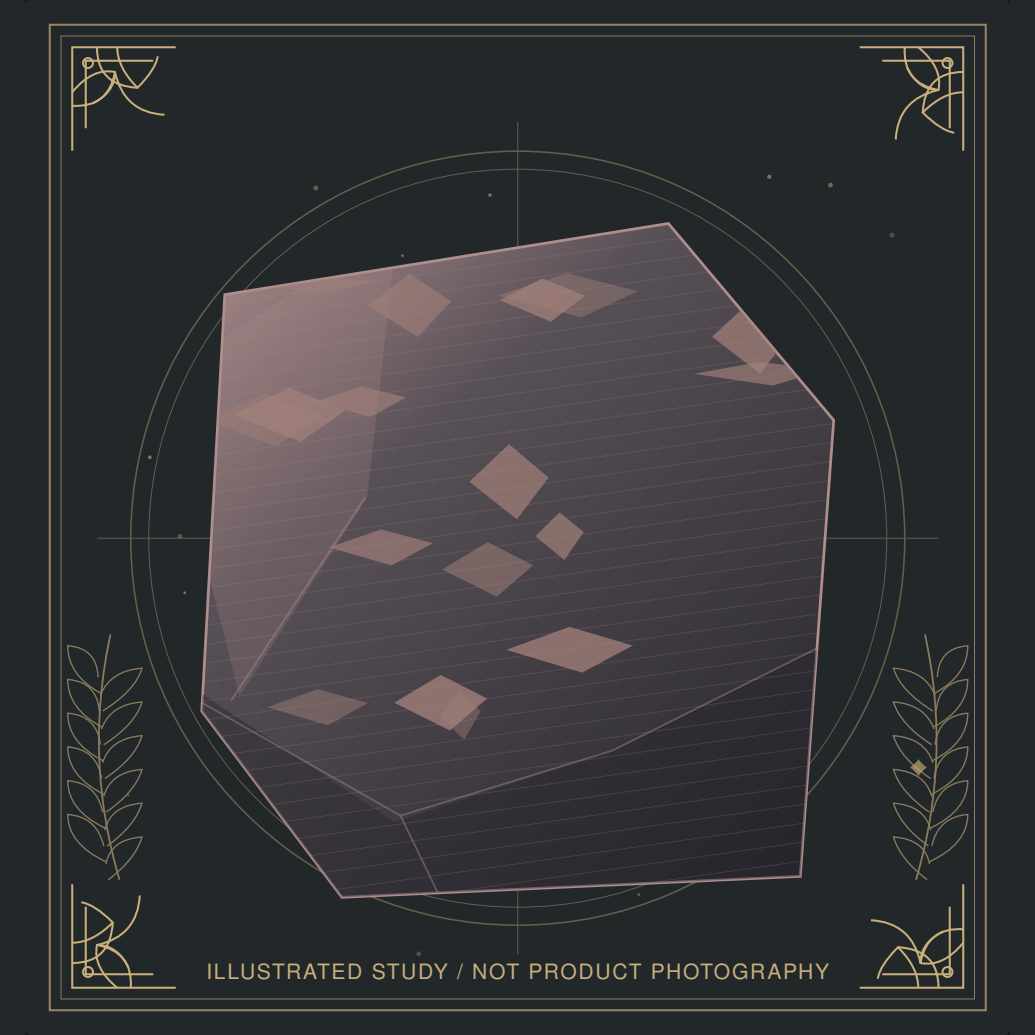
A dark metallic sheen
Legacy name within the enstatite–ferrosilite series, retained in gem trade.
Hypersthene persists in ornamental trade although modern pyroxene classification does not treat it as one independent species.
Read the specimen guide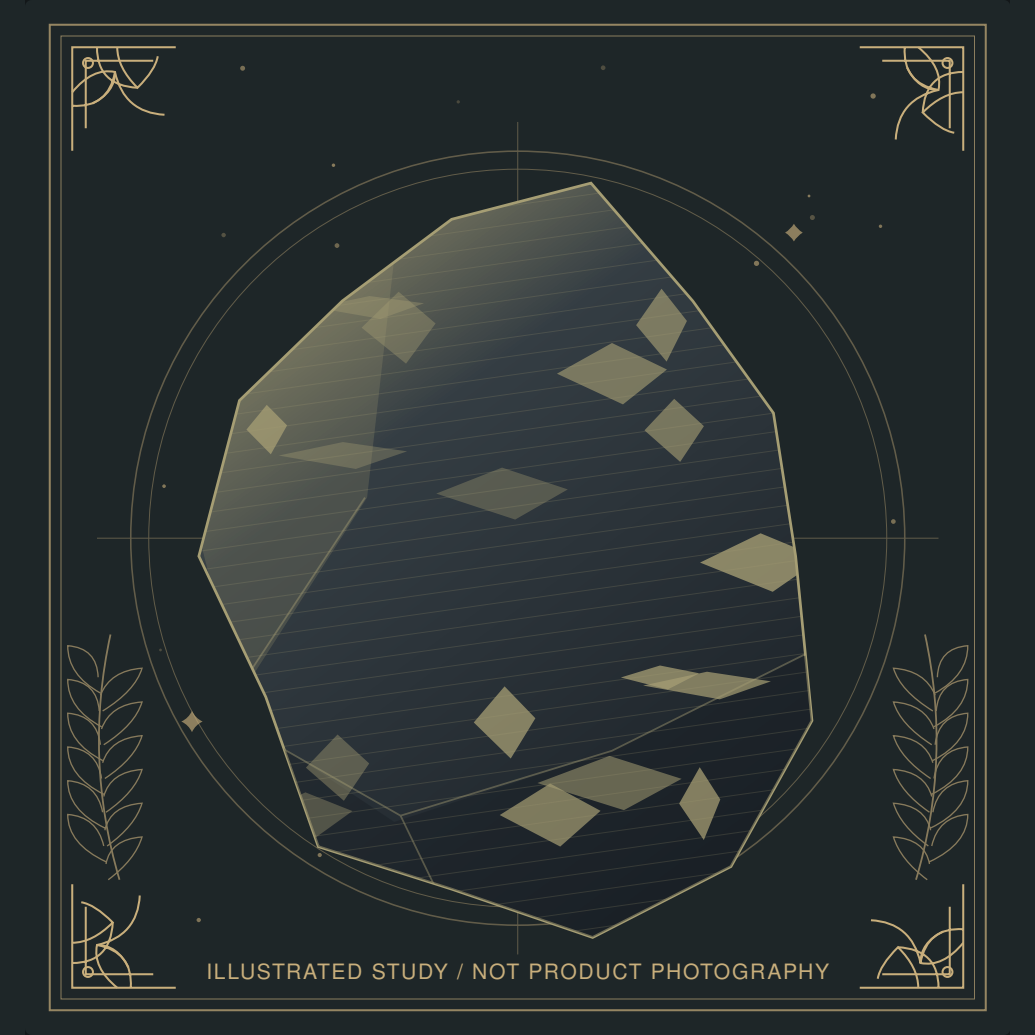
Small lights in dark rock
Iridescent amphibole-bearing metamorphic rock associated with Nuuk, Greenland.
Nuummite is a rock associated with anthophyllite and gedrite amphiboles, rather than one standalone mineral species.
Read the specimen guide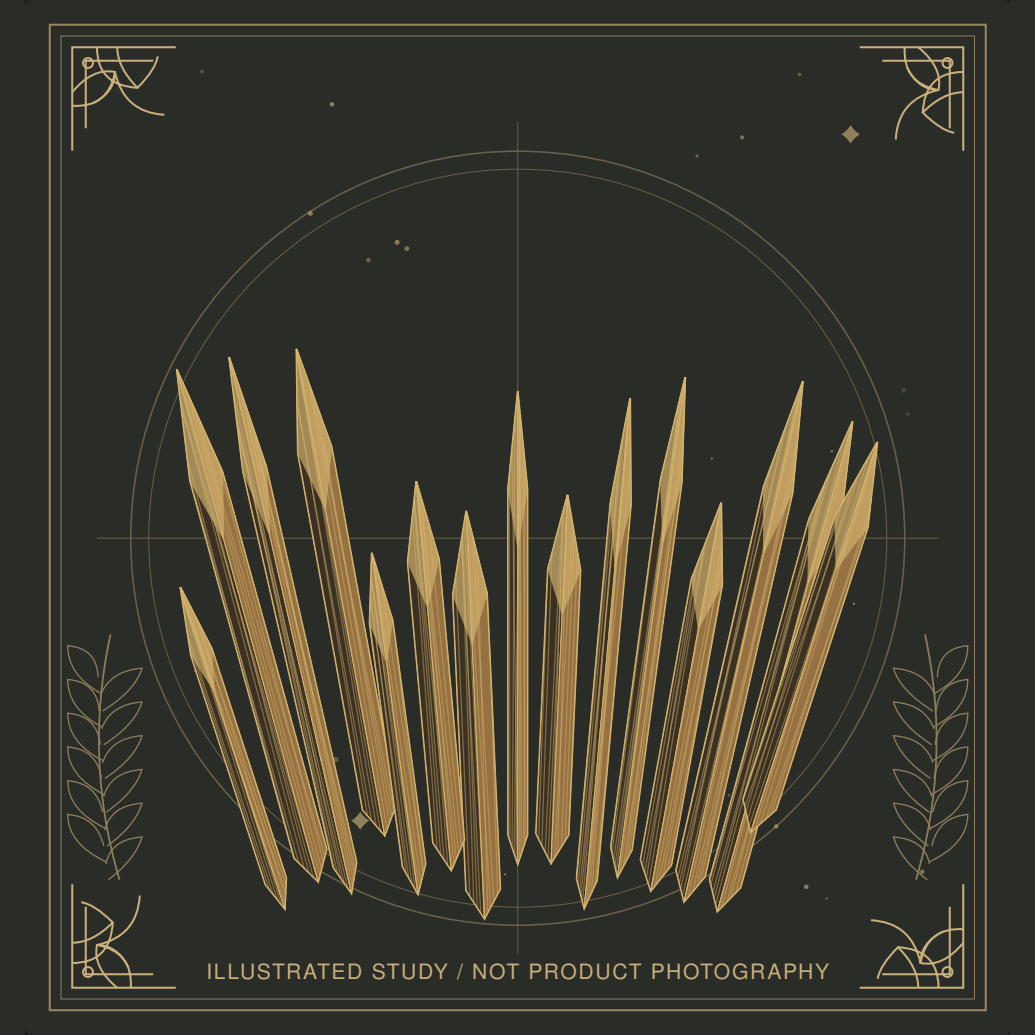
A radiating spray
Titanium-bearing silicate mineral with often radiating golden-brown blades.
Astrophyllite is a titanium-bearing silicate, often seen as golden-brown blades against a contrasting host.
Read the specimen guide
Blue black needles
Sodium-rich amphibole mineral commonly in alkaline igneous rocks.
Arfvedsonite is a sodium-rich amphibole mineral.
Read the specimen guide
Square light
A group of hydrous silicate minerals.
Apophyllite is a group name covering related hydrated silicate minerals.
Read the specimen guide
Sheaves and needles
A family of hydrated aluminosilicates; species differ.
Zeolites are a mineral family, not one pale crystal species.
Read the specimen guide
The clear wedge
Calcium borosilicate mineral.
Danburite is calcium borosilicate, CaB2(SiO4)2.
Read the specimen guide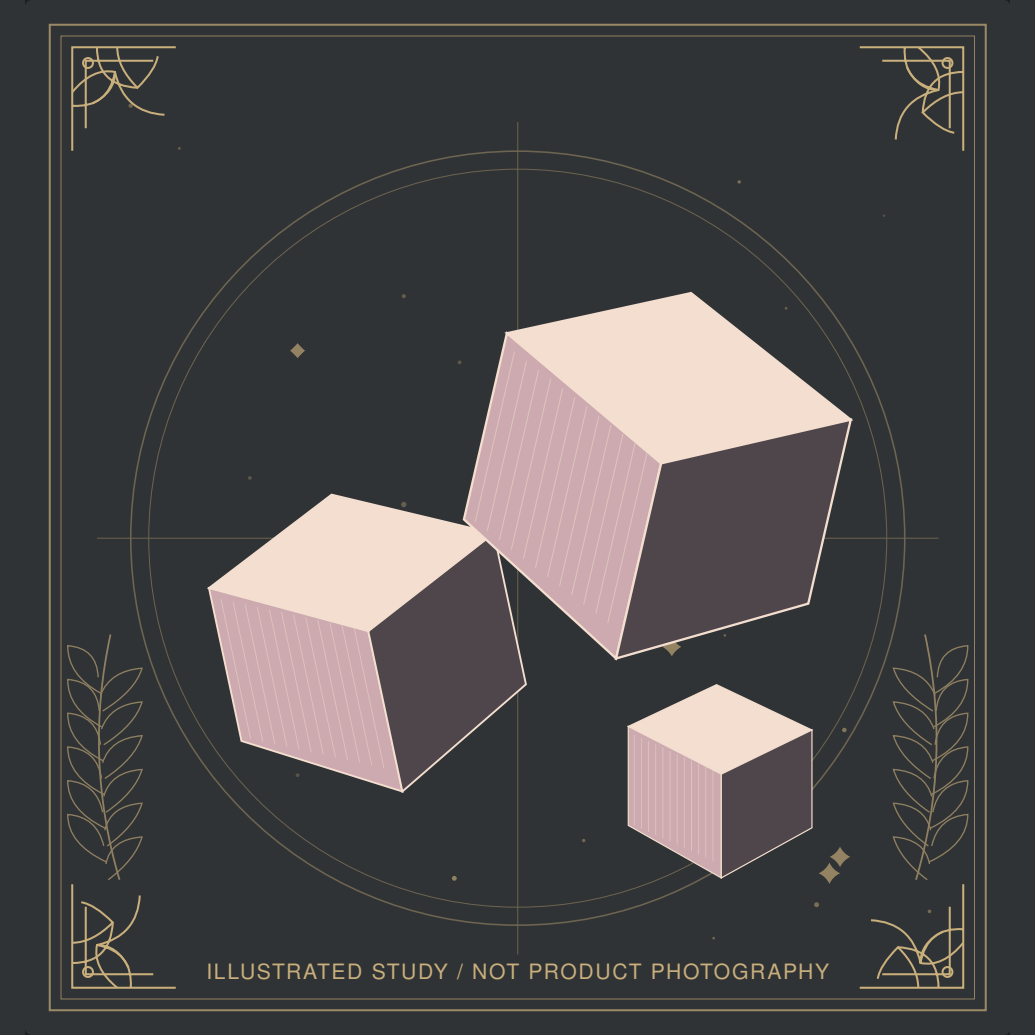
Salt in cubes
Sodium chloride mineral, occurring in evaporite deposits.
Halite is the mineral sodium chloride, NaCl.
Read the specimen guide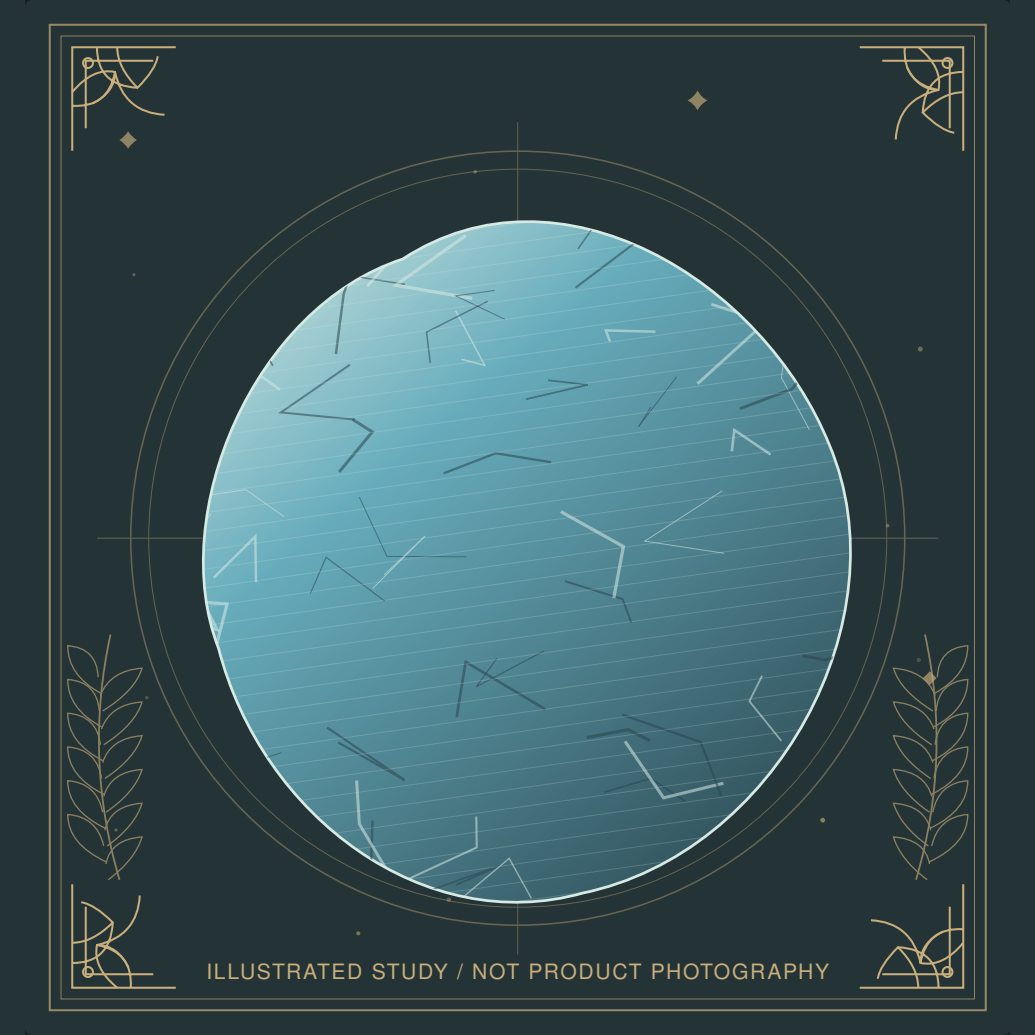
A pale blue network
Blue pectolite trade material from the Dominican Republic.
Larimar is trade language for blue pectolite material from the Dominican Republic, not a separate mineral species.
Read the specimen guide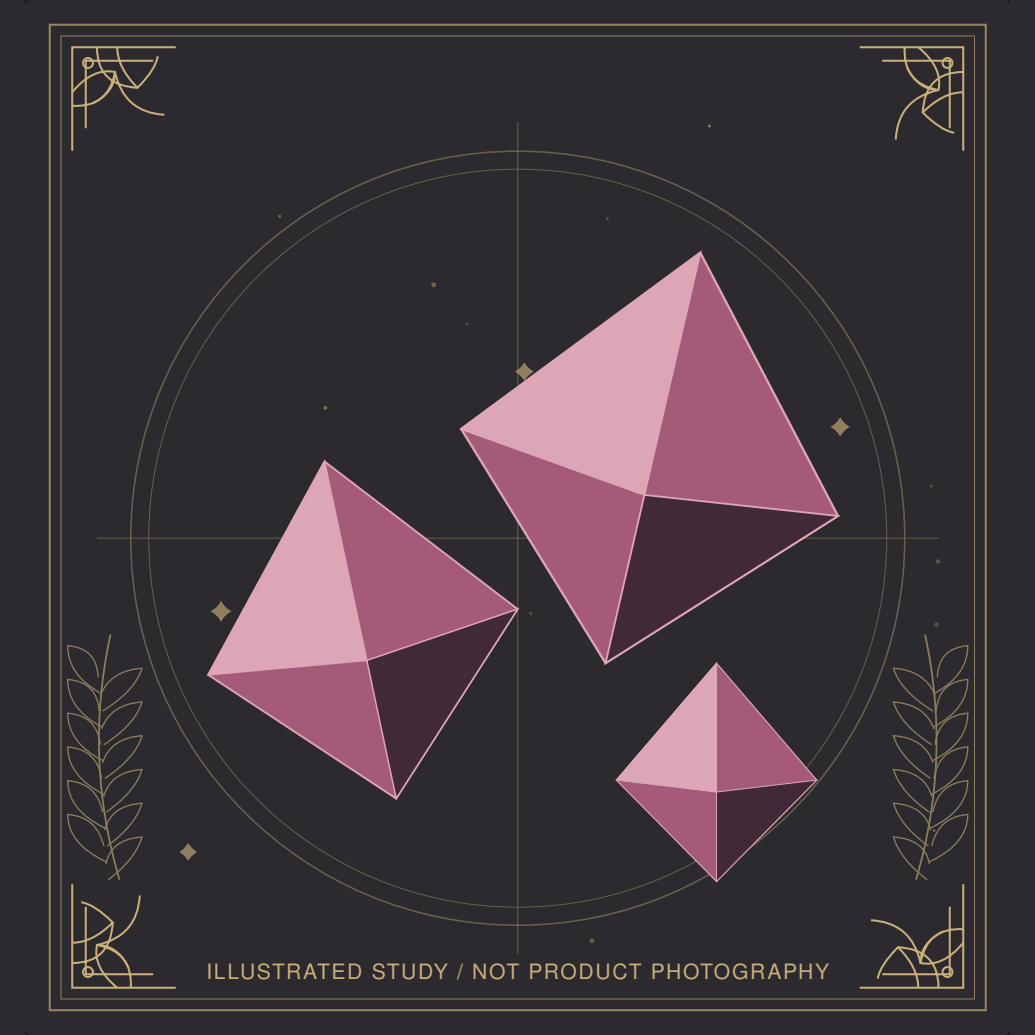
The eight faced gem
Magnesium aluminium oxide mineral.
Spinel is magnesium aluminium oxide, MgAl2O4.
Read the specimen guide
Crossed crystal forms
Iron-rich aluminium silicate, sometimes naturally twinned into cross-like forms.
Staurolite is an iron-rich aluminium silicate.
Read the specimen guide
Yellow black and honest names
Carbonate-rich Indonesian decorative rock, despite the common jasper label.
Bumblebee stone is a carbonate-rich mixed material, despite the common jasper trade name.
Read the specimen guide