
A coarse indigo mosaic
Gabbro / Indigo Gabbro
Gabbro is a coarse-grained mafic igneous rock; indigo gabbro is a trade label.
Coarse-grained mafic intrusive igneous rock
Gabbro is a coarse-grained mafic igneous rock.
Geology · Human history · Attributed traditions
Explore the specimen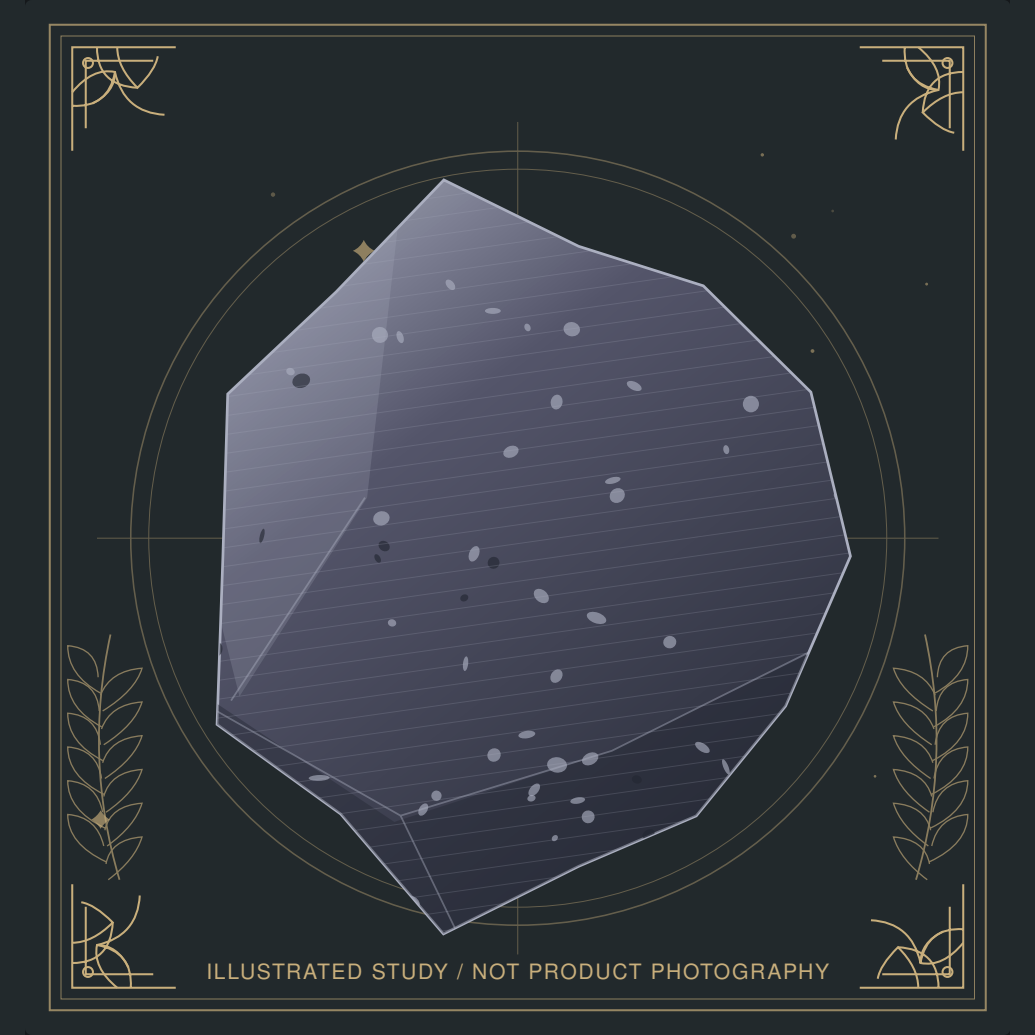
Material
Gabbro is a coarse-grained mafic igneous rock; indigo gabbro is a trade label. [2]
Family
Igneous rock [2]
Appearance
Coarse light and dark mineral grains in mafic igneous rock. [2]
Meaning & tradition
The Crystal Council: introspection in its Mystic Merlinite framework. [1]
In this guide
Visual identity & plain-language name
Gabbro is a coarse-grained mafic igneous rock. Light plagioclase and darker minerals can form a visible interlocking texture. Indigo gabbro and Mystic Merlinite are retail descriptions whose precise assemblages need independent identification. A dark polished sphere is not one large single crystal. [2]
Earth story: formation, structure & color
Slow cooling below the surface allows a mafic magma to develop coarse minerals. NPS distinguishes such plutonic rock from fine-grained volcanic counterparts. Minerals within a gabbro can have different compositions and properties. Texture and mineral proportions provide classification clues, while a retail purple-gray hue alone does not. [2]
Gabbro is a coarse-grained mafic igneous rock that typically develops below the surface as magma crystallizes comparatively slowly. National Park Service classification illustrates the relation between intrusive rocks and volcanic counterparts and emphasizes grain size and mineral assemblage. Visible light plagioclase and darker mafic minerals can form an interlocking mosaic. The entire object is a rock, even when a shop calls it a crystal sphere. [2]
Individual grains can differ in chemistry, cleavage, hardness and reflectivity. A coarse dark assemblage should not receive the ideal formula or crystal system of whichever grain appears most prominent. Alteration can add further components and change appearance after crystallization. Indigo gabbro is a commercial description that needs its own rock determination; purple-gray color alone cannot confirm a gabbro assemblage or supply a universal list of minerals. A polished product may reveal texture clearly while losing its original field relationships. [2]
Mafic describes a compositional character rather than a promise that every visible grain is black. Light plagioclase can remain conspicuous within the assemblage. Coarse texture reflects crystal development, while any later alteration belongs to a separate stage. The rock classification is therefore a relationship among minerals and texture, not a single hue or a universal proportion of purple material. [2]
Varieties & look-alikes
Compare confirmed gabbro, finer basalt and decorative material sold as indigo gabbro. Merlinite can also be applied to other ornamental products, so an added mystical name does not settle geology. Individual reflective patches need their own mineral identification rather than assigning a fixed ingredient list to all trade pieces. [2]
- Indigo gabbro
- Indigo refers to the dark purple-gray appearance in trade and does not define a formal species. Confirmed gabbro identity should follow the rock's texture, assemblage and supporting examination. A coarse mineral mosaic can contain several phases and altered regions. Exact source and treatments need independent records rather than inference from the color term. [2]
- Mystic Merlinite
- This commercial alias adds a contemporary symbolic framework and is not a geological classification. A seller should explain whether its particular product is confirmed gabbro or another material using related trade vocabulary. Preserve the alias alongside the examined rock identity rather than replacing the latter. A mystical name cannot establish mineral proportions or origin. [2]
- Black-and-purple material
- This appearance describes the visible contrast of darker and purplish regions, which may involve several constituents. The color combination is not a complete gabbro determination. Record texture, known grains and any analytical basis; leave unknown components unresolved. Manufactured polish, filling or color intervention are separate aspects of the finished object. [2]
Human story: objects, names & cultural context
Gabbro belongs to geological classification developed to describe rocks and their formation. Modern indigo and mystical names serve product recognition and symbolism. Keeping these histories separate helps the collector connect a specific object with a reliable geological account. [2]
Geological rock names grew from the effort to distinguish materials, assemblages and formation environments. Modern lapidary labels such as Mystic Merlinite add symbolic and marketing histories to that scientific account. The histories can coexist when their functions are stated plainly: one name attempts a rock classification, while the other makes a product recognizable or expresses a contemporary meaning. A claimed volcanic region, deep geological age or historical magical association requires evidence for the actual specimen rather than inference from a dramatic commercial name. [2]
Meaning & practice: attributed traditions
The Crystal Council discusses indigo gabbro under its Mystic Merlinite label with introspective and spiritual-exploration themes. This is contemporary belief language. [1]
An editorial introspection practice can observe a dark polished surface and record one question you want to answer with evidence. The mixture offers a reminder that several components can contribute to one appearance without being interchangeable.
Material truth: trade names & treatments
Request an actual rock description when a product is sold only by a mystical alias. Do not copy a mineral inventory from another seller’s similarly colored sphere. Polishing, filling or dye should be disclosed where known. A coarse-grained rock has variable grain properties, not one crystal habit or one universally applicable formula. [2]
Merlinite is used inconsistently in commerce and can name other patterned ornamental materials. It should not be treated as a synonym that automatically identifies gabbro, dendritic silica or any single mineral. A trustworthy record retains the scientific material description and then the seller's alias. Treatments, fillings and repairs need separate disclosure where known. A rock can be naturally multicomponent yet shaped, coated or assembled by people, so natural rock does not imply untouched object. [2]
Look for coarse interlocking grains and describe which are light, dark or reflective without guessing every species. Grain boundaries may respond differently to polishing and become more apparent under angled light. Keep the overall rock determination and the individual mineral determinations separate. An actual petrographic or gemological report is more informative than a copied ingredient list from another similarly colored sphere. A personal introspection object can be chosen for its pattern while its geological identity remains specific about evidence and uncertainty.
Sources & related specimens
NPS provides the intrusive igneous context. The Crystal Council supplies the attributed retail-symbolic framework. Compare rhyolite and unakite to see how different rock categories can all become polished shop specimens.
- Mystic Merlinite: contemporary meanings
The Crystal Council · Contemporary symbolic associations attributed to The Crystal Council · Accessed October 9, 2026
- NPS: Igneous Rocks
National Park Service · Material identity and natural history · Accessed October 9, 2026