
The vesicular surface
Lava Stone
Broad retail name, usually for vesicular volcanic rock.
Broad trade category for volcanic rock
Lava stone is broad retail language, often for dark vesicular volcanic rock.
Geology · Human history · Attributed traditions
Explore the specimen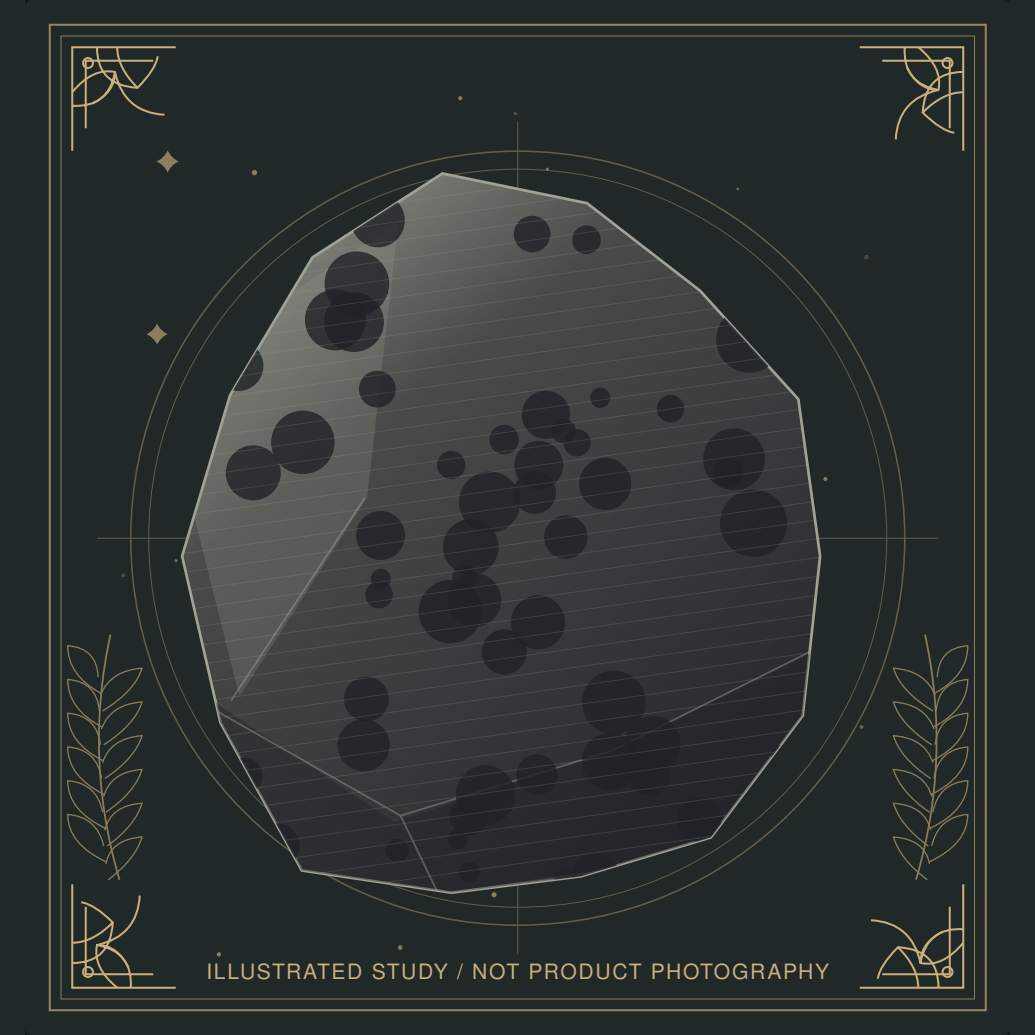
Meaning & tradition
The Crystal Council: grounding and personal strength. [1]
In this guide
Visual identity & plain-language name
Lava stone is broad retail language, often for dark vesicular volcanic rock. It does not identify one mineral or even one exact rock composition. Beads and spheres are manufactured forms; pores can preserve gas-bubble cavities from volcanic material, but coatings or artificial products can imitate the appearance. [4][3]
Earth story: formation, structure & color
NPS explains vesicles as cavities left by gas released from magma. Scoria is usually dark, highly vesicular material from mafic to intermediate eruptions, while pumice is typically lighter-colored, glass-rich and exceptionally vesicular. These categories reflect chemistry and texture, not interchangeable spiritual names. [4][3]
Lava stone is a broad commercial category often applied to porous volcanic rock. Basalt is a mafic rock classification, while scoria describes a vesicular volcanic fragment and its texture. National Park Service explanations distinguish rock chemistry, cooling history and eruptive material. Vesicles are former gas spaces in the cooling material; the holes are not a lattice of one mineral or a guarantee that every dark bead has exactly the same composition. [2][4][3]
Fine-grained basalt can contain several minerals and glassy or altered components, whereas scoria emphasizes a fragmental, bubble-rich presentation. Pumice is another vesicular volcanic product, with different typical composition and structure, and should not become a synonym for every porous dark rock. Larger cavities, fine pores and variation in grain cohesion influence how a specimen behaves when drilled or carved. A finished bead's texture also depends on cutting, surface processing and any coating. Its black appearance is consequently only one part of the identification. [2][4][3]
Varieties & look-alikes
Compare vesicular basalt, scoria, pumice and dense volcanic rock. Similar porosity does not establish identical composition or density. A black bead marketed as lava can be coated, filled or manufactured; color alone cannot demonstrate volcanic origin. Obsidian is glassy volcanic material with a different familiar texture. [4][3]
- Basalt beads
- Basalt is a volcanic rock category, while bead describes manufacture. A fine-grained mafic material can be porous or comparatively dense and need not expose obvious individual crystals. The rock may contain several phases. Confirmed basalt identity and any coatings should be recorded separately from the dark hue, round outline and marketing description of the jewelry product. [4][3]
- Scoria
- Scoria is vesicular volcanic fragmental material, with gas-space texture central to its description. It is not a formal mineral species or the name of one elemental composition. Documented geology can identify the eruptive setting, while a porous photograph alone cannot select a source volcano. Fragile cavities and thin walls can affect handling and bead durability. [4][3]
- Vesicular lava rock
- Vesicular is an observation about cavities, not a complete rock classification. It can be combined with a supported basaltic or other volcanic identity. Hole size and distribution influence appearance, while surface treatments may conceal the original texture. Preserve uncertainty when the only available information is a trade designation and an image of a black porous object. [4][3]
Human story: objects, names & cultural context
Volcanic rock provides a direct record of eruption and cooling. NPS separates different eruption products and their formation conditions. A cut bead has a recent manufacturing history on top of the geological story; its roundness does not describe the eruption. Specific cultural volcano traditions should be named individually rather than assigned to all lava products. [4][3]
A volcanic rock's age and eruptive source belong to its geological provenance, while a bead's drilling and assembly belong to the history of the object. An identified lava flow or deposit can provide an eruption context; a shop's lava label cannot select an exact volcano or date. The NPS account explains formation processes, not the origin of every bead in commerce. That distinction leaves room for a maker's own documented history without inventing an ancient ceremonial use for an unprovenanced product. [2][4][3]
Meaning & practice: attributed traditions
The Crystal Council gives lava rock grounding and strength associations. These are contemporary spiritual beliefs. [1]
An editorial grounding intention can use the rough texture as a reminder to name the immediate surroundings and one practical next step. The action is attentive observation, not a claim that volcanic origin produces a bodily effect.
Material truth: trade names & treatments
Record the actual rock category where established, along with dye, coating or filling. Open pores can hold residue, and their appearance is not proof of an untreated product. A retail lava label does not guarantee a particular locality or suitability for adding oils. Follow the documented condition of the object rather than assuming every porous bead behaves alike. [4][3]
Porous volcanic material can be coated, colored, filled or replaced by another manufactured porous product. A surface that resembles scoria is a useful observation but not a complete identity test. A label should distinguish confirmed volcanic rock from a seller's lava-bead designation and retain any known treatment. Its pores do not prove an ability to purify water, detoxify or provide therapeutic effects. If an object is used decoratively with fragrance, that is a chosen use of a porous product, separate from geology and requiring the product's own practical suitability. [2][4][3]
Describe the size and distribution of visible holes, whether the rock is fine-grained or glassy-looking, and whether a surface film obscures the texture. Compare a bead's drilled hole with the outer surface when visible: both are manufactured exposures of the material. Do not assume a dense polished dark stone and a lightweight porous bead came from the same deposit. A useful record preserves the broad rock identification, source, maker and any processing information without demanding a false single-mineral formula.
Sources & related specimens
NPS establishes volcanic textures and product distinctions. The Crystal Council documents modern symbolism. Compare rhyolite for a silica-rich volcanic category and obsidian for volcanic glass.
- Lava Rock: contemporary meanings
The Crystal Council · Contemporary symbolic associations attributed to The Crystal Council · Accessed October 9, 2026
- NPS: Igneous Rocks
National Park Service · Material identity and natural history · Accessed October 9, 2026
- Pyroclasts and Pyroclastic Rocks
National Park Service · Mineralogy, geology, naming and documented material history · Accessed October 9, 2026
- NPS: Magma Melts and Eruption Types
National Park Service · Identity and natural history · Accessed October 9, 2026