
A volcanic color field
Rhyolite and Patterned Volcanic Stones
Silica-rich volcanic rock, with varied textures and mineral mixtures.
Silica-rich volcanic igneous rock
Rhyolite is a volcanic rock category, not one mineral species.
Geology · Human history · Attributed traditions
Explore the specimen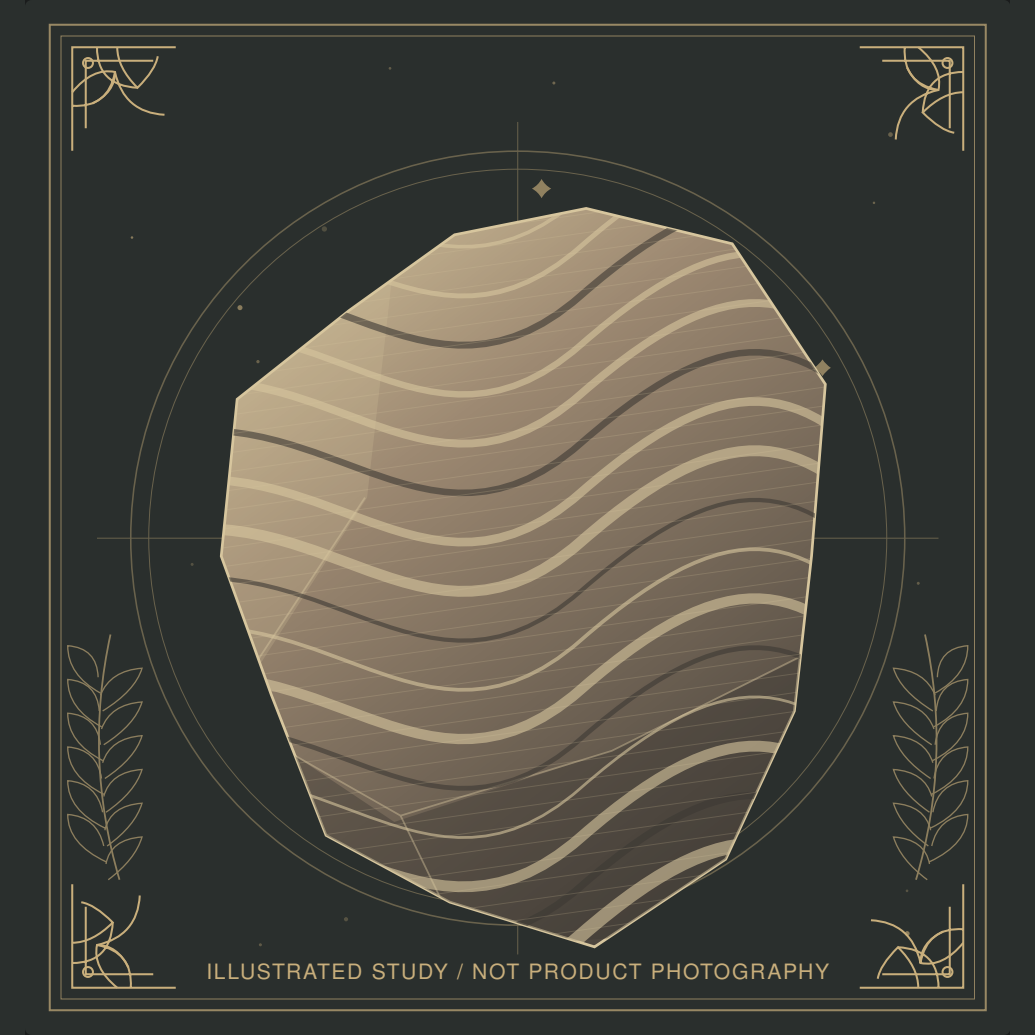
Meaning & tradition
The Crystal Council: endurance and transformation. [1]
In this guide
Visual identity & plain-language name
Earth story: formation, structure & color
NPS distinguishes volcanic classification by chemistry from the visible mineral classification commonly used for coarse plutonic rocks. Rhyolitic material is silica-rich. Larger crystals can grow before eruption, while the surrounding material cools later. Some volcanic products are glassy or fragmented, so texture matters alongside chemical category. [2][3]
Rhyolite is a silica-rich volcanic rock category. National Park Service guidance distinguishes chemistry-based volcanic classification from naming coarse plutonic rocks through visible mineral proportions. A fine groundmass may make bulk chemical analysis important, while larger crystals, glass, bands or spherulitic textures add information about cooling and eruption history. A patterned lapidary stone can therefore have an interesting visible architecture without possessing one mineral formula or one crystal system. [2][3]
Larger crystals can begin growing before eruption, with a later fine-grained or glassy surrounding material developing as cooling continues. Volcanic fragments, flow-related bands and later alteration create further variation. The same broad chemical category does not require one exact appearance. Conversely, circles or a rainforest-like design cannot establish silica chemistry or a rhyolitic classification by themselves. The host rock, mineral components and geological source should be recorded separately when information is available. [2][3]
Fine groundmass and larger embedded crystals record differing stages or conditions of cooling, but their relative proportions do not alone supply the full bulk chemistry. The NPS distinction between texture and composition prevents a decorative pattern from becoming a complete rock classification. Flow-related structure, glassy material and later alteration add further observations. Keeping those observations separate from an analytical name helps explain why similar-looking polished volcanic stones can receive different supported classifications. [2][3]
Varieties & look-alikes
Compare fine-grained, porphyritic, banded and spherulitic material where documented. Rainforest and leopard-skin jasper labels can refer to volcanic decorative stones, but each trade product requires its own evidence. Obsidian is natural glass, not simply another crystalline rhyolite texture. Jasper has a separate material definition. [2][3]
- Rainforest jasper comparison
- Rainforest is a commercial pattern description, while the jasper suffix does not guarantee a silica-jasper identity. Some trade material is described as rhyolitic volcanic rock, which needs specimen-specific support. Preserve known rock classification and source separately from green-brown imagery. The decorative resemblance to vegetation is not evidence of fossil plants. [2][3]
- Leopard-skin jasper comparison
- Rounded or spotted patterns can prompt this trade label across decorative material. They do not identify an animal fossil or one standard mineral species. A rhyolite interpretation requires rock evidence beyond the appearance. Keep the alias, actual material determination and any dye or filling disclosure separate so the product name does not silently answer all three. [2][3]
- Flower rhyolite
- Flower-like forms are pattern vocabulary within a commercially identified volcanic rock. The appearance can reflect mineral or aggregate texture rather than biological flowers. Identify constituents and volcanic classification when supported, and leave their cause unresolved when not. Cutting orientation and polish influence the exposed design without establishing an exact eruption or mine. [2][3]
Human story: objects, names & cultural context
Mapping and volcanic research place a rock in an eruption and regional history. A locality can support that account; a trade pattern cannot. Cutting a decorative slab reveals textures but also removes field context, which makes provenance records useful to collectors. [2][3]
A field locality can connect a rhyolite specimen with mapped volcanic deposits and research on their age and eruption processes. A polished object usually lacks some of that context, because cutting removes its original relationship to surrounding rock. Keeping source records preserves the opportunity to connect lapidary beauty with a supported geological account. Modern rainforest, leopard-skin and flower names add commercial imagery; they are not evidence of a fossil forest, an animal structure or an ancient ritual category. [2][3]
Meaning & practice: attributed traditions
The Crystal Council associates rhyolite with endurance and transformation. This is contemporary spiritual interpretation. [1]
An editorial endurance intention can select one task that benefits from repeated effort and define the next interval of work. Patterned volcanic texture can remind you of stages and interruptions without promising an effect from magma-derived energy.
Material truth: trade names & treatments
Do not assign one crystal formula or one mineral hardness to a mixed volcanic rock. Describe the actual material and trade alias separately. Color and pattern cannot certify a volcano or an age. Dye, resin filling and repairs are additional product questions rather than rock classifications. [2][3]
Rhyolite and jasper are different geological descriptions even when patterned volcanic rocks acquire jasper aliases. A product label should explain the actual examined rock and retain the trade name as such. Glassy volcanic material can also overlap with silica-rich rock in appearance, so obsidian needs its own texture and material account. Color treatment, resin filling, repairs and assembled construction are further questions. None is answered solely by a volcanic classification or by a natural-looking decorative pattern. [2][3]
For a specimen journal, describe fine groundmass, conspicuous larger grains, visible bands and rounded features independently. Note which identities are known and which patterns are merely observed. A brown-green polished palmstone can retain a seller's rainforest designation without receiving an invented mineral inventory. Multiple views show how the pattern changes through the rock, while a locality record supplies a different kind of evidence. The material can be educational as a rock texture even when its exact volcano and formation age remain unknown.
Sources & related specimens
NPS establishes volcanic classification and texture. The Crystal Council provides modern meaning. Compare gabbro for an intrusive igneous category and Kambaba for why a patterned trade name needs its own identification.
- Rhyolite: contemporary meanings
The Crystal Council · Contemporary symbolic associations attributed to The Crystal Council · Accessed October 9, 2026
- NPS: Igneous Rocks
National Park Service · Material identity and natural history · Accessed October 9, 2026
- NPS: Magma Melts and Eruption Types
National Park Service · Identity and natural history · Accessed October 9, 2026