
A field of orbs
Ocean Jasper
A lapidary trade name associated with orbicular silica-rich material from Madagascar.
Orbicular chalcedony-rich decorative rock described by a trade name
Ocean jasper is a trade category associated with orbicular silica-rich material from Madagascar. Rounded spots, concentric outlines, cavities and color fields create its characteristic visual rhythm. The circles are mineral patterns, not proof of a specific numbered vein or coastal collection story.
Geology · Human history · Attributed traditions
Explore the specimen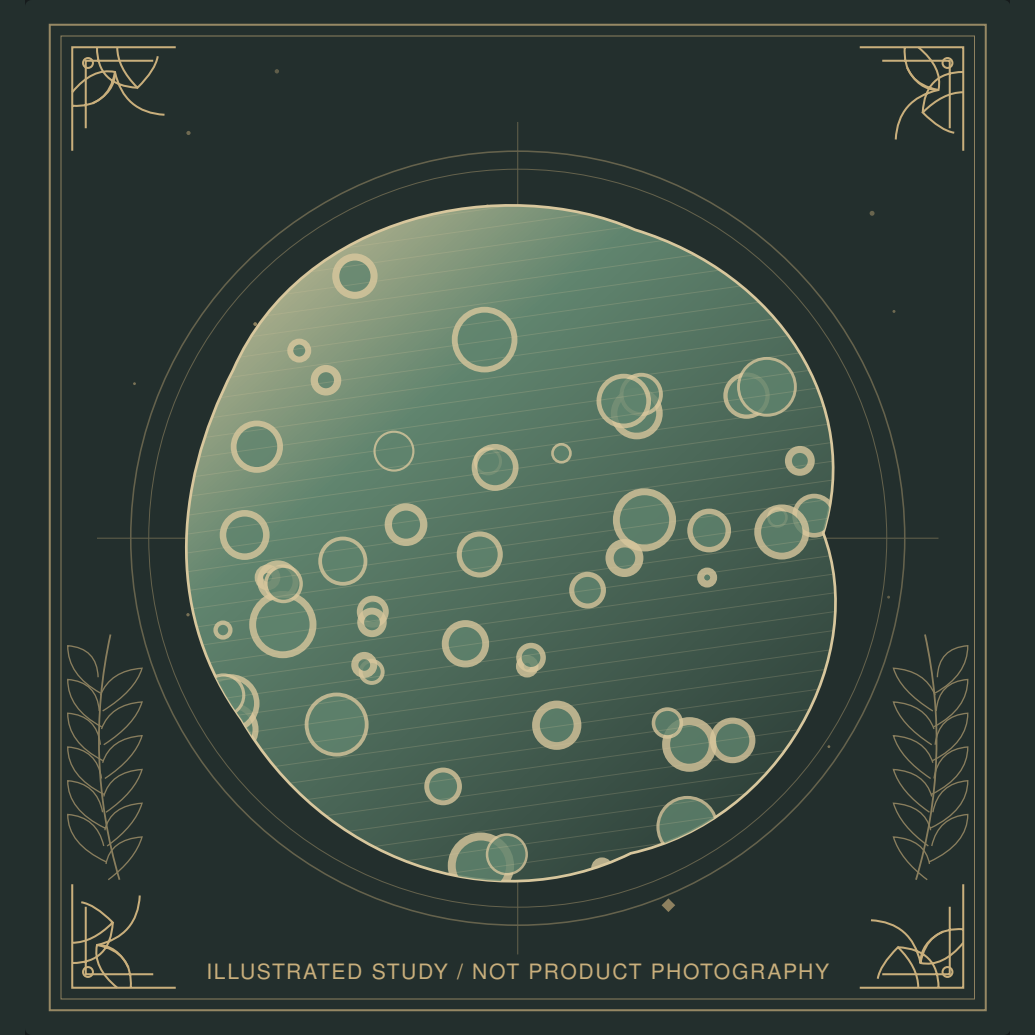
Material
A lapidary trade name associated with orbicular silica-rich material from Madagascar. [1]
Family
Chalcedony and related silica [1]
Appearance
Rounded pattern fields [1]
Traditions
The Crystal Council emphasizes joy, expression and inner peace in its present-day Ocean Jasper profile. [4]
In this guide
Visual identity
Ocean jasper is a trade category associated with orbicular silica-rich material from Madagascar. Rounded spots, concentric outlines, cavities and color fields create its characteristic visual rhythm. The circles are mineral patterns, not proof of a specific numbered vein or coastal collection story. [1]
Orbicular describes the rounded eyes or spheres visible in the material. A cut through a three-dimensional feature can produce rings, solid-looking circles or different-sized sections, so a single slab does not show every orb at its maximum diameter. The field between orbs may be fine grained, translucent, opaque or locally lined by small quartz crystals. The familiar ocean name organizes this striking decorative material in commerce; the more concrete visual account records orbs, matrix and open crystalline areas. [1][2]
Earth story: geology and formation
GIA’s Pond Life microstructural feature describes iron-containing inclusions surrounded by concentric chalcedony growth. The example reveals fine fibrous texture and complicated optical orientation. That observed structure supplies a more precise explanation than calling each orb a fossil or assuming every orbicular stone is ocean jasper. The GIA microstructural study describes concentric growth around iron-containing inclusions and emphasizes the optical arrangement of fine fibers. A cut through a rounded structure exposes different ring outlines depending on depth and orientation. The same three-dimensional feature can therefore present as a small circle, a larger outline or an irregular partial arc. A vein number is not readable from those geometric effects alone. [1]
Fine-grained silica differs visually from a single clear quartz crystal: its tiny crystallites and inclusions scatter light and produce a waxy or softly glassy surface. The Australian Museum gives microcrystalline quartz a hardness around 6.5, refractive indices of approximately 1.530–1.539, and specific gravity around 2.57–2.64. These are reference ranges, not a certificate for every rock sold under a related trade name. Many fine-grained silica materials accept artificial color because their microstructure can admit a staining solution. The visible pattern, the aggregate structure and any treatment must therefore be considered together. A highly polished surface reveals contrast in a cut section; it does not show the complete shape in which the material originally formed. [3]
GIA’s microscopic examination describes concentric chalcedony fibers with iron-rich inclusions such as goethite, hematite and limonite. This supplies a specimen-based explanation for the fine structure rather than treating every eye as an organism. The microscopy also draws attention to fiber orientation within the rounded forms. The observed textures support a mineral growth account for the examined material. Similar circles in an unrelated rock should not receive the same detailed explanation merely because a seller also calls that rock orbicular jasper. [1]
Varieties and lookalikes
These names describe different levels of information: a mineral species, a visual variety, a crystal habit or a retail label. The distinctions below keep the recognizable shop vocabulary alongside its material explanation.
The 2000 trade report describes a varied Madagascar material with colors and nodules that differ across samples. Color-based sorting can therefore produce retail groups without implying new mineral species or independent geological formations. A particular vein name is more demanding: it requires a documented supply connection to the stated excavation or batch. A buyer can appreciate white, green, rose or warm-toned orbs as visible differences while treating numbered-vein and mine-specific claims as provenance statements that need their own record. [2][1]
- Orbicular ocean jasper
- Concentric growth around inclusions can generate rounded patterns. Each cut exposes a different section through the three-dimensional texture. [1]
- Sea jasper and Kabamby labels
- These are commercial or locality-associated terms. They need a clear material description and provenance rather than automatic equivalence. [1]
- Vein-number labels
- Numbering refers to commercial source history, not a mineral species. A pattern alone cannot authenticate a numbered deposit. [1]
Human story: history and naming
GIA reported Madagascar orbicular jasper as a newly featured trade material at the Tucson show in 2000. This is a documented modern market context, distinct from the much older geological formation. The coastal name does not establish an ancient ocean ritual. [2]
The Tucson report is a useful dated entry into the modern market history. A material introduced at a trade show can be geologically old while its present branding is comparatively recent. Those two chronologies answer different questions. The report also gives contemporary observations of the decorative pattern, providing a check against later claims that the original marketed appearance was always identical. The modern collecting story is substantial evidence in its own right and does not need an invented ancient coastal ceremony to make the stone interesting. [2]
Meaning and practice: attributed traditions
The Crystal Council emphasizes joy, expression and inner peace in its present-day Ocean Jasper profile. These are modern practitioner meanings. A rounded pattern can inspire personal imagery, but neither its coastal name nor its mineral texture proves a universal spiritual lineage. [4]
An optional joy reflection is to identify one small detail that rewards close attention. The many circles offer a visual cue without promising emotional transformation.
The Crystal Council uses the rounded, colorful material in a present-day account of joy, expression and peace. These are attributed themes that can inform a personal ritual or contemplative setting. The reader may draw a metaphor from changing circles and colors, but that metaphor is not a geological measurement of emotional energy. Neither the name ocean nor a Madagascar source establishes one universal indigenous or maritime spiritual tradition; an account of a specific community would require that community’s own documented context. [4]
Material identity and trade terminology
Ocean Jasper is not an approved mineral species. Sea jasper, vein numbers and Kabamby-related claims require provenance for the particular piece. The presence of circles alone cannot authenticate a commercial origin. A label should preserve confirmed silica identity while keeping a seller’s unverified locality claim recognizable as such. [1]
Sources and related specimens
The references below distinguish mineral identification and physical properties from historical interpretation and practitioner symbolism. A cited material category describes a kind of stone; it does not certify the identity, treatment or provenance of an untested individual retail specimen.
- Pond Life Orbicular Chalcedony
Gemological Institute of America · Geological, gemological or documented material-history evidence · Accessed October 9, 2026
- Gem News: Orbicular Jasper from Madagascar, Spring 2000
Gemological Institute of America · Geological, gemological or documented material-history evidence · Accessed October 9, 2026
- Quartz
Australian Museum · Geological, gemological or documented material-history evidence · Accessed October 9, 2026
- The Crystal Council: Ocean Jasper
The Crystal Council · Contemporary practitioner symbolism and retailer terminology; distinct from mineralogical evidence · Accessed October 9, 2026