
The eight faced gem
Spinel
Magnesium aluminium oxide mineral.
Mineral species; ornamental specimens may include other minerals
Spinel is magnesium aluminium oxide, MgAl2O4.
Geology · Human history · Attributed traditions
Explore the specimen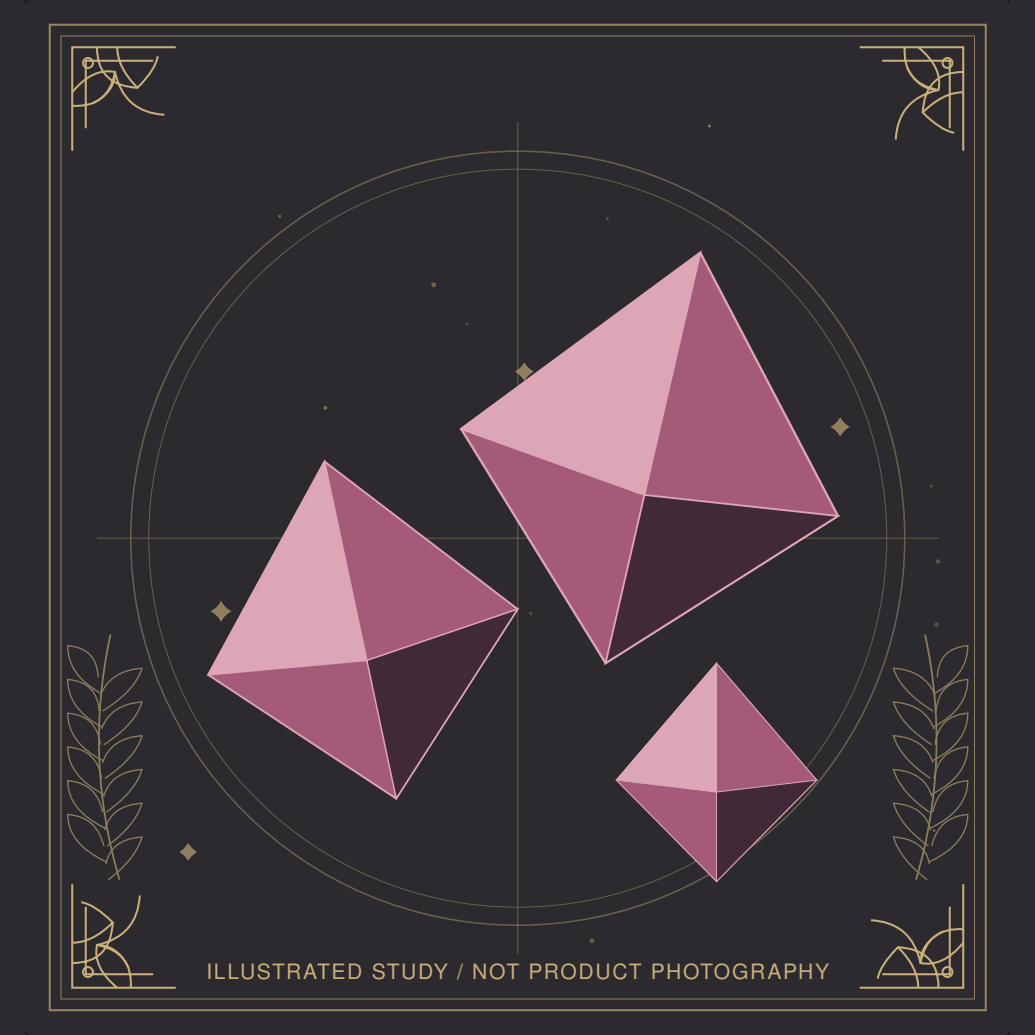
Material
Magnesium aluminium oxide mineral. [1]
Family
Magnesium aluminum oxide [1]
Appearance
Natural oxide mineral in red, pink, blue, black and other colors. [1]
Meaning & tradition
Documented gem-history confusion; Kynes: relationships. [4]
In this guide
Visual identity & plain-language name
Spinel is magnesium aluminium oxide, MgAl2O4. Its colors span red, pink, blue, black and other appearances. Natural crystals and laboratory-grown spinel can share the material name only when origin is clearly stated. Spinel is not a form of ruby merely because both can be red. [1]
Earth story: formation, structure & color
GIA describes spinel’s cubic structure and hardness around 8. Octahedral crystals are familiar, while cut gems display a manufactured form. Trace constituents can influence color. Natural occurrence and laboratory growth are different formation histories even when chemical and structural properties overlap. [1]
Spinel is magnesium aluminum oxide, MgAl2O4, a member of an oxide mineral group with cubic structure. Octahedral crystals and spinel-law twins provide familiar natural forms, while a faceted gem's outline is manufactured. Trace constituents and compositional variation influence color, with red, pink, blue, black and other appearances represented in gem commerce. A hue does not turn spinel into corundum or select natural versus laboratory growth. [1][3]
The Handbook records hardness about 7.5–8, brittle behavior and density commonly around 3.6 with compositional variation. Those properties offer stronger identification evidence than a ruby-like red color, but no one measurement should be treated as a complete origin conclusion. Spinel occurs in appropriate metamorphic carbonate settings and igneous assemblages, and can later enter alluvial deposits through erosion and transport. A recovered gem's secondary deposit may differ from the environment where its crystal originally formed. [1][3]
Laboratory-grown spinel has a deliberately created history that requires clear origin language. Its optical and chemical correspondence must be examined rather than assumed from a commercial label. The natural/laboratory distinction answers how the material formed, while an imitation answers whether another substance merely resembles it. A trustworthy label preserves those questions independently, together with any known treatment and the scope of a gemological report. [1][3]
Varieties & look-alikes
Compare red, pink, blue and black natural spinel, as well as explicitly laboratory-grown products. Ruby is corundum with different composition and structure. A red historical jewel called ruby may require revised identity. Color, fluorescence or price alone cannot establish natural origin. [1]
- Black spinel
- Black is a bodycolor and opacity description rather than a separate species or proof of natural origin. A polished black bead can overlap visually with other dark minerals and engineered products. Preserve a supported oxide determination and any growth-origin finding. Its luster and hardness alone cannot establish all the claims of a commercial label. [1]
- Red spinel
- Red spinel is distinct from red corundum ruby even when historical names or a comparison photograph suggest otherwise. A natural or laboratory origin must be stated separately from color. Suitable gemological properties support identification, while a historic mount supplies a different kind of evidence. Preserve both the object's old name and its present material determination when relevant. [1]
- Pink spinel
- Pink spans pale to stronger bodycolor within the gem category. The shade does not identify a mine, a trace constituent or untreated status by itself. Describe hue and transparency independently from species and origin. A quality or romantic marketing term should not replace the analytical finding or the report's actual scope. [1]
- Blue spinel
- Blue appearance can be compelling while its exact coloring mechanism remains specimen-specific. The material must still be distinguished from blue sapphire, laboratory-grown spinel and other blue substitutes. Color and fluorescence are observations rather than complete natural-origin tests. Keep mineral identity, growth history, treatment findings and supported source separately in the label. [1]
Human story: objects, names & cultural context
GIA’s history account explains historical confusion between red spinel and ruby, including famous named jewels. This is a precise material-literacy story: historical prestige did not always depend on modern mineral classification. It also shows why an old name should not override present identification. [2]
GIA's historical account describes famous red jewels that were called ruby before modern material distinctions identified spinel. The Black Prince's Ruby is a named example illustrating how an object's historic name and present mineral identity can coexist. Historical prestige belongs to the jewel's documented social history and does not require the old name to be chemically correct. Modern buyers can learn from that distinction without dismissing the workmanship, symbolism or ownership history of objects made before today's identification methods. [2]
Meaning & practice: attributed traditions
Sandra Kynes assigns spinel a relationships correspondence in her 2018 article. This is an attributed modern belief. [4]
An editorial relationship intention can ask whether a familiar label still fits what is actually happening. Write one accurate description before deciding what to do. The historical ruby confusion offers a reminder to update assumptions with evidence.
Material truth: trade names & treatments
Distinguish laboratory-grown spinel, natural spinel and another material imitating it. Hardness is useful for abrasion resistance but not a promise of immunity to chips. A report for a valuable cut stone can address questions not settled by color. Preserve origin and treatment wording rather than compressing every product to genuine. [1]
A cut red stone cannot be called natural spinel from color, age of its mount or price alone. Laboratory-created material, natural spinel and substitutes need separate findings. Any report should state what was examined and whether it assessed treatment or origin; a material identification should not be inflated into conclusions outside its scope. High hardness helps resist scratching but does not eliminate brittleness, edge damage or fractures. Preserve component identity and condition when a gem is part of an older assembled object. [1][3]
For a record, distinguish bodycolor, clarity, cut, mineral determination, growth origin and any treatment. Natural rough can preserve octahedral faces, while a polished bead or gem removes many original clues. A black opaque example and a transparent pink gem need different observations even though they may share the oxide species. An inherited ruby label can be retained as object history alongside a current spinel determination. Updating identity with evidence clarifies the story rather than erasing what earlier owners called their jewel.
Sources & related specimens
GIA supplies mineral identity and historical gem context. Kynes documents modern symbolism. Compare ruby and sapphire for corundum and moissanite for another important natural-versus-laboratory origin distinction.
- GIA: Spinel
Gemological Institute of America · Identity and natural history · Accessed October 9, 2026
- Spinel History and Lore
Gemological Institute of America · Mineralogy, geology, naming and documented material history · Accessed October 9, 2026
- Handbook of Mineralogy: Spinel
Mineralogical Society of America · Mineralogy, geology, naming and documented material history · Accessed October 9, 2026
- Sandra Kynes: 365 Days of Crystal Feng Shui for Your Home (2018)
Llewellyn Worldwide · Sandra Kynes’s contemporary crystal-placement and intention framework · Accessed October 9, 2026