Crossed crystal forms
Staurolite / Fairy Crosses
Iron-rich aluminium silicate, sometimes naturally twinned into cross-like forms.
Mineral species; ornamental specimens may include other minerals
Staurolite is an iron-rich aluminium silicate.
Geology · Human history · Attributed traditions
Explore the specimen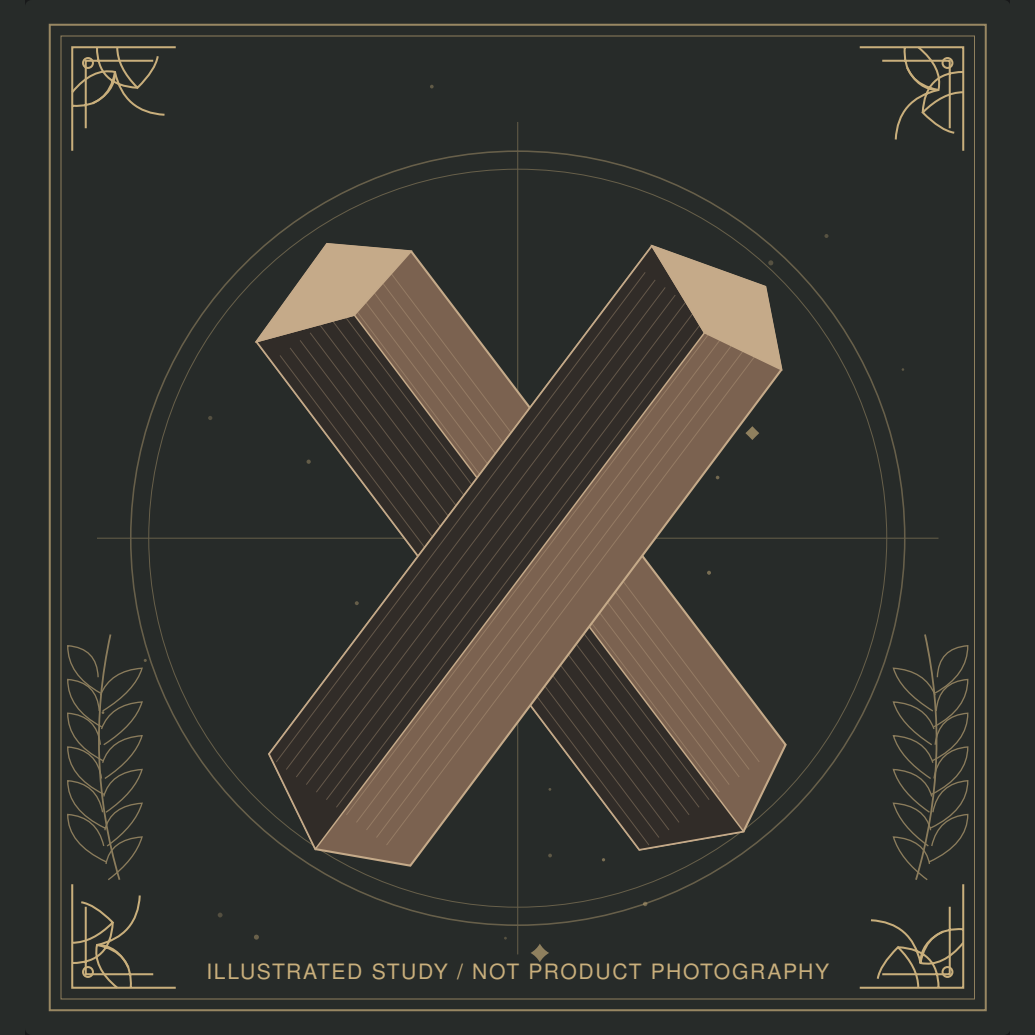
Meaning & tradition
Virginia regional fairy-stone folklore; Kynes: success. [2]
In this guide
Visual identity & plain-language name
Staurolite is an iron-rich aluminium silicate. Some crystals intergrow into natural cross-like twins; many do not. A crossed outline is a crystallographic outcome, while a carved or assembled cross is a different product. The fairy-stone name adds a human interpretation to that geological object. [1][3]
Earth story: formation, structure & color
The Handbook records monoclinic, pseudo-orthorhombic structure, hardness 7–7.5 and common twin arrangements near 60 degrees, with less common approximately right-angle crosses. Metamorphic schists provide a familiar setting. Weathering can release crystals from softer host material without making every detached cross identical. [1][3]
Staurolite is an iron-rich aluminum silicate with magnesium and other compositional variation. The Handbook gives monoclinic, pseudo-orthorhombic structure and documents common twinning that produces crossed forms. A crystal can be single, twinned at an oblique angle or twinned near a right angle. The cross outline is therefore a natural structural possibility, not a requirement that every staurolite specimen resemble a Christian symbol. [1][3]
The reference records Mohs hardness 7–7.5, density about 3.74–3.83, brittle behavior and a distinct cleavage direction. Dark reddish-brown to blackish-brown appearances are typical, with other documented variations. Metamorphic environments, particularly suitable aluminum-rich schists, provide geological context. Weathering of the host can release durable crystals, but detached shape alone cannot reconstruct a complete metamorphic history or authenticate a named locality. [1][3]
Twin angles and crystal intergrowth describe mineral structure, while surface wear, chips and any carving describe condition or manufacture. A roughly cruciform stone can therefore be natural, modified or assembled, and identification needs more than religious-looking geometry. Geological source records and examination complement one another. A raw matrix specimen may preserve useful relationships that a loose polished charm lacks, though each can still be accurately described at its own level of evidence. [1][3]
Varieties & look-alikes
Compare single crystals, oblique twins, right-angle twins and specimens retained in matrix. A regular cross can be carved or assembled, and a dark cruciform object is not automatically natural staurolite. The shape and its formation must both be described. [1][3]
- Staurolite single crystals
- A single crystal remains staurolite even without a cross-like twin. Brown prismatic material can preserve natural faces or be worn after release from a host rock. Species identity depends on the mineral's composition and structure rather than symbolic geometry. Record condition and locality independently from the absence or presence of twinning. [1][3]
- Fairy cross or fairy stone
- These names carry regional folklore and commercial imagery. They do not determine whether a product is an intact natural twin, shaped stone or substitute. Virginia's documented heritage provides a specific narrative that should remain attributed. A geological identification and source record supply different evidence and should accompany rather than be replaced by the legend. [1][3]
- Cross twins
- Common oblique twins and less common approximately right-angle twins express crystallographic intergrowth. The angles and natural surfaces can inform an examination, but a carved cross can imitate outward form. Describe confirmed twinning and any modification separately. A twin's mineral identity does not establish that it came from the locality named in a product story. [1][3]
Human story: objects, names & cultural context
Virginia’s historical-resource account documents localized fairy-stone and good-luck folklore. Read it as regional legend alongside twinning science rather than as evidence of supernatural mineral formation. The local place, story and collecting history are more precise than claiming every staurolite specimen belongs to one worldwide tradition. [4]
Virginia's heritage account documents localized fairy-stone folklore and good-luck associations in a specific regional setting. Its story should be read as heritage and legend, not a physical explanation of crystal growth. The geology account explains metamorphism, twinning and the release of crystals from host rock. Keeping those categories separate preserves both cultural context and scientific clarity. It also avoids turning one documented regional narrative into a universal tradition for all staurolite from every locality or every modern cross-shaped product. [4]
Meaning & practice: attributed traditions
Sandra Kynes includes staurolite in success correspondences in her 2018 framework. This is a separate contemporary spiritual interpretation. [2]
An editorial success intention can write a goal and the two activities that need to intersect to reach it. The twin can serve as a visual reminder of cooperation, without promising luck or a mineral effect.
Material truth: trade names & treatments
Specify natural twin, shaped object or assembled ornament where known. Exact angles and raw surfaces can inform examination but do not alone authenticate every product. Hardness does not cancel brittleness or fractures. Retain locality evidence, especially when a fairy-stone story is used to market the origin. [1][3]
Fairy cross and fairy stone are human naming and imagery layers. A seller should state whether an object is an intact natural twin, shaped specimen or assembled ornament when known. A mineral's hardness does not authenticate a cross or guarantee resistance to impact. Exact source claims require provenance independent of the legend attached to the product. A drilled or mounted charm has additional manufacture and condition considerations, including cracks or repairs that should remain in its record. [1][3]
Inspect surviving natural faces and the relationship between crossed arms without creating new damage. Note worn edges, fractures, shaping and the source of the determination. A gallery can compare an oblique twin, a right-angle twin and a single crystal, making clear that all can belong to the same mineral category. If the only information is a seller's fairy-stone designation, preserve that attribution until material and construction are established. Personal success symbolism can be chosen explicitly without making a promise of supernatural luck.
Sources & related specimens
The Handbook and Virginia geology source explain the mineral and twins. Virginia’s heritage account grounds regional folklore, while Kynes documents modern symbolism. Compare other twinned crystals before inferring a carved appearance is unnatural.
- Handbook of Mineralogy: Staurolite
Mineralogical Society of America · Mineralogy, geology, naming and documented material history · Accessed October 9, 2026
- Sandra Kynes: 365 Days of Crystal Feng Shui for Your Home (2018)
Llewellyn Worldwide · Sandra Kynes’s contemporary crystal-placement and intention framework · Accessed October 9, 2026
- Virginia State Parks: Fairstones
Virginia Department of Conservation and Recreation · Staurolite formation and twinned crystal habit · Accessed October 9, 2026
- Virginia DHR: Fairy Stone State Park Historic District
Virginia Department of Historic Resources · Localized good-luck folklore; not universal ancient tradition · Accessed October 9, 2026