
The clear wedge
Danburite
Calcium borosilicate mineral.
Mineral species; ornamental specimens may include other minerals
Danburite is calcium borosilicate, CaB2(SiO4)2.
Geology · Human history · Attributed traditions
Explore the specimen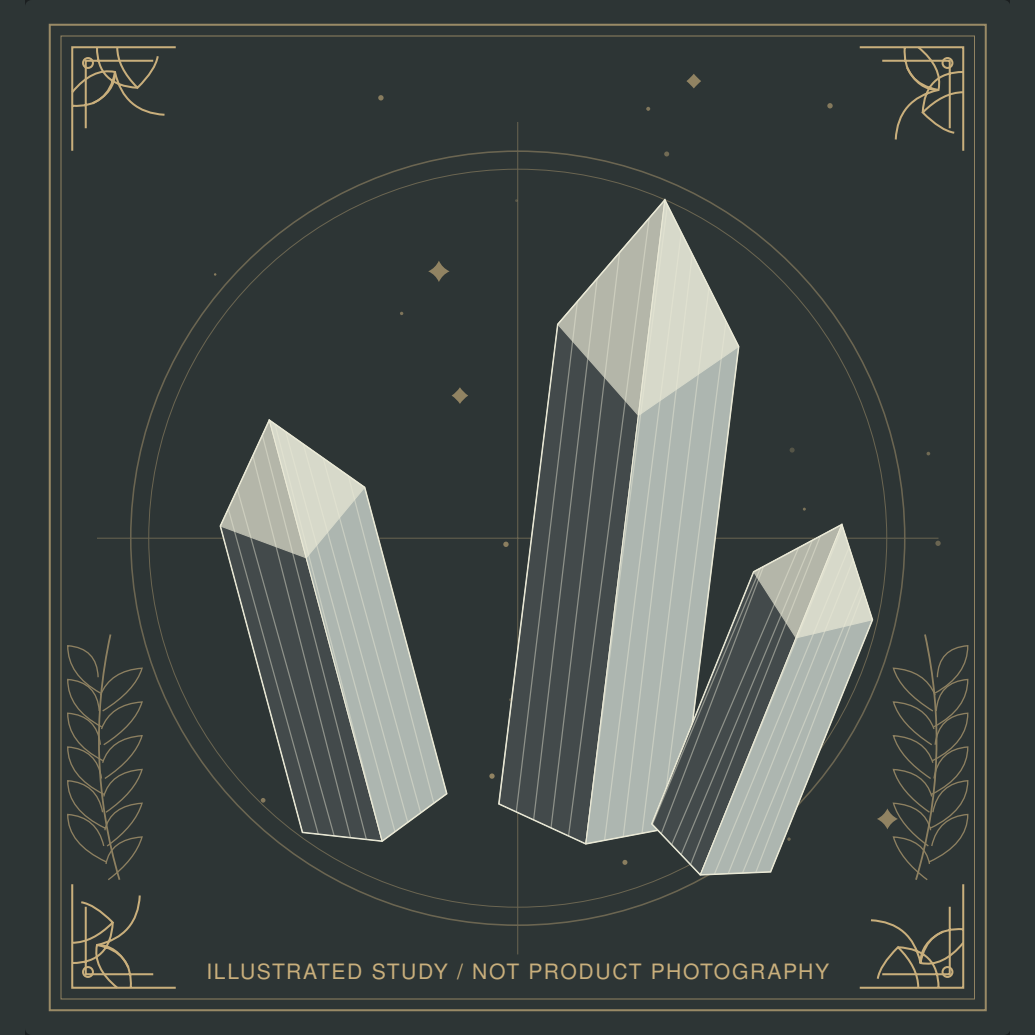
Material
Calcium borosilicate mineral. [1]
Family
Calcium borosilicate [1]
Appearance
Clear to pale prismatic calcium borosilicate crystals. [1]
Meaning & tradition
Kynes: communication. [2]
In this guide
Visual identity & plain-language name
Danburite is calcium borosilicate, CaB2(SiO4)2. Transparent prisms can resemble other pale gems, but clear color does not identify them as quartz or topaz. Natural crystal geometry and manufactured faceting are distinct forms of the same identified material. [1]
Earth story: formation, structure & color
The Handbook gives orthorhombic structure, hardness 7–7.25, brittle behavior and indistinct cleavage. Crystals may have a rhomboidal to square cross-section. Occurrences include granite-related and metamorphosed carbonate settings and other mineralizing environments. Mineral identity depends on composition and structure, not transparency alone. [1]
Danburite is a calcium borosilicate, CaB2(SiO4)2. The presence of boron and calcium differentiates it from quartz, even when both can appear as transparent pale prisms. Its orthorhombic structure can produce crystals with rhomboidal to square cross-sections, while a faceted gem presents the cutter's chosen geometry rather than the original growth form. The Handbook describes colorless, white, wine-yellow, yellowish-brown and greenish material. [1]
The reference records hardness 7–7.25, density about 2.93–3.02, indistinct cleavage and brittle tenacity. Abrasion resistance therefore does not guarantee immunity from chips, and a clear prism should not be judged durable solely because its hardness approaches quartz. Optical measurements provide more specific identification than a silhouette: the listed refractive indices are approximately 1.63. A crystal's natural faces and a gem's cut facets are different kinds of observations and should be described accordingly. [1]
Danburite occurs in granite and metamorphosed carbonate rocks associated with hydrothermal activity, and also in evaporite settings recorded by the Handbook. Quartz, feldspar, calcite, gypsum, anhydrite and other minerals can accompany it in differing environments. These associations demonstrate that one species can appear in more than one geological history. A shop's clear crystal cannot acquire a precise mine or deposit type from color or from a comparison with the most common commercial specimen. [1]
A square-looking cross-section is morphology rather than cubic crystal-system proof; danburite remains orthorhombic in the reference account. [1]
Varieties & look-alikes
Compare colorless crystals, pale yellow material and cut gems. Quartz, topaz and apophyllite may all be clear but differ chemically and physically. A golden or pink trade adjective does not identify a new danburite species. Origin claims need the specimen record rather than a general resemblance to famous localities. [1]
- Clear danburite
- Colorless to white material is documented and can produce transparent collector crystals or faceted gems. The calcium-boron silicate composition remains distinct from quartz. Shape, clarity and a high polish are observations, while suitable optical or analytical evidence establishes identity. Keep fractures, condition and any manufacturing history with the mineral name. [1]
- Pink danburite
- Pink is retained as a retail appearance category rather than a separate species. The color and species determinations must be supported independently, with any treatment uncertainty stated honestly. A pink prism's photograph cannot establish a mine or an unaltered color. Preserve the seller's description separately when no examination has confirmed the full claim. [1]
- Yellow danburite
- Wine-yellow and yellowish-brown are within the Handbook's recorded appearances. The color term does not change the calcium borosilicate formula into a different gem species. Record saturation and transparency as observations and leave the exact cause unresolved unless studied. A bright photograph is weaker origin evidence than documented provenance or a suitable examination. [1]
Human story: objects, names & cultural context
The name comes from Danbury, Connecticut. It is a place-based scientific naming history. A confirmed original locality and a modern gem source are different facts; the name does not guarantee that every crystal was collected in Connecticut or that a universal ancient symbolic system existed. [1]
The name derives from Danbury, Connecticut, one documented locality. The Handbook lists other occurrences, including large crystals from Charcas, Mexico, and further regions. A place-based scientific name does not imply that every modern specimen was collected in Connecticut. The reference also cites structure investigations connecting danburite with a broader account of silicate architecture. Scientific discovery and later locality recognition provide a supported human story without requiring an ancient communication or celestial tradition. [1]
Meaning & practice: attributed traditions
Sandra Kynes includes danburite in communication correspondences in her 2018 account. This is a modern belief framework. [2]
An editorial communication practice can ask which detail makes an explanation easier to understand. Write the main point and one necessary example. The clear prism may be a reminder of the goal of clarity, without causing communication skill.
Material truth: trade names & treatments
Hardness above quartz does not mean an edged crystal cannot chip. Support prisms and retain treatment or repair notes. Avoid improvised scratch testing against glass or other collectibles. A precision-cut gem needs gemological identification rather than relying on the apparent shape of a loose rough crystal. [1]
Clear quartz, topaz, apophyllite-group material and other pale minerals can resemble danburite at a glance, while having different composition and properties. A sound material label should state the identification basis rather than rely on a prism's familiar shape. Pink is a commercial appearance claim requiring its own examination; the color word cannot authenticate species, natural color or locality. Any treatment, repair or assembled presentation belongs alongside the mineral determination when established. [1]
Observe the crystal cross-section where visible, surviving growth faces, internal fractures and the relationship to the matrix. A chipped termination should be recorded instead of interpreted as a natural face. For a cut gem, preserve the report's actual scope: species identification, treatment assessment and origin determination are different conclusions. Your label can describe pale yellow confirmed danburite and leave color causation unresolved. This is more useful than assigning a universal trace-element explanation to every shade or copying another specimen's locality story.
Sources & related specimens
The Handbook establishes composition, properties, occurrence and naming. Kynes provides modern symbolism. Compare quartz and apophyllite for why colorless crystal appearance crosses different mineral categories.
- Handbook of Mineralogy: Danburite
Mineralogical Society of America · Identity and natural history · Accessed October 9, 2026
- Sandra Kynes: 365 Days of Crystal Feng Shui for Your Home (2018)
Llewellyn Worldwide · Sandra Kynes’s contemporary crystal-placement and intention framework · Accessed October 9, 2026