
A clear termination
Topaz
Aluminium fluorine/hydroxyl silicate mineral.
Aluminum fluorine-hydroxyl silicate mineral species and gem varieties
Topaz is an aluminium silicate containing fluorine and hydroxyl, with colors extending beyond familiar commercial blue. Clear prisms and striated faces provide a more accurate rough silhouette than treating every specimen as a blue gem.
Geology · Human history · Attributed traditions
Explore the specimen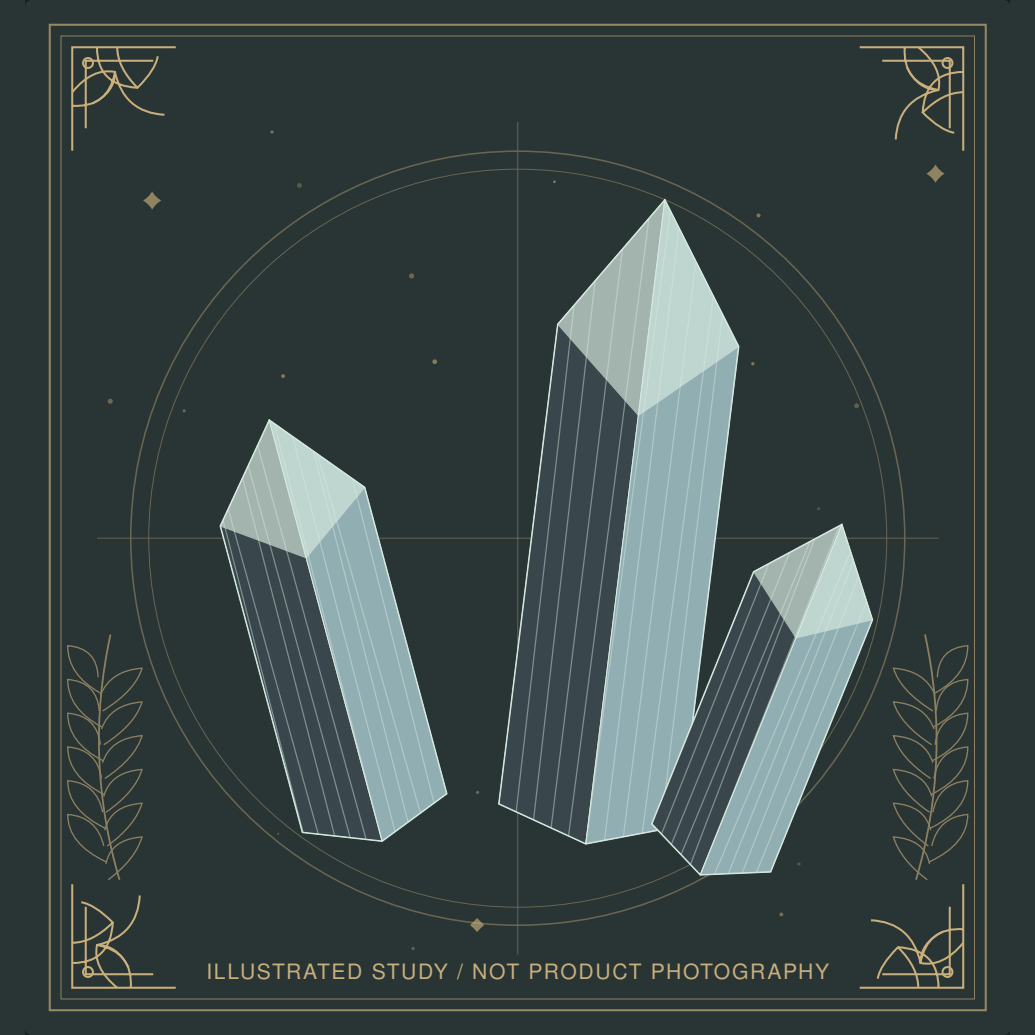
Traditions
Margaret Ann Lembo’s 2013 chart includes golden topaz with self-confidence and courage symbolism. [6]
In this guide
Visual identity
Topaz is an aluminium silicate containing fluorine and hydroxyl, with colors extending beyond familiar commercial blue. Clear prisms and striated faces provide a more accurate rough silhouette than treating every specimen as a blue gem. [1][2][3]
Topaz can be colorless, yellow, orange, pink, brownish or blue. A faceted object emphasizes transparency and selected color, while an uncut crystal may display growth striations, fractures and attached matrix. The flat basal cleavage is particularly important: the mineral can part in a preferred direction despite hardness 8. A cut surface or broken end is not always a natural termination. A precise illustration distinguishes intact growth faces, cleavage surfaces and the manufactured facets of a finished jewel. [1][2]
Earth story: geology and formation
The Handbook of Mineralogy records topaz in granite-related cavities, pegmatites and specialized hydrothermal settings. GIA documents irradiation and heating for common blue material and surface coating for mystic topaz. Underlying species, induced color and a coating are different parts of a specimen’s description. The Handbook associates topaz with volatile-rich granite-related systems and lists quartz, feldspar, beryl, tourmaline and fluorite among companions. Recorded localities include Ouro Preto in Brazil and the Thomas Range in Utah. The prism shape, vertical striations and a natural terminal arrangement can survive in rough. A flat broken base, however, may reflect cleavage rather than growth, and an attractive blue color may reflect processing after extraction. [1][2][3]
Topaz has orthorhombic symmetry, a composition conventionally written Al₂SiO₄(F,OH)₂, hardness 8 and measured density around 3.49–3.57 grams per cubic centimetre. Its perfect cleavage in one direction contrasts with that high scratch resistance. A prism may show lengthwise striations and a distinct terminal arrangement, but a broken flat face can be a cleavage surface rather than a natural termination. Glassy luster and varied colors are useful observations, while the source of a particular blue or multicolored appearance requires separate treatment information. [1]
Topaz is an aluminum fluorine-hydroxyl silicate, with fluorine and hydroxyl proportions varying within its composition. The Handbook places it in volatile-rich granitic settings, including pegmatites and greisen, as well as associated veins. Striated prisms can preserve evidence of crystal growth, while rounded or worked material may have lost that exterior. The common geological association is more informative than treating topaz as simply a hard colored jewel. The mineral’s fluorine-bearing chemistry and orthorhombic structure are distinct from the silica identity of citrine. [1][4]
Varieties and lookalikes
These names describe different levels of information: a mineral species, a visual variety, a crystal habit or a retail label. The distinctions below keep the recognizable shop vocabulary alongside its material explanation.
Swiss, sky and London blue are familiar commercial shade names, not separate mineral species. Imperial is a valued trade designation associated with particular warm-colored material, while mystic topaz refers to a surface coating that produces iridescent appearance. Colorless topaz supplies a comparison with colorless quartz or glass, and yellow topaz with citrine. The shared colors are insufficient for host identification. A label should therefore explain whether it communicates mineral identity, a shade category, a source-associated trade term or an applied enhancement. [2][3][1]
Human story: history and naming
GIA’s history notes that older topaz language was applied to other yellow-green gems, including material now identified as peridot. Historical references therefore need care. The modern mineral identity is more exact than a traditional color-based gem name. [5]
GIA explains that older topaz terminology included gems that would now be identified as peridot and other materials. That history cautions against reading modern species boundaries into an ancient yellow-stone description. The mineral’s current structure and chemistry provide a more precise identity. The naming and gem-use history can still be meaningful when the old vocabulary is kept in context. A modern blue or coated topaz should not inherit an alleged ancient practice merely because the broad topaz word appears in the earlier account. [5]
Meaning and practice: attributed traditions
Margaret Ann Lembo’s 2013 chart includes golden topaz with self-confidence and courage symbolism. This is a contemporary color-specific framework. It does not automatically give blue or coated topaz the same meaning, and the gem’s physical hardness does not establish personal strength. [6]
An optional confidence reflection is to choose one modest action despite uncertainty. The material can symbolize that intention without guaranteeing courage.
Lembo specifically places golden topaz in a yellow-stone framework involving confidence, courage and clarity. That attribution should not be copied automatically to every blue or surface-coated topaz. A participant can choose a golden specimen as an intended reminder to act with deliberation or recognize a personal aim. The spiritual chapter describes the intended symbolism; the geological chapter describes the fluorine-hydroxyl silicate. Hardness and warmth of color do not themselves establish a psychological strengthening mechanism or guarantee the intended outcome. [6]
Material identity and trade terminology
Most commercial blue topaz color is induced, while mystic topaz is coated. Citrine is quartz and should not be sold as topaz. Perfect cleavage makes impact behavior different from scratch resistance; a hardness value alone cannot describe the durability of a particular rough prism. [1][2][3]
Irradiation and subsequent heating are important to the familiar blue-topaz market. GIA also documents surface coatings as a separate treatment category. A treated stone can retain topaz as its host while the displayed appearance has been deliberately altered. A natural-material claim does not answer the enhancement question. Coating is especially relevant when an iridescent surface is marketed with a new poetic variety name. The useful account names the topaz host and the process, rather than implying that every color effect records the same natural formation history. [3][2]
Sources and related specimens
The references below distinguish mineral identification and physical properties from historical interpretation and practitioner symbolism. A cited material category describes a kind of stone; it does not certify the identity, treatment or provenance of an untested individual retail specimen.
- Handbook of Mineralogy: Topaz
Mineralogical Society of America · Mineral composition, structure, physical properties and occurrence · Accessed October 9, 2026
- GIA: Topaz
Gemological Institute of America · Geological, gemological or documented material-history evidence · Accessed October 9, 2026
- GIA: An Introduction to Gem Treatments
Gemological Institute of America · Geological, gemological or documented material-history evidence · Accessed October 9, 2026
- Handbook of Mineralogy: Quartz
Mineralogical Society of America · Mineral composition, structure, physical properties and occurrence · Accessed October 9, 2026
- Topaz History and Lore
Gemological Institute of America · Historical naming, material use and explicitly attributed lore · Accessed October 9, 2026
- Margaret Ann Lembo: Colors, Enlivening the Rainbow Body (2013)
Llewellyn Worldwide · Contemporary practitioner symbolism and retailer terminology; distinct from mineralogical evidence · Accessed October 9, 2026