

Dark spots pale ground
Dalmatian Stone
Spotted ornamental rock; analyzed trade samples contain a feldspar-quartz matrix with arfvedsonite-rich dark areas.
Ornamental rock; examined material is a feldspar-quartz-amphibole assemblage
Dalmatian stone is a spotted decorative rock.
Geology · Human history · Attributed traditions
Explore the specimen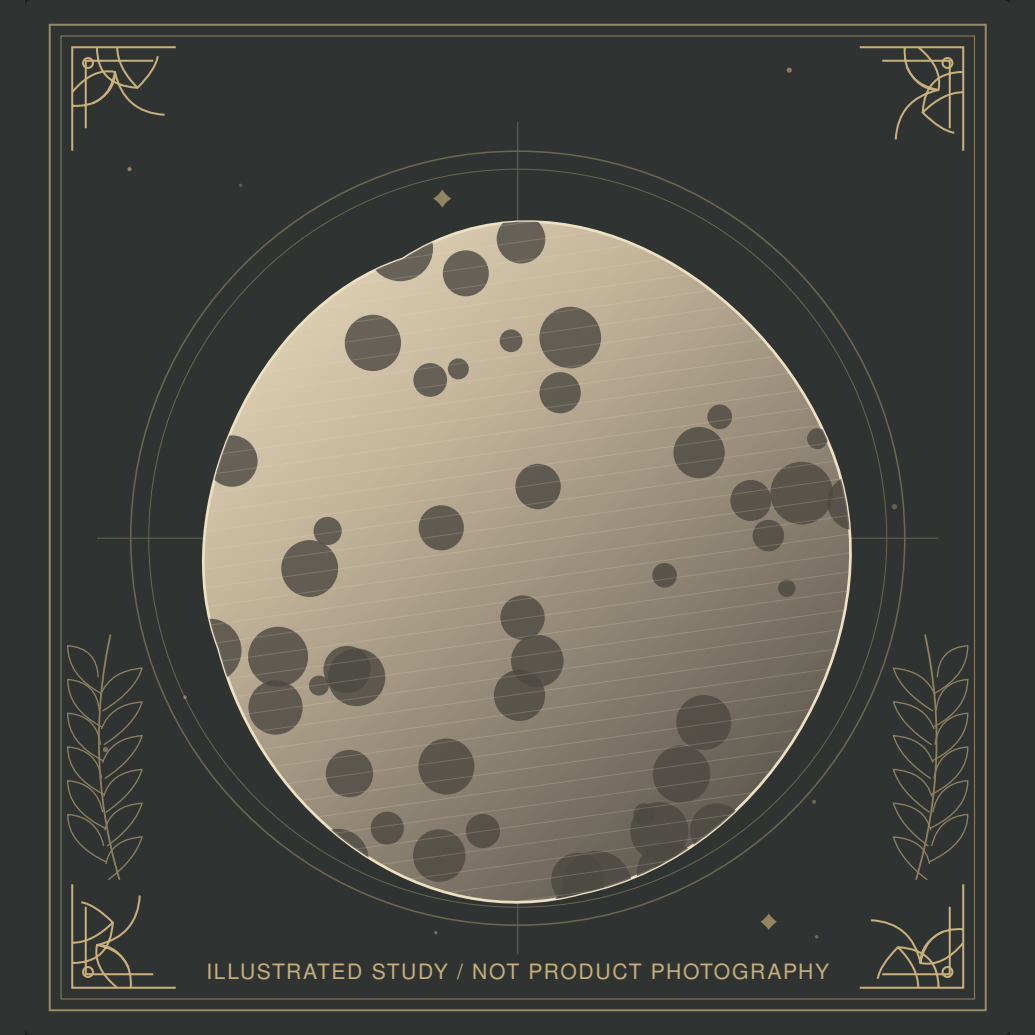
Material
Spotted ornamental rock; analyzed trade samples contain a feldspar-quartz matrix with arfvedsonite-rich dark areas. [2]
Family
Mixed natural rock [2]
Appearance
Light feldspar-quartz rock with dark amphibole-rich spots. [2]
Meaning & tradition
The Crystal Council: confidence and intention. [1]
In this guide
Visual identity & plain-language name
Dalmatian stone is a spotted decorative rock. The jasper nickname is misleading for material examined in GIA’s 2017 study: the researchers found a feldspar-quartz matrix and dark arfvedsonite-rich spots. The attractive resemblance to a dog’s coat is a visual trade description rather than mineral taxonomy. [2]
Earth story: formation, structure & color
The study classifies its examined specimens as peralkaline rock and documents feldspars, quartz, amphiboles and minor secondary phases. It does not confidently settle intrusive versus extrusive origin or confirm a source for all trade material. That sample-level boundary matters: one study cannot certify every spotted bead. [2]
GIA's 2017 investigation examined the spotted ornamental material with microscopy and analytical methods rather than accepting a commonly repeated jasper label. The studied samples contained a feldspar-quartz groundmass with arfvedsonite-rich dark areas and additional minor constituents. The researchers classified the analyzed material as peralkaline rock, meaning an alkali-rich compositional relationship. Those results explain why the black spots should not automatically be called tourmaline and why the entire object should not receive a pure jasper formula. [2]
The study preserves uncertainties: it does not confidently determine whether the examined rock was intrusive or extrusive, and provenance was not established for all material in trade. That restraint is part of the article's value. A pale groundmass, scattered spots and a similar commercial name can identify a comparison category while failing to establish that another bead shares the same mineral inventory. Different grains also have different physical properties, so a single mineral hardness or crystal system is inappropriate for the whole rock. [2]
Varieties & look-alikes
Compare ordinary pale spotted material, colored trade products and other spotted rocks. Tourmaline is not the identified black phase in the GIA samples. True jasper is a different silica material. Dyed pink or blue Dalmatian-style pieces require treatment descriptions separate from any underlying rock identification. [2]
- Dalmatian stone
- The parent trade material is a pale spotted ornamental rock. In GIA's studied samples it was a feldspar-quartz and amphibole assemblage, with provenance and intrusive-versus-extrusive interpretation left unresolved. Preserve that sample-specific boundary. The resemblance of another object can guide comparison, but it cannot transfer every analytical finding to an untested product. [2]
- Dalmatian jasper alias
- The jasper wording remains useful as a recorded commercial alias but is misleading as the scientific classification of the analyzed rock. A name based on pattern is not a mineral determination. Identify the actual assemblage where examined and retain unknowns where not. The distinction makes the material account clearer without judging its decorative worth. [2]
- Colored spotted products
- Pink, blue or other strongly colored Dalmatian-style objects require an independent treatment and substrate account. A pale-patterned rock can be colored while retaining its original minerals, and a substitute can imitate the pattern entirely. The appearance alone settles neither question. State assessed dye or coating explicitly and keep any unverified seller designation attributed. [2]
Human story: objects, names & cultural context
The familiar trade name is based on appearance. GIA’s research history is a useful human story: analysis corrected widely repeated mineral claims and retained uncertainty about provenance. Scientific progress can replace a convenient label with a more accurate account without making the decorative material less appealing. [2]
The familiar commercial name refers to the resemblance between dark spots and a Dalmatian dog's coat. The history of analytical correction is the supported human story here: testing challenged an appealing but inaccurate mineral label and retained uncertainty where the evidence was incomplete. Scientific naming can become clearer while the material remains attractive and useful to lapidaries. There is no need to invent an archaeological tradition to give a modern decorative rock an interesting account of how people understand and work it. [2]
Analytical correction is especially important when an easily remembered commercial name is repeated widely. The GIA authors distinguish the mineral determination from a still incomplete source history, providing a model for accurate cataloging. A future examination can add evidence without requiring today's label to invent an intrusive or extrusive setting. [2]
Meaning & practice: attributed traditions
The Crystal Council associates Dalmatian stone with confidence, intention and grounding. These are contemporary beliefs attached to the trade material. [1]
An editorial confidence intention can identify one achievable task and what preparation it needs. The playful pattern may remind you to begin without requiring perfection. The mineral mixture is a geological observation, not a confidence mechanism.
Material truth: trade names & treatments
Use Dalmatian stone rather than implying confirmed jasper composition. Describe dye where known, and avoid assigning origin from a distributor’s claim alone. A spotted photograph cannot prove that the dark material is arfvedsonite in every product. Keep the study’s findings tied to analyzed samples. [2]
Dalmatian stone is the clearer parent label for the studied rock than Dalmatian jasper. The article's analyzed black constituent is not proof of the same constituent in every product. Dyed blue or pink spotted objects need a color-treatment statement, while their substrate requires its own identification. The words natural jasper should not conceal a mixed-rock identity or documented dye. Source, mineral inventory, treatment and manufactured form should be preserved separately whenever supporting evidence is available. [2]
For your specimen record, note the size and distribution of spots and whether they appear within the rock or as a surface color. Observe different faces and any pale quartz-rich regions without inferring an exact mineral percentage from an image. A comparative gallery can show ordinary pale material alongside colored products, but it should label which identities were examined. The study supplies a model of how evidence revises an assumption, not a universal picture-based authentication rule for all spotted stones.
Sources & related specimens
GIA supplies sample-based mineralogical research and its limits; the Crystal Council supplies modern symbolism. Compare jasper and arfvedsonite to understand why a trade nickname can cross scientific categories.
- The Crystal Council: Dalmatian Stone
Primary publication · Contemporary symbolic associations attributed to The Crystal Council · Accessed October 9, 2026
- True Colors of Dalmatian Jasper
Gemological Institute of America · Mineralogy, geology, naming and documented material history · Accessed October 9, 2026