
A radiating spray
Astrophyllite
Titanium-bearing silicate mineral with often radiating golden-brown blades.
Mineral species; ornamental specimens may include other minerals
Astrophyllite is a titanium-bearing silicate, often seen as golden-brown blades against a contrasting host.
Geology · Human history · Attributed traditions
Explore the specimen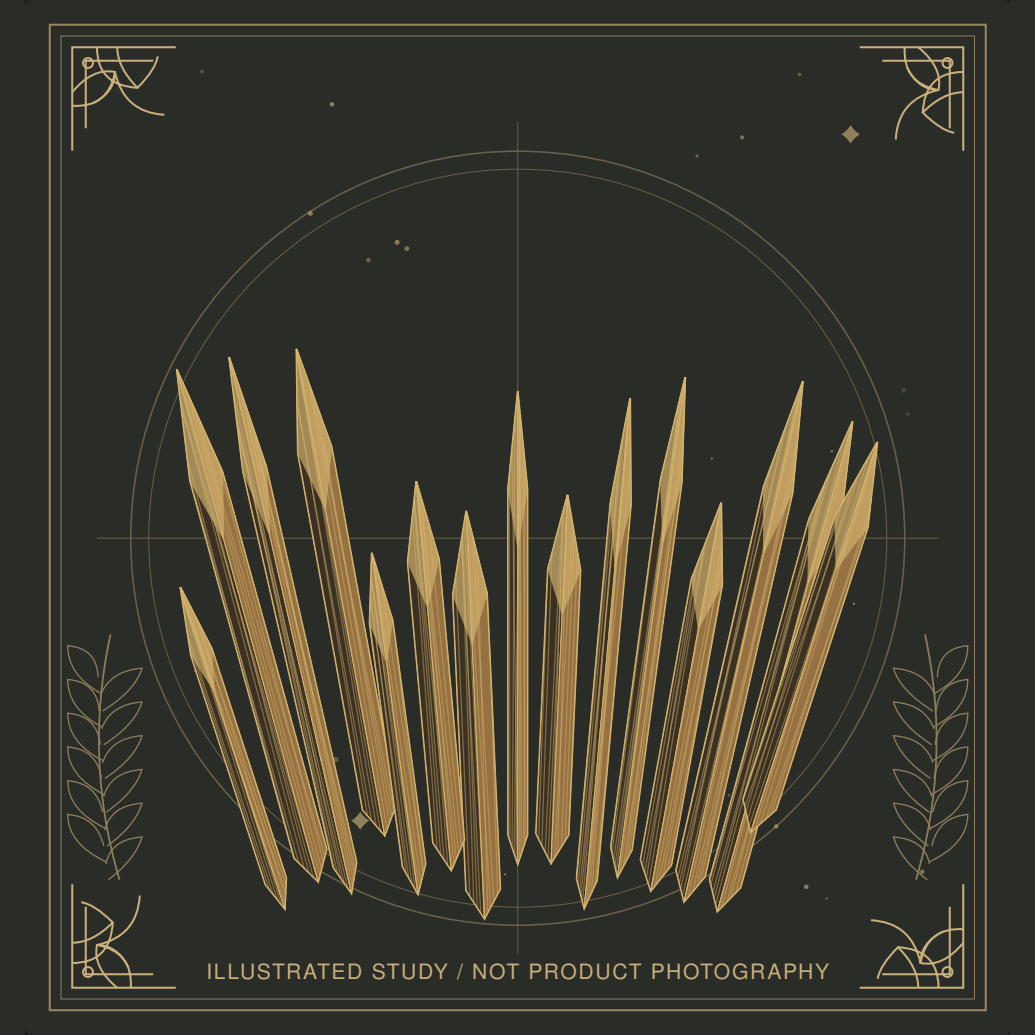
Material
Titanium-bearing silicate mineral with often radiating golden-brown blades. [2]
Family
Titanium-bearing silicate [2]
Appearance
Golden-brown blades and radiating groups within rock. [2]
Meaning & tradition
The Crystal Council: spiritual exploration and self-trust. [1]
In this guide
Visual identity & plain-language name
Astrophyllite is a titanium-bearing silicate, often seen as golden-brown blades against a contrasting host. Star-like radiating groups inspired its name. A polished stone may expose the mineral within a larger assemblage, rather than displaying a pure mass of astrophyllite. [2]
Earth story: formation, structure & color
The Handbook gives triclinic structure, hardness about 3 and strong cleavage. Thin leaves may look translucent while thicker material appears opaque. Specialized alkaline rocks supply the geological setting, with associates including feldspar, aegirine and arfvedsonite. A radiating plate architecture is more informative than a generic glittering-black description. [2]
Astrophyllite is a complex titanium-bearing silicate containing potassium or sodium and iron or manganese among its principal constituents. The Handbook gives a triclinic structure and describes tabular, bladed or needle-like crystals that may group in radiating star-like arrangements. Bronze-yellow through brown and reddish-brown colors, submetallic or pearly luster and a golden streak belong to its mineralogical appearance account. They do not imply native gold. [2]
The reference gives Mohs hardness 3, measured density around 3.2–3.4 and perfect cleavage in one prominent direction. A blade can therefore be delicate despite a bright metal-like look. Astrophyllite occurs in alkaline igneous assemblages, including nepheline syenites and related rocks, with various associated minerals. A polished slab often includes pale or dark host components around the blades. The whole object cannot be assigned astrophyllite's formula or hardness simply because its golden sprays are the most memorable feature. [2]
The Handbook records strong directional optical color in suitable thin material, while thicker blades can appear opaque. A reflected bronze flash and pleochroism in transmitted-light examination are different phenomena and should not be merged into one universal description. The star-like arrangement can occur where blades radiate from an area, but many specimens present less symmetric groups. The source also records similarities in powder patterns with a related mineral, reinforcing the need for suitable analytical evidence when exact species identity matters. A dramatic star silhouette is therefore morphology, not a complete chemical determination. [2]
Titanium in the mineral's complex silicate composition is distinct from an applied titanium-colored surface film. A confirmed species finding and any coating assessment are different conclusions. Their distinction prevents a metal-related ingredient from becoming a treatment or origin assumption. [2]
Varieties & look-alikes
Compare blades, stellate groups and astrophyllite-bearing rock. Arfvedsonite is a chemically and structurally different mineral that can occur in related assemblages. Bronze-like pyroxene and copper-bearing glass also glitter. Golden reflection does not establish titanium-silicate identity. [2]
- Astrophyllite
- Confirmed mineral can appear as bronze-yellow or brown blades, plates or radiating groups. The complex titanium-bearing silicate chemistry separates it from native gold, pyroxene or glittering glass. Softness and perfect cleavage remain relevant despite the bright appearance. A raw specimen and a polished exposure may show very different parts of its natural architecture. [2]
- Astrophyllite-bearing matrix
- The surrounding rock and blades form an assemblage rather than one chemically uniform crystal. A pale field can make the blades especially clear, but it should not receive a guessed mineral identity from color. Record confirmed components, surface condition and any repairs. Bulk durability depends on the arrangement of host, soft blades and fractures. [2]
Human story: objects, names & cultural context
Greek roots for star and leaf underlie the name, referring to the radiating and platy habit. This naming story joins close mineral observation with metaphor. A star-shaped aggregate is not evidence of extraterrestrial origin or a historical astronomical ritual. [2]
The name refers to star and leaf imagery, relating to the radiating arrangement of platy or bladed material. That morphological naming account provides a supported connection between language and observation. The Handbook records studied localities and scientific descriptions, which can anchor a collector's identification history. A modern carved slab has its own maker and acquisition record. Its star-like pattern does not establish a celestial origin or a documented ancient ritual use. [2]
Meaning & practice: attributed traditions
The Crystal Council discusses astrophyllite through contemporary spiritual-exploration and self-trust themes. These are attributed beliefs rather than mineral effects. [1]
An editorial self-trust exercise can distinguish a considered decision from an impulse. Write the evidence and the reason for the choice. Radiating blades can provide a personal visual metaphor for several options without becoming a source of supernatural certainty.
Material truth: trade names & treatments
Low hardness and cleavage make exposed blades vulnerable. A quartz- or feldspar-rich polished host can feel more durable than the mineral component. Label the mixture when known and describe repairs or coating. A seller’s use of astrophyllite for every flashing dark stone should be treated as a claim requiring material evidence. [2]
Astrophyllite and bronze-toned pyroxene material are different minerals even when they share a warm directional sheen. Manufactured goldstone offers another comparison with glass and metal particles rather than natural titanium-bearing blades. Matrix identification, repairs and filling can matter in a fragile polished aggregate. A label should distinguish confirmed astrophyllite-bearing rock from an untested golden-spray trade specimen. Natural-looking radiation of blades is a useful observation but does not authenticate origin or treatment status by itself. [2]
Observe where golden blades begin and end, whether they cross one another and how they relate to the surrounding host. Name a host constituent only when identified. The cutting plane can expose a broad reflective plate or a narrow blade, creating different visual impressions of the same mineral structure. Support raw specimens carefully and protect thin edges. An honest collection description can retain unknown matrix while describing the confirmed blades in detail, rather than inventing an ingredient list to make the specimen appear more complete.
Sources & related specimens
The Handbook supplies mineral properties, assemblage and naming. The Crystal Council documents modern symbolism. Compare arfvedsonite and bronzite for different mineral identities behind similar dramatic reflections.
- Astrophyllite: contemporary meanings
The Crystal Council · Contemporary symbolic associations attributed to The Crystal Council · Accessed October 9, 2026
- Handbook of Mineralogy: Astrophyllite
Mineralogical Society of America · Identity and natural history · Accessed October 9, 2026