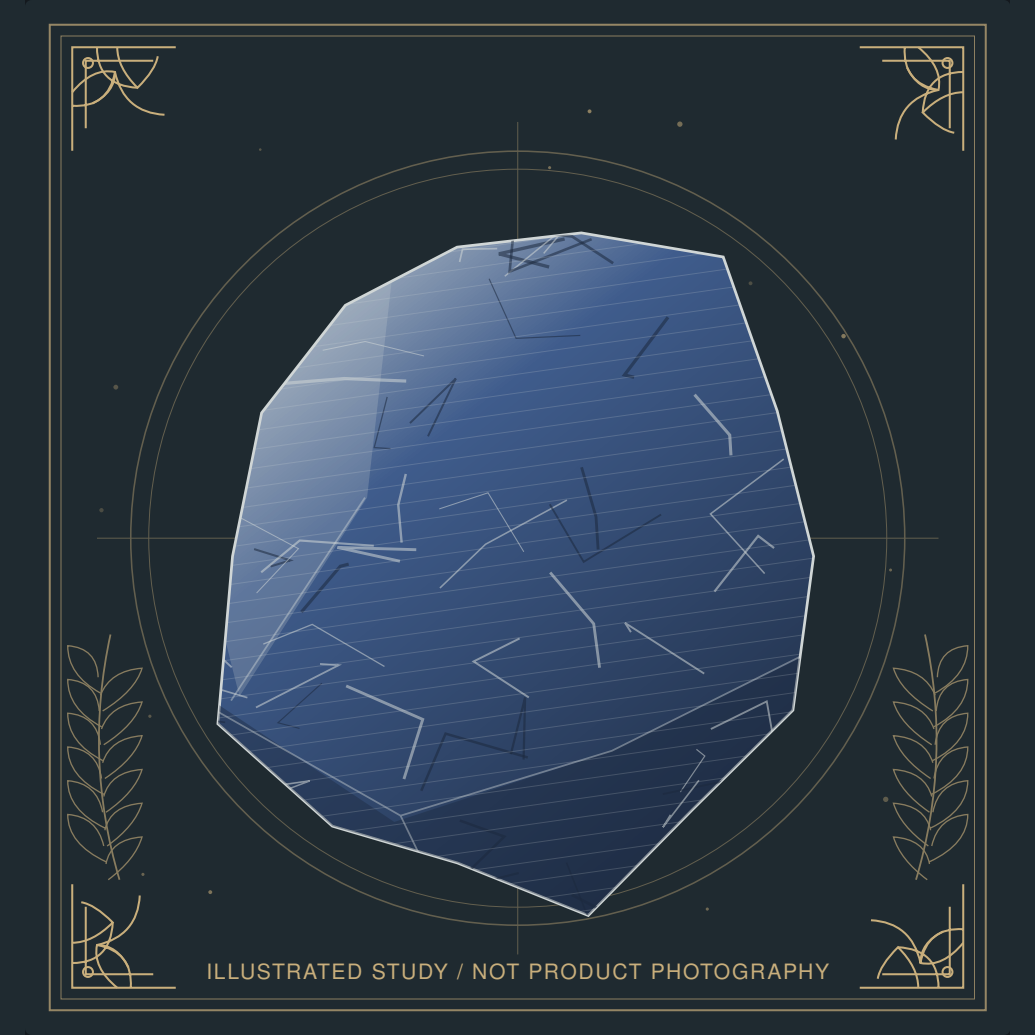
Blue with white seams
Sodalite
A blue to variable-colored feldspathoid mineral.
Sodalite is a sodium-rich feldspathoid, Na8Al6Si6O24Cl2.
Read the specimen guide
 Mila'sExotic Plants & CuriositiesA living collection by Luminary Oddities
The mineral atlas
Compare familiar polished stones and collector minerals, including materials whose shop names cover mixtures or multiple species. Read the mineral descriptions alongside their histories and attributed modern traditions.
14 specimens · Geology, history, and attributed traditions
Blue with white seams
A blue to variable-colored feldspathoid mineral.
Sodalite is a sodium-rich feldspathoid, Na8Al6Si6O24Cl2.
Read the specimen guide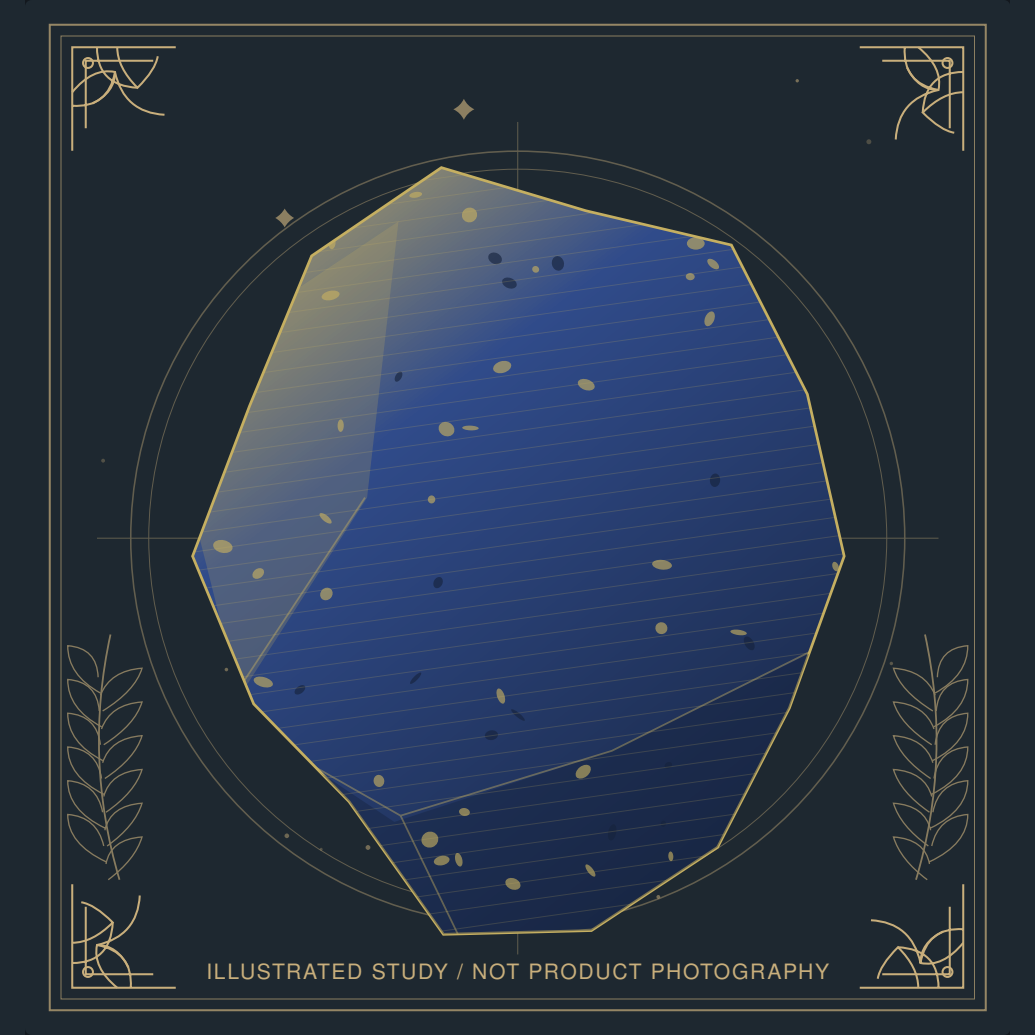
Blue rock gold grains
A rock containing blue lazurite with variable calcite, pyrite and other minerals.
Lapis lazuli is a rock rather than one blue mineral species.
Read the specimen guide
A pale vein map
Calcium borosilicate hydroxide, commonly white with dark veining.
Howlite is calcium borosilicate hydroxide, Ca2B5SiO9(OH)5.
Read the specimen guide
Chalk white forms
Magnesium carbonate (MgCO3).
Magnesite is magnesium carbonate, MgCO3.
Read the specimen guide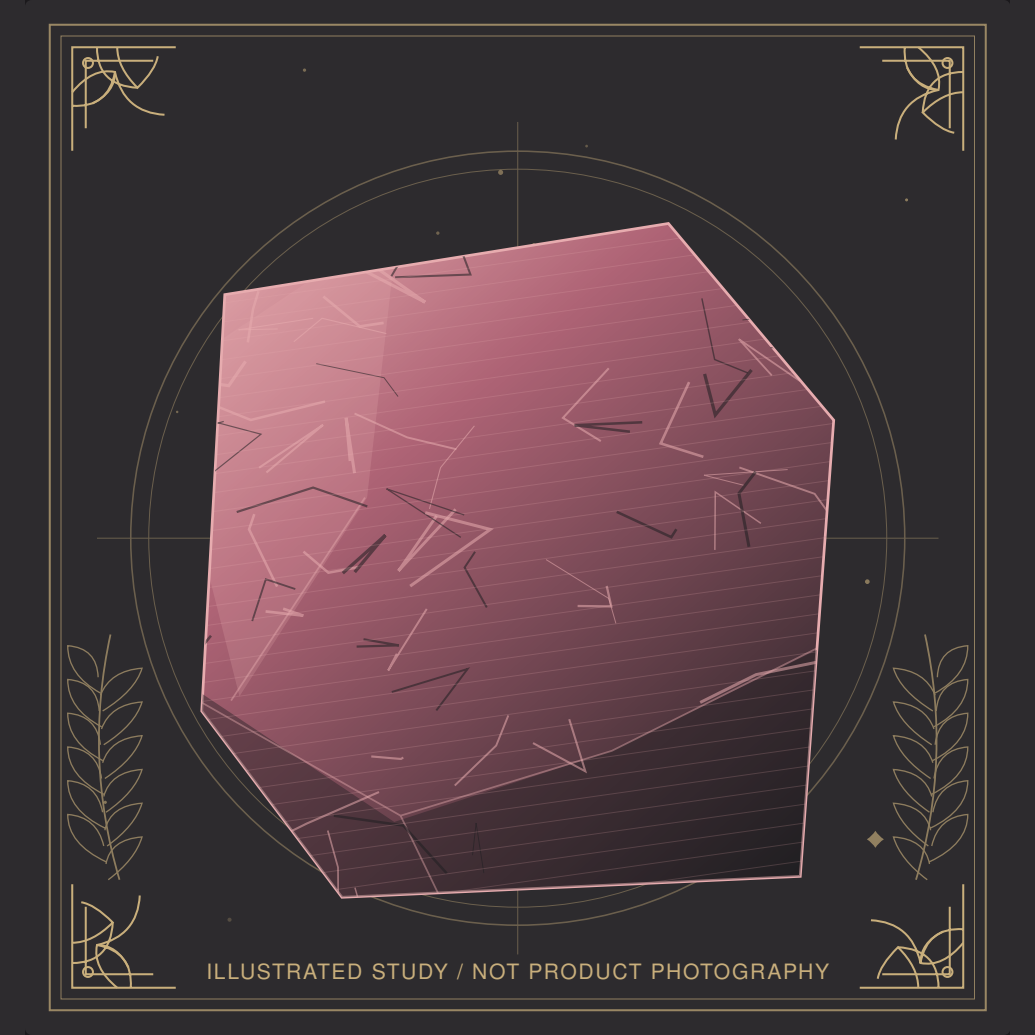
Pink crossed by black
Manganese-rich silicate material, often pink with dark manganese oxides.
Rhodonite is a manganese-rich silicate.
Read the specimen guide
Rose colored bands
Manganese carbonate (MnCO3).
Rhodochrosite is manganese carbonate, MnCO3.
Read the specimen guide
Lavender mica pages
Field/trade name for lithium-rich micas, not one accepted mineral species.
Lepidolite is a field and trade name for lithium-rich micas, not one fixed mineral species.
Read the specimen guide
Green mica light
Chromium-bearing green muscovite variety.
Fuchsite is chromium-bearing green muscovite.
Read the specimen guide
Blue fibers in stone
Aluminium borosilicate, commonly encountered in quartz-rich material.
Dumortierite is an aluminium borosilicate.
Read the specimen guide
Violet silk currents
Complex silicate mineral usually sold as purple charoite-bearing rock.
Charoite is a complex silicate mineral, commonly presented as a purple charoite-bearing ornamental rock.
Read the specimen guide
Dense violet mosaic
A complex potassium-sodium lithium silicate mineral, often sold in mixed massive material.
Sugilite is a complex silicate containing potassium, sodium and lithium among other elements.
Read the specimen guide
Blue copper mixtures
A copper silicate hydroxide mineral, often present in blue-green mixed rocks.
Shattuckite is a copper silicate hydroxide, commonly appearing as blue aggregates rather than large solitary prisms.
Read the specimen guide
Small emerald green prisms
Hydrated copper silicate, often emerald green.
Dioptase is a hydrated copper silicate, CuSiO3·H2O.
Read the specimen guide
Blue rounded surfaces
Hydrated zinc silicate.
Hemimorphite is a hydrated zinc silicate, Zn4Si2O7(OH)2·H2O.
Read the specimen guide