
Blue copper mixtures
Shattuckite
A copper silicate hydroxide mineral, often present in blue-green mixed rocks.
Mineral species; ornamental specimens may include other minerals
Shattuckite is a copper silicate hydroxide, commonly appearing as blue aggregates rather than large solitary prisms.
Geology · Human history · Attributed traditions
Explore the specimen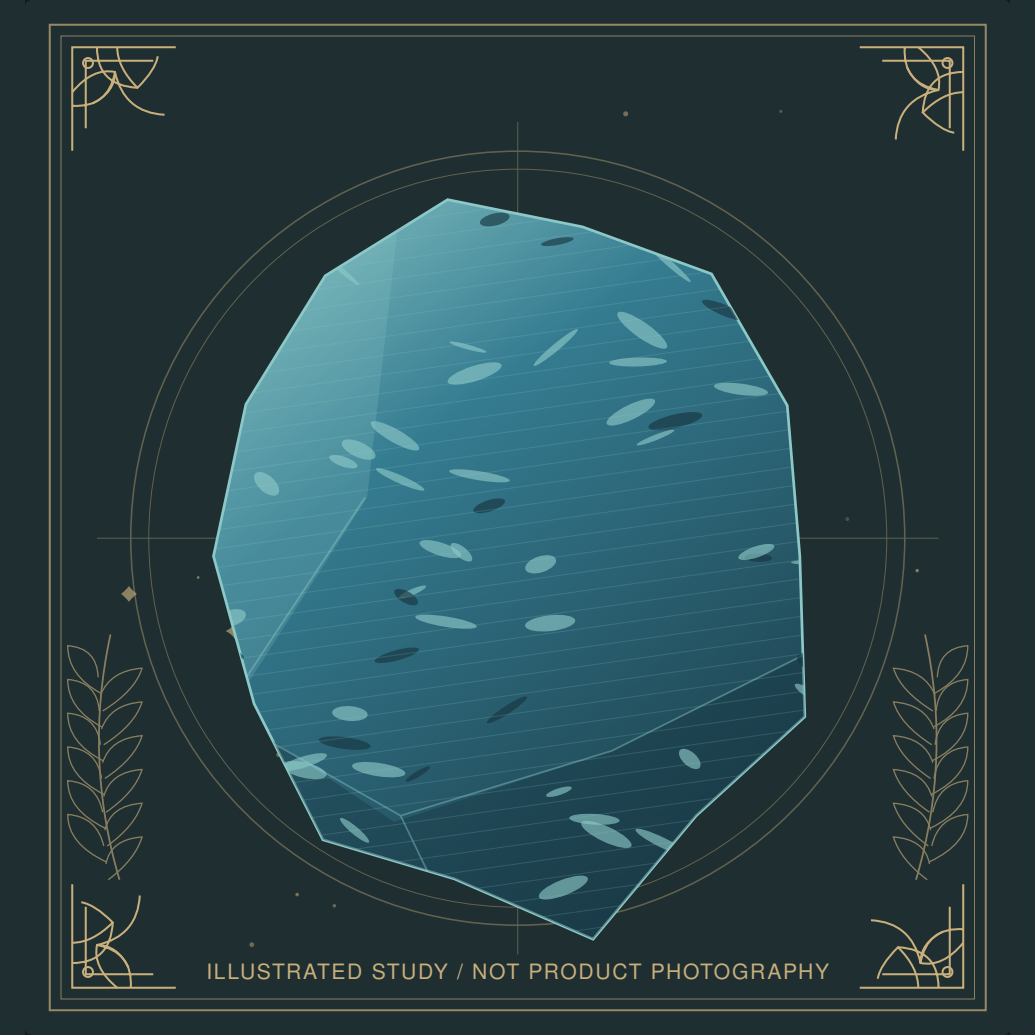
Material
A copper silicate hydroxide mineral, often present in blue-green mixed rocks. [2]
Family
Copper silicates [2]
Appearance
Blue fibrous or rounded aggregates in copper-mineral mixtures. [2]
Meaning & tradition
The Crystal Council: intuition and truthful expression. [1]
In this guide
Visual identity & plain-language name
Shattuckite is a copper silicate hydroxide, commonly appearing as blue aggregates rather than large solitary prisms. Blue-green lapidary material may combine it with chrysocolla, malachite, quartz or other minerals. Naming the whole object shattuckite need not mean every colored patch is that mineral. [2]
Earth story: formation, structure & color
The ideal formula Cu5(SiO3)4(OH)2 and orthorhombic structure distinguish it from other copper blues. The Handbook records hardness around 3.5 and commonly acicular crystals gathered into rounded masses. It forms as a secondary mineral in oxidized copper deposits. Quartz intergrowth can make a polished object behave differently from the blue phase alone. [2]
Shattuckite is a hydrated copper silicate with ideal formula Cu5(SiO3)4(OH)2. Its orthorhombic structure can produce very small prismatic or needle-like crystals, often arranged as rounded radiating aggregates. The Handbook describes medium to deep blue color and silky luster. This is a different structure and composition from blue copper carbonates such as azurite, even when several materials share a copper-bearing deposit. [2]
It is a secondary mineral of oxidized copper deposits, with chrysocolla, malachite, quartz, hematite and ajoite among documented associates. The reference gives approximate hardness 3.5, perfect cleavage in two directions and density about 4.11. Those values characterize the mineral, not necessarily a quartz-rich cabochon or a multicolored polished rock. A blue area enclosed in hard silica does not become harder shattuckite; the object combines constituents. A good description therefore distinguishes the identified blue mineral, the host and any accessory material. [2]
The Handbook documents different studied occurrences and analyses, with type material from Bisbee and additional samples from other regions. A secondary copper-mineral association can be locally varied even within the same species account. Fine acicular grains can produce rounded outward aggregates, demonstrating the distinction between a crystal's individual form and the shape of the whole mass. That scale distinction is especially helpful when comparing a raw blue tuft with a polished opaque stone. [2]
Varieties & look-alikes
Compare fibrous aggregates, rounded blue growths and quartz-rich mixed material. Chrysocolla has variable hydrated-silicate character; azurite is a carbonate and turquoise a phosphate. A beautiful blue-green tumble cannot resolve these identities by color. A label should state a verified mixture where possible. [2]
- Shattuckite
- Confirmed shattuckite can occur as fine blue fibrous or radiating aggregates. The texture and silky luster are useful clues, while copper-silicate chemistry and appropriate measurements establish identity. Most polished retail shapes no longer show natural external crystal boundaries. Keep specimen form, known associations and the determination source together in a label. [2]
- Shattuckite–chrysocolla
- The label describes a two-component copper-mineral association when both have been determined. It is not a distinct species with a combined ideal formula. Blue and blue-green patches may contribute differently to polish and durability. If either component has only been inferred visually, qualify the identification rather than allowing the commercial combination to appear analytically complete. [2]
- Shattuckite–quartz mixtures
- Quartz can provide a harder silica framework around blue shattuckite-bearing areas. Identifying the host explains why one polished object may behave differently from a soft raw aggregate. The amount and arrangement of quartz matter, and blue inclusions still require determination. A clear host is not evidence that every blue component is the same copper mineral. [2]
Human story: objects, names & cultural context
The name comes from the Shattuck mine at Bisbee, Arizona, its type locality. The Handbook lists museum type material and early mineralogical references. This mining and scientific record gives a specific human context, without requiring an invented ancient spiritual name. [2]
The name comes from the Shattuck mine at Bisbee, Arizona, the type locality. The Handbook lists preserved type material at the National Museum of Natural History and cites analytical studies that refined its formula and structure. That documented history connects mine discovery, museum collections and mineralogical investigation. Other recorded occurrences include Namibia, Congo and Greece, so the mine-derived name does not require every specimen to come from Arizona. A present-day shop's origin claim still requires its own record. [2]
Meaning & practice: attributed traditions
The Crystal Council associates shattuckite with intuition and truthful expression. These are contemporary spiritual beliefs, not evidence that the mineral alters perception. [1]
An editorial truthfulness practice can ask which part of a statement is direct observation and which is interpretation. Write both separately before speaking. The mixed specimen becomes a reminder to identify components honestly, while the practical skill comes from attention.
Material truth: trade names & treatments
Distinguish a shattuckite-bearing rock from an isolated mineral aggregate. Exposed fibers and low-hardness growths warrant support rather than abrasion. Do not infer the identity of every green area or the source of the piece from a seller’s attractive photograph. Retain treatment and repair information when supplied. [2]
Shattuckite and chrysocolla are often encountered as components in related blue-green assemblages, but naming one does not automatically identify every patch. A seller should state whether the polished piece is confirmed shattuckite, a shattuckite-bearing rock, a quartz-rich mixture or an untested trade designation. Porosity, fractures, impregnation and polishing can affect the object's feel without establishing its mineral identity. Do not infer a pure formula from a coherent smooth surface or accept an exact locality on color alone. [2]
Examine whether the blue material forms radiating tufts, fine rounded clusters or opaque regions inside pale silica. Note changes in sheen as the specimen turns under light. An attractive mixture can be labeled with known constituents while leaving the rest unidentified. Keep copper-bearing display material out of improvised drinking preparations and avoid creating mineral dust. For fragile raw specimens, support the matrix and preserve the fine aggregate rather than rubbing it as an authentication demonstration.
Sources & related specimens
The Handbook supplies mineral identity, habits and mine naming. The Crystal Council supplies modern symbolism. Chrysocolla, azurite and turquoise make useful material comparisons.
- Shattuckite: contemporary meanings
The Crystal Council · Contemporary symbolic associations attributed to The Crystal Council · Accessed October 9, 2026
- Handbook of Mineralogy: Shattuckite
Mineralogical Society of America · Identity and natural history · Accessed October 9, 2026