
Blue rounded surfaces
Hemimorphite
Hydrated zinc silicate.
Mineral species; ornamental specimens may include other minerals
Hemimorphite is a hydrated zinc silicate, Zn4Si2O7(OH)2·H2O.
Geology · Human history · Attributed traditions
Explore the specimen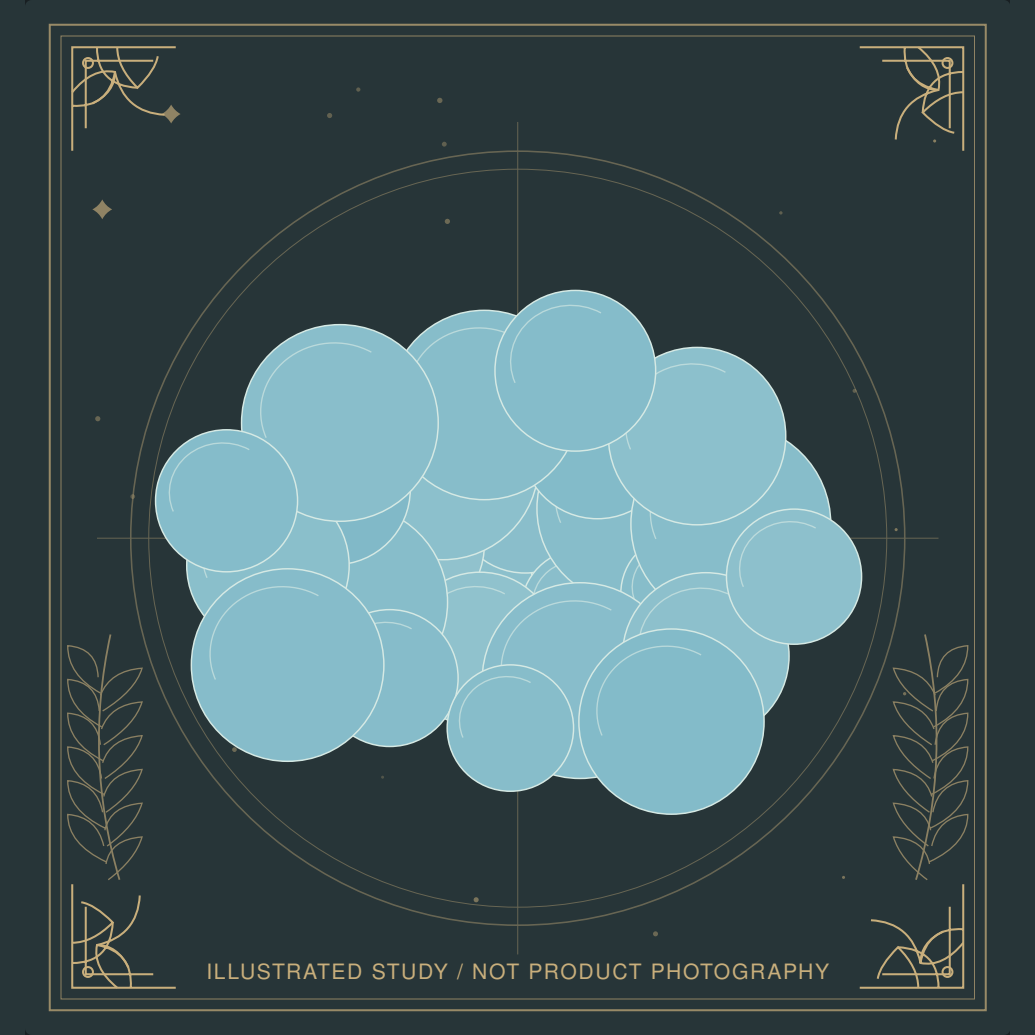
Material
Hydrated zinc silicate. [2]
Family
Zinc silicate [2]
Appearance
White or blue fans, fibrous masses and rounded crusts. [2]
Meaning & tradition
The Crystal Council: thoughtful communication. [1]
In this guide
Visual identity & plain-language name
Hemimorphite is a hydrated zinc silicate, Zn4Si2O7(OH)2·H2O. Crystal fans and rounded blue surfaces can look unrelated at first glance. They describe habits within the same mineral category, while host material and other phases explain additional variation in a specimen. [2]
Earth story: formation, structure & color
The Handbook gives orthorhombic structure, hardness about 4.5–5 and brittle behavior. Opposite crystal ends can develop different forms, the architectural feature behind the name. It grows in oxidized zinc-bearing deposits, with mineral companions including smithsonite and calcite. A blue color is an appearance clue rather than a zinc assay. [2]
Hemimorphite is a hydrated zinc silicate, Zn4Si2O7(OH)2·H2O. Its orthorhombic structure can show different forms at the opposite ends of a crystal, the characteristic called hemimorphism. Fine crystals may be thin and tabular, joined into fan-like or sheaf-like groups. Rounded, stalactitic, fibrous and chalky coatings are also recorded. Consequently, a smooth blue aggregate and a delicate white crystal spray can be presentations of the same mineral. [2]
The Handbook records Mohs hardness 4.5–5, density about 3.48, pronounced cleavage and brittle tenacity. It is a secondary mineral in the oxidized parts of zinc-bearing deposits, with smithsonite, sphalerite, calcite, hydrozincite and other minerals among possible associates. Colorless and white material is documented, as are pale blue, pale green, gray and impurity-colored appearances. Neither intense blue nor a rounded surface is necessary to identify the species, and neither proves that an unknown specimen is hemimorphite rather than another secondary mineral. [2]
Hemimorphism is most easily appreciated where both natural ends of a crystal survive. A rounded aggregate or cut cabochon can conceal that original asymmetry, so the absence of obvious unlike ends does not exclude the species. The Handbook also records a white streak and varying vitreous to pearly luster. These describe material properties at the crystal level; an overall chalky coating can look different because of grain size and aggregation. [2]
Varieties & look-alikes
Compare pale fan-shaped crystals, blue botryoidal crusts and compact material. Smithsonite is zinc carbonate, not another hemimorphite form. Blue aragonite and other ornamental mixtures can overlap visually. A photograph of rounded growth cannot reliably assign every blue zinc or copper mineral. [2]
- Blue hemimorphite
- Blue is one documented appearance, not a separate species or a guaranteed locality marker. Rounded or fibrous blue aggregates can overlap visually with other minerals. Keep bodycolor, texture and a confirmed zinc-silicate determination distinct. The intensity shown in a sales photograph is especially weak evidence when illumination and image processing are unknown. [2]
- White hemimorphite
- White or colorless material may form thin tabular crystals, fans or coatings. Its appearance can be very different from a blue polished tumble, even while sharing the same hydrated zinc-silicate identity. Well-developed opposite ends may show the morphology responsible for the name. An aggregate without obvious terminations still needs identification through appropriate material evidence. [2]
- Botryoidal hemimorphite
- The grape-like outward form describes an aggregate shape and does not define the mineral. Hemimorphite can create such rounded masses, but other minerals can too. Describe the surface texture and known host rather than authenticating from rounded lobes alone. Polishing can flatten or conceal those original growth forms and change how the specimen reads visually. [2]
Human story: objects, names & cultural context
The name refers to hemimorphic morphology: opposite ends of a crystal need not have identical forms. This observable difference grounds the naming history. A mineral architecture can inspire personal metaphor without being proof that historical users assigned it today’s communication meanings. [2]
The name explicitly points to unlike crystal ends, a scientifically observable feature rather than a symbolic opposition. The Handbook's cited structure study and recorded localities trace investigation of the mineral in ore deposits and museum-worthy specimens. Not all rounded aggregates reveal the feature that supplied the name, but the underlying mineral identity remains. Historical zinc-ore vocabulary can be ambiguous, so a broad older ore term should not be retroactively assigned to hemimorphite without identifying the material concerned. [2]
Meaning & practice: attributed traditions
The Crystal Council associates hemimorphite with communication and considerate expression. This is a modern spiritual interpretation. [1]
An editorial communication intention might revise one sentence so that it says what you mean without an unnecessary accusation. The differing crystal ends can remind you that sending and receiving a message are not identical experiences.
Material truth: trade names & treatments
Keep zinc-silicate identity distinct from color-based trade descriptions. Delicate crystal fans and thin coatings can be more vulnerable than a compact tumble suggests. Ask about coatings, repair and matrix identification when buying a display group. Avoid creating mineral powder to compare whiteness or color. [2]
Botryoidal blue material can visually resemble other carbonates and silicates found in oxidized deposits. The shared habitat and texture are reasons to examine mineral properties, not reasons to merge names. A piece with resin, coating, filling or repairs needs separate condition disclosure when those interventions are known. An exceptionally smooth polish can hide fine fibrous structure and natural porosity. A named zinc-silicate determination is more informative than calling every rounded blue object a high-energy crystal. [2]
Look for whether the aggregate surface is composed of visible tiny crystals, silky fibers or a smooth coating. Compare raw and polished areas if both survive, and note which features are manufactured by cutting. For a fan-like specimen, preserve its fragile free edges and handle the supporting matrix. A collector can report rounded blue aggregate with confirmed hemimorphite while leaving the color's exact cause unresolved. That distinction avoids confusing a secure species identification with a complete chemical explanation of every visible feature.
Sources & related specimens
The Handbook establishes identity, habits and oxidation-zone occurrence. The Crystal Council provides the attributed modern theme. Compare smithsonite and chrysocolla before identifying blue rounded growth by appearance alone.
- Hemimorphite: contemporary meanings
The Crystal Council · Contemporary symbolic associations attributed to The Crystal Council · Accessed October 9, 2026
- Handbook of Mineralogy: Hemimorphite
Mineralogical Society of America · Identity and natural history · Accessed October 9, 2026