
Sheaves and needles
Zeolites: Stilbite and Scolecite
A family of hydrated aluminosilicates; species differ.
Hydrated aluminosilicate mineral family
Zeolites are a mineral family, not one pale crystal species.
Geology · Human history · Attributed traditions
Explore the specimen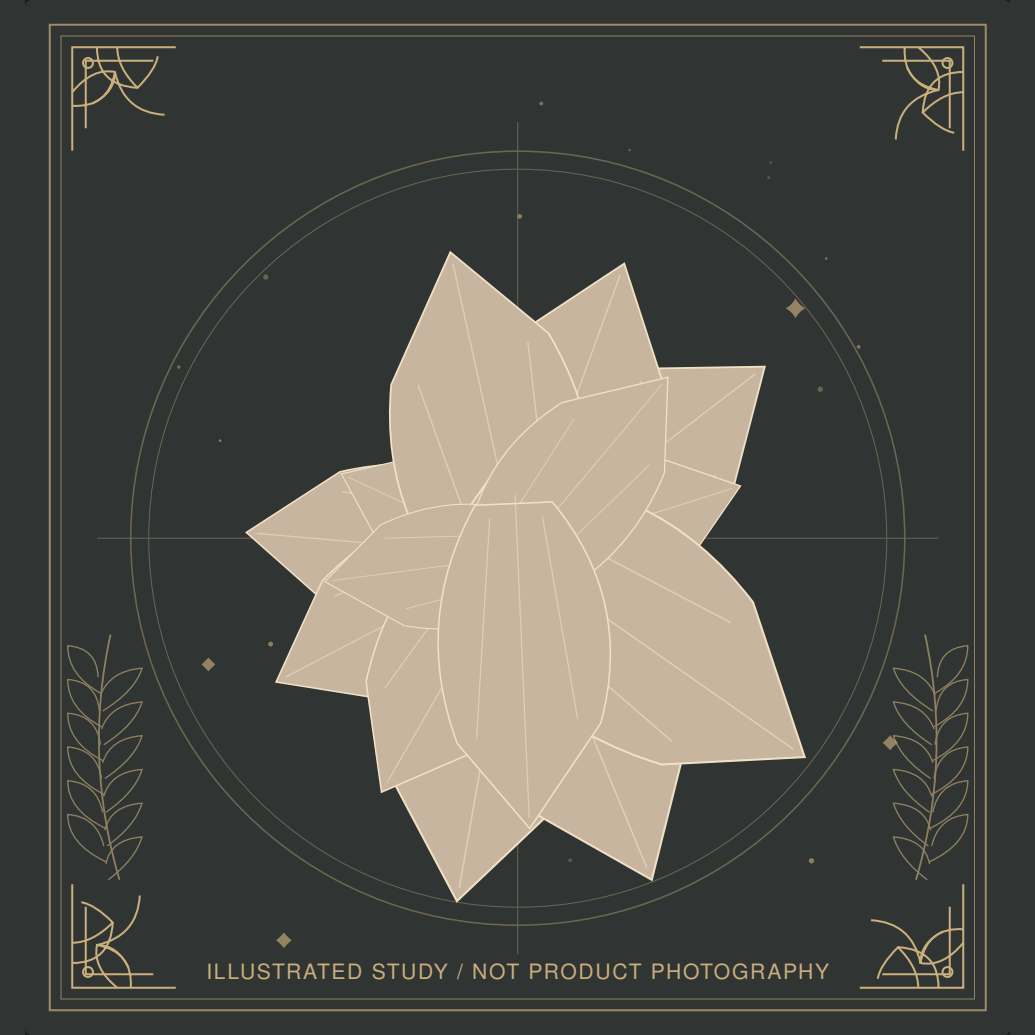
In this guide
Visual identity & plain-language name
Zeolites are a mineral family, not one pale crystal species. Stilbite and scolecite offer contrasting familiar forms. A cavity-grown display may contain several zeolites and non-zeolite associates. A fan or spray is an architectural clue, while a confirmed species label requires more than whiteness. [6][7]
Earth story: formation, structure & color
The Handbook describes hydrated aluminosilicate structures. Scolecite is a calcium-bearing zeolite commonly in radiating slender crystals, with hardness 5–5.5. Stilbite-Ca commonly forms sheaflike tabular aggregates and is softer, about 3.5–4. Low-temperature cavity and hydrothermal growth explain common display settings without making the two species identical. [6][7]
Zeolites are a mineral family with aluminosilicate frameworks containing channels, exchangeable constituents and structural water. This is a group directory context rather than one mineral with one formula or crystal system. Scolecite, natrolite, mesolite, stilbite and heulandite have different compositions and architectures. Their outward forms can be strikingly different even when they occur together in one volcanic cavity. [6][7][4][5][3]
The Handbook documents scolecite as a calcium-bearing mineral, CaAl2Si3O10·3H2O, with slender prismatic crystals and radiating sprays. Mesolite contains both sodium and calcium, Na2Ca2Al6Si9O30·8H2O, and can form hair-like tufts or divergent aggregates. Natrolite provides a sodium-rich comparison, while stilbite and heulandite have their own framework compositions and habits. A cluster cannot receive the formula of whichever zeolite name is most familiar to a buyer. [6][7][4][5][3]
Secondary growth in cavities of volcanic rocks is important in many collected examples, with mineral-bearing fluids depositing crystals after the host formed. The examined mineral references also record other hydrothermal occurrences. Several generations or species may share one cavity. Their attachment and texture provide clues, but a pale spray's exact species requires more evidence than needle shape. Individual cleavage, brittleness and aggregate fragility matter when handling delicate clusters; industrial uses of zeolite frameworks do not make any raw specimen suitable for ingestion or water treatment. [6][7][4][5][3]
Varieties & look-alikes
Compare stilbite sheaves, scolecite sprays, heulandite-like crystals and mixed assemblages. Apophyllite may be nearby but is outside the zeolite family. Natrolite and other needle-shaped species can resemble scolecite. Each caption should identify what is confirmed and avoid assigning the whole cluster one mineral name. [6][7]
- Stilbite
- Stilbite-group material can form broad blades and sheaf-like aggregates, often contrasting with clear crystals in a cavity. The Handbook's calcium-rich reference documents its own composition and properties. A commercial peach-colored sheaf should retain a supported identification rather than receive the name from hue alone. The broad layered-looking silhouette is a clue, not a complete analysis. [7]
- Scolecite
- Scolecite's slender prismatic crystals can form radiating sprays or fibrous masses. Its calcium-rich hydrated framework differs from related sodium-bearing zeolites. The Handbook records perfect cleavage and brittle behavior, so fine needles deserve support. A white spray is not automatically scolecite: natrolite, mesolite and other minerals can create overlapping outward textures. [6]
- Heulandite
- Heulandite is retained as a separate zeolite comparison rather than a synonym for stilbite. Its species and framework chemistry require an appropriate determination, especially in multicomponent clusters. Describe visible blades or grains and cite the basis for the name. Unknown pale areas can remain unidentified instead of being assigned the most common label. [3]
- Natrolite
- Natrolite supplies a sodium-rich zeolite comparison with its own prismatic or fibrous forms. Shape overlaps with related minerals, so a needle-like aggregate cannot select the species by itself. Preserve the confirmed name, locality and determination source. A general zeolite identification may be the better wording when composition has not been established. [5]
- Mesolite
- Mesolite is not merely a decorative form of scolecite. Its sodium-calcium composition and orthorhombic structure are independently described in the Handbook, which records hair-like tufts and radiating aggregates. Those textures explain both appearance and fragility. Identify it through suitable evidence and protect free edges; a pale fibrous photograph alone cannot settle the species. [4]
- Zeolite clusters
- A natural cavity specimen can contain more than one zeolite alongside other minerals. The whole cluster needs a component account rather than one formula. Attachment, repairs and matrix identity are separate parts of the description. A broad family label can be honest and informative when every small component has not been determined. [6][7]
Human story: objects, names & cultural context
The scientific family groups related structures and chemical behavior while retaining separate species names. Scolecite’s name refers to curling behavior when heated in early mineral testing; that historical observation is not an instruction to heat a display specimen. Modern collector language benefits from recording individual phases. [6][7]
The family name has a historical connection with boiling imagery and behavior observed on heating. The individual species names preserve other accounts: mesolite refers to a middle compositional relation, while scolecite's naming reflects an older observation associated with heating. Those naming stories describe scientific history, not a suggestion to heat collection pieces. Modern mineralogical studies refine structures and compositions and maintain preserved specimens as reference points. A newly purchased cluster should retain its actual locality and determination rather than inherit the entire family history as one ancient spiritual practice. [6][7][4][5][3]
Meaning & practice: attributed traditions
The Crystal Council associates stilbite with compassion and scolecite with inner peace. These are separate contemporary correspondences, not universal effects of all zeolites. [2][1]
An editorial peace intention can select a short uninterrupted period for observation. Notice the different growth directions without touching fragile tips, then choose one next task. Personal calm does not need to be presented as a chemical property.
Material truth: trade names & treatments
Support delicate needles and sheaves by their host. Do not use dry brushing, heating or deliberate fragmentation as a casual identity test. Repair and glued additions belong in condition notes. The family label should not be used to give every specimen one hardness or to certify a precise species. [6][7]
Stilbite, scolecite and other commercial zeolite specimens need species-level labels when evidence permits. A general zeolite-cluster label is appropriate when the components are not all determined. Resemblance, a white color and an Indian locality statement do not settle every fine needle or blade. Clusters can also be repaired or assembled, so the material identity and specimen construction require separate attention. Cleaning intended for a robust stone can detach a delicate spray or exploit cleavage in individual crystals. [6][7][4][5][3]
Describe each visible component without forcing a guessed name: peach-colored sheaves, white radiating needles, clear angular crystals or a darker volcanic host. Then state which determinations are confirmed. Photograph the attachment and supporting matrix as well as the free-growing tips. A report that identifies scolecite should not silently become a determination of every surrounding zeolite. Careful records preserve the specimen's genuine geological diversity and allow later examination to refine a label rather than undo an invented ingredient list.
Sources & related specimens
The two Handbook references supply species-specific properties and occurrence. The Crystal Council documents two modern interpretations. Apophyllite is a useful neighboring-mineral comparison.
- Scolecite: contemporary meanings
The Crystal Council · Contemporary symbolic associations attributed to The Crystal Council · Accessed October 9, 2026
- Stilbite: contemporary meanings
The Crystal Council · Contemporary symbolic associations attributed to The Crystal Council · Accessed October 9, 2026
- Handbook of Mineralogy: Heulandite
Mineralogical Society of America · Mineralogy, geology, naming and documented material history · Accessed October 9, 2026
- Handbook of Mineralogy: Mesolite
Mineralogical Society of America · Mineralogy, geology, naming and documented material history · Accessed October 9, 2026
- Handbook of Mineralogy: Natrolite
Mineralogical Society of America · Mineralogy, geology, naming and documented material history · Accessed October 9, 2026
- Handbook of Mineralogy: Scolecite
Mineralogical Society of America · Identity and natural history · Accessed October 9, 2026
- Handbook of Mineralogy: Stilbite-Ca
Mineralogical Society of America · Mineralogy, geology, naming and documented material history · Accessed October 9, 2026