

The dark octahedron
Magnetite
Magnetic iron oxide, distinct from hematite.
Mineral species; ornamental specimens may include other minerals
Magnetite is an iron oxide, Fe3O4, distinct from hematite.
Geology · Human history · Attributed traditions
Explore the specimen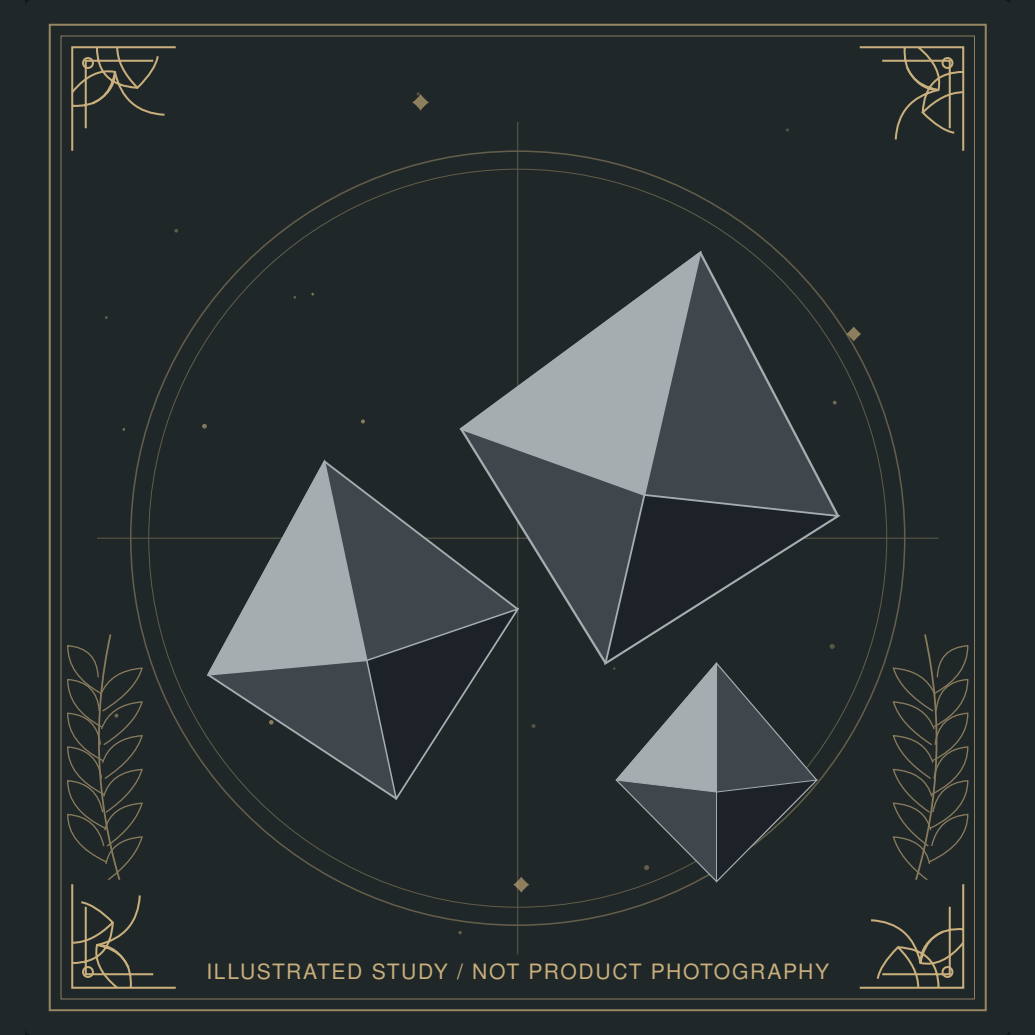
Material
Magnetic iron oxide, distinct from hematite. [1]
Family
Iron oxides [1]
Appearance
Black metallic grains, masses and octahedral crystals. [1]
Meaning & tradition
Kynes: lodestone and reconciliation. [2]
In this guide
Visual identity & plain-language name
Magnetite is an iron oxide, Fe3O4, distinct from hematite. Dark octahedral crystals, grains and massive material occur naturally. Lodestone describes magnetite that carries natural permanent magnetization; it should not be used as a synonym for every specimen containing magnetite. [1]
Earth story: formation, structure & color
Cubic structure and strong magnetic response distinguish identified magnetite. The Handbook records hardness about 5.5–6.5 and black streak. It is common in igneous and metamorphic rocks and occurs in major sedimentary iron formations and detrital deposits. A magnetic response reveals a property but does not establish the purity or source of a mixed rock. [1]
Magnetite is Fe3O4, an iron oxide that differs chemically and structurally from hematite. The Handbook places it in the cubic system and records octahedral crystals, granular masses and other forms. Its black color, black streak and strong magnetic response are useful observations. The magnetic property belongs to the physical mineral account; it does not establish a claimed spiritual attraction or prove that a polished commercial magnet is natural magnetite. [1]
The reference records Mohs hardness 5.5–6.5 and density about 5.18. Magnetite occurs widely as an accessory in igneous and metamorphic rocks and in major ore deposits. Grains disseminated through a rock differ in presentation from a collected octahedron or compact magnetic mass. Other minerals can be intergrown or present in the host. The label should therefore identify magnetite-bearing rock when that is the actual object, rather than assigning every component the oxide's ideal formula and density. [1]
Magnetite's cubic symmetry also allows twinning following the spinel law, documented in the Handbook. A grain or distorted octahedron may therefore show relationships more complicated than one ideal sketch. In a rock, intergrowth and surface alteration can further complicate the apparent form. Retain the observed architecture and examined oxide identity separately rather than making a perfect geometric silhouette the definition of a natural crystal. [1]
Varieties & look-alikes
Compare faced octahedra, granular material, massive ore and naturally magnetized lodestone. Hematite is another iron oxide, while manufactured magnetic jewelry can contain materials selected for magnetic behavior. A black polished bead is not confirmed lodestone merely because it is attracted to a magnet. [1]
- Magnetite
- The parent iron oxide can appear as individual crystals, compact masses or grains in a rock. Strong magnetism and black powder color complement, rather than replace, a material determination. An opaque black object should not be called magnetite from one response alone. The cubic structure and appropriate analytical properties supply a more specific identity. [1]
- Lodestone
- Lodestone is naturally magnetized material associated with magnetite. It is a descriptive category concerning magnetization, not a new oxide species. Distinguish it from an ordinary magnetite specimen attracted to a magnet and from an engineered magnet. A recorded specimen history helps support natural origin, while an impressive pulling force cannot establish that history by itself. [1]
- Natural crystals
- Octahedra can display magnetite's cubic symmetry particularly clearly. Surface alteration, attached host and intergrown minerals may complicate the form, and broken surfaces should not be mistaken for ideal growth faces. Record condition and any repairs. The specimen's black geometric architecture is useful for comparison but is not an exact locality fingerprint. [1]
Human story: objects, names & cultural context
The Handbook describes the name as an ancient term, possibly linked to Magnesia in Greece, retaining uncertainty. This cautious naming account is preferable to assigning every dark magnetic stone one universal cultural history. A mineral’s natural magnetization and a product’s deliberately created magnetic condition are different histories. [1]
The mineralogical naming account links magnetite to historically magnetic iron material. Lodestone introduces a more specific phenomenon: naturally magnetized material able to function as a magnet. The distinction matters in historical use and in modern collections. A general magnetic attraction test does not recreate the story of a particular old compass or prove that a newly purchased stone has an ancient navigation history. Preserve documented object use separately from the material's ability to respond to magnetic forces. [1]
Meaning & practice: attributed traditions
Sandra Kynes lists lodestone in reconciliation correspondences in her 2018 account. This belief applies to her named practice. [2]
An editorial reconciliation intention can identify one conversation worth attempting and one respectful opening. The physical idea of attraction can be a personal metaphor, but mineral magnetism is not evidence that relationships will reconnect.
Material truth: trade names & treatments
Use lodestone only when permanent magnetization is actually part of the specimen description. A magnetic mineral grain within rock and a manufactured magnetic bead are not the same product category. Preserve documentation and keep powerful magnets used in demonstrations separate from fragile display specimens. [1]
A naturally magnetic mineral, a naturally magnetized lodestone and a manufactured magnet answer different identity and origin questions. Commercial magnetic beads can be engineered materials, even when sold near hematite or lodestone. A magnet response does not settle composition or manufacture by itself. For an unknown item, suitable material examination is more useful than a stronger magnet test. Labels should also retain any known host rock, repairs or coating rather than treating magnetism as the only property that matters. [1]
Observe a confirmed crystal's octahedral faces and note whether the surrounding rock contains distinct grains or veins. If demonstrating physical attraction, use a documented specimen and describe the observation plainly. Keep delicate crystals from striking one another or a magnet, since the pull can cause mechanical damage. A personal symbolic practice may borrow the idea of attraction while the material record remains a description of iron oxide and magnetization. Those separate accounts prevent metaphor from becoming an identification claim.
Sources & related specimens
The Handbook gives identity, physical behavior, occurrence and cautious naming. Kynes provides the attributed lodestone meaning. Compare hematite and its manufactured magnetic look-alikes without reducing identification to one magnet test.
- Handbook of Mineralogy: Magnetite
Mineralogical Society of America · Identity and natural history · Accessed October 9, 2026
- Sandra Kynes: 365 Days of Crystal Feng Shui for Your Home (2018)
Llewellyn Worldwide · Sandra Kynes’s contemporary crystal-placement and intention framework · Accessed October 9, 2026