
Brass geometry
Pyrite
Iron sulfide (FeS2).
Mineral species; ornamental specimens may include other minerals
Pyrite is iron sulfide, FeS2, known for brassy metallic color and precise natural crystal geometry.
Geology · Human history · Attributed traditions
Explore the specimen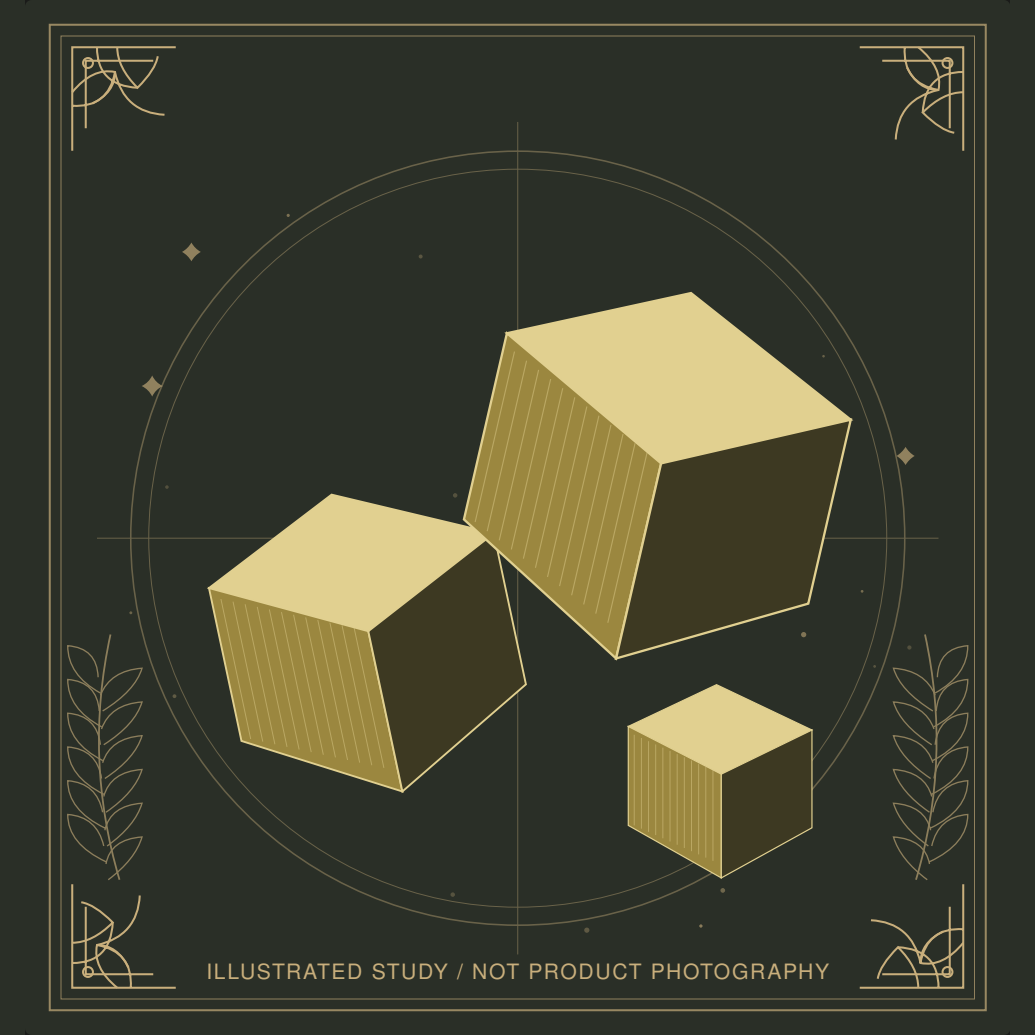
Material
Iron sulfide (FeS2). [3]
Family
Iron sulfide [3]
Appearance
Brassy metallic cubes, aggregates and radiating forms. [3]
Meaning & tradition
The Crystal Council: determination and intention-setting. [1]
In this guide
Visual identity & plain-language name
Pyrite is iron sulfide, FeS2, known for brassy metallic color and precise natural crystal geometry. Cubes, pyritohedra, octahedra and aggregates need not be machine-cut. Surface striations can record crystal growth. A specimen’s natural form and any repair or mounting are separate questions. [3]
Earth story: formation, structure & color
The Handbook gives cubic structure, hardness 6–6.5 and brittle behavior. Pyrite occurs in many geological environments, from hydrothermal deposits to sedimentary and metamorphic settings. Its strong metallic reflection is not proof of gold. Color and shape become informative when read alongside chemistry and occurrence. [3]
Pyrite is iron disulfide, FeS2, with cubic symmetry and a pale brass-yellow metallic appearance. Natural cubes can bear striations, while pyritohedra, octahedra, granular masses and rounded aggregates are also documented. The variety of forms matters: a cube is one growth expression rather than the only natural shape of pyrite. A metallic yellow object that lacks a cube is not automatically another species, and a manufactured cube is not automatically pyrite. [3]
The Handbook records Mohs hardness 6–6.5, density about 5.02, brittle tenacity and greenish-black to brownish-black streak. These differ from native gold's characteristic mechanical behavior and from the softer copper sulfide chalcopyrite. Pyrite occurs in numerous geological environments, including ore deposits and sedimentary rocks. Its iron and sulfur can participate in alteration, so specimen condition and storage history deserve attention. A bright fresh surface, darker tarnish and an unstable deteriorating aggregate are different observations that should not be compressed into one sales image. [3]
Varieties & look-alikes
Compare sharp cubes, radiating suns, granular aggregates and pyrite in host rock. Chalcopyrite is a different copper-iron sulfide; marcasite has the same broad formula but a different crystal structure. Gold differs in mechanical and other properties. Glitter in a lapis specimen may be pyrite rather than a separate gold inclusion. [3]
- Pyrite cubes
- Cubic crystals are one natural expression of the mineral's symmetry. Striations and contact relationships can supply valuable observations, but geometric perfection does not by itself establish identity or an exact mine. Record whether faces are intact, chipped or restored. The crystal's natural form should be distinguished from the cut or assembled form of a decorative product. [3]
- Pyrite clusters
- Clusters gather several crystals, possibly with different sizes and orientations, on one matrix or among intergrown grains. Identify the host when known and preserve uncertainty when it is not. Attachment, repairs and broken faces are part of condition. A dramatic cluster can be appreciated while its component identities and restoration history remain clearly documented. [3]
- Pyrite suns
- Sun describes a radiating, flattened aggregate appearance in commerce. It is not a new species or evidence of a celestial origin. The label should retain pyrite identification and, when known, geological provenance. Radial texture is a visual observation whose formation interpretation needs more context than a product name. Preserve any thin edges and fragile supporting material. [3]
- Pyrite in matrix
- The brass-yellow mineral and its surrounding host are separate components of the specimen. A black or pale background should not receive a guessed name from color alone. Multiple constituents can change bulk density and durability. The most honest caption identifies confirmed pyrite and then states the known host or leaves the matrix unidentified. [3]
Human story: objects, names & cultural context
The name comes from a Greek reference to fire because sparks can be struck from the material. That documented property-related etymology is not evidence for every modern prosperity or manifestation claim. Mineral naming, ore history and current spiritual marketing are separate accounts. [3]
The mineral name's historical connection with fire reflects an older naming and use vocabulary. The popular phrase fool's gold preserves visual confusion rather than a correct material identity: pyrite and gold are separate substances. That comparison can introduce scientific tests and the limits of appearance without ridiculing earlier users or modern buyers. A documented specimen's mining or collection history provides a more specific human story than calling every cube an ancient prosperity talisman. [3]
Meaning & practice: attributed traditions
The Crystal Council associates pyrite with determination, personal will and intention-setting. This is a contemporary spiritual framework, not a promise of financial gain. [1]
An editorial determination practice can pair the specimen with one goal, one next action and a date to check progress. The crystal’s geometry can remind you to make the goal specific. The action and follow-through do the practical work.
Material truth: trade names & treatments
Ask about repairs where multiple perfect cubes appear joined, and distinguish natural aggregates from assembled displays. Hardness does not remove brittleness. Moisture-sensitive sulfide preservation can matter for some specimens, especially those showing deterioration. Do not use a gold-colored surface as a complete identification or value judgment. [3]
A clear description can state natural pyrite crystals on matrix, isolated crystal, pyrite-bearing rock or another identified product. Condition, repair and any surface intervention should be recorded independently. Natural-looking geometry and strong shine do not rule out repairs or attached crystals. Conversely, tidy cube faces can genuinely be natural growth surfaces. Gold-like appearance should not become an investment or metal-content claim, and a prosperity correspondence should stay within the explicitly attributed modern tradition. [3]
Observe face striations under angled light and compare an intact termination with an area of fracture. Photograph the back and attachment to the matrix as well as the most spectacular face. For a cluster, note whether crystals interpenetrate or merely sit next to one another; the relationship informs the specimen description without proving an entire formation sequence. Avoid storing delicate crystals where rubbing or impact will abrade them. If deterioration is visible, record the change and conserve the specimen instead of trying aggressive household cleaning.
Laboratory-grown bismuth hopper crystals provide a useful manufactured comparison. Bismuth is the element Bi, distinct from pyrite's FeS2; natural bismuth also exists, as the Handbook documents. The Royal Society of Chemistry describes stepped crystals grown from molten bismuth and the oxide film responsible for iridescent appearance. A created metal crystal is still genuinely crystalline, but it has a deliberate growth history rather than a mined-specimen provenance. Rainbow color and angular architecture therefore establish neither pyrite nor natural origin. Label the material and created origin plainly. [2][4]
Sources & related specimens
The Handbook supplies chemistry, crystal habits and naming. The Crystal Council provides modern symbolism. Compare peacock ore for another metallic sulfide category and hematite for an iron mineral with different chemistry.
- The Crystal Council: Pyrite
Primary publication · Contemporary symbolic associations attributed to The Crystal Council · Accessed October 9, 2026
- Handbook of Mineralogy: Bismuth
Mineralogical Society of America · Mineralogy, geology, naming and documented material history · Accessed October 9, 2026
- Handbook of Mineralogy: Pyrite
Mineralogical Society of America · Identity and natural history · Accessed October 9, 2026
- Bismuth: Element Properties and Crystal Growth
Royal Society of Chemistry · Mineralogy, geology, naming and documented material history · Accessed October 9, 2026