
An iridescent surface
Peacock Ore: Bornite and Chalcopyrite
A retail label commonly applied to iridescent copper-iron sulfides.
Appearance-based trade category for copper-iron sulfide specimens
Peacock ore is a retail appearance label.
Geology · Human history · Attributed traditions
Explore the specimen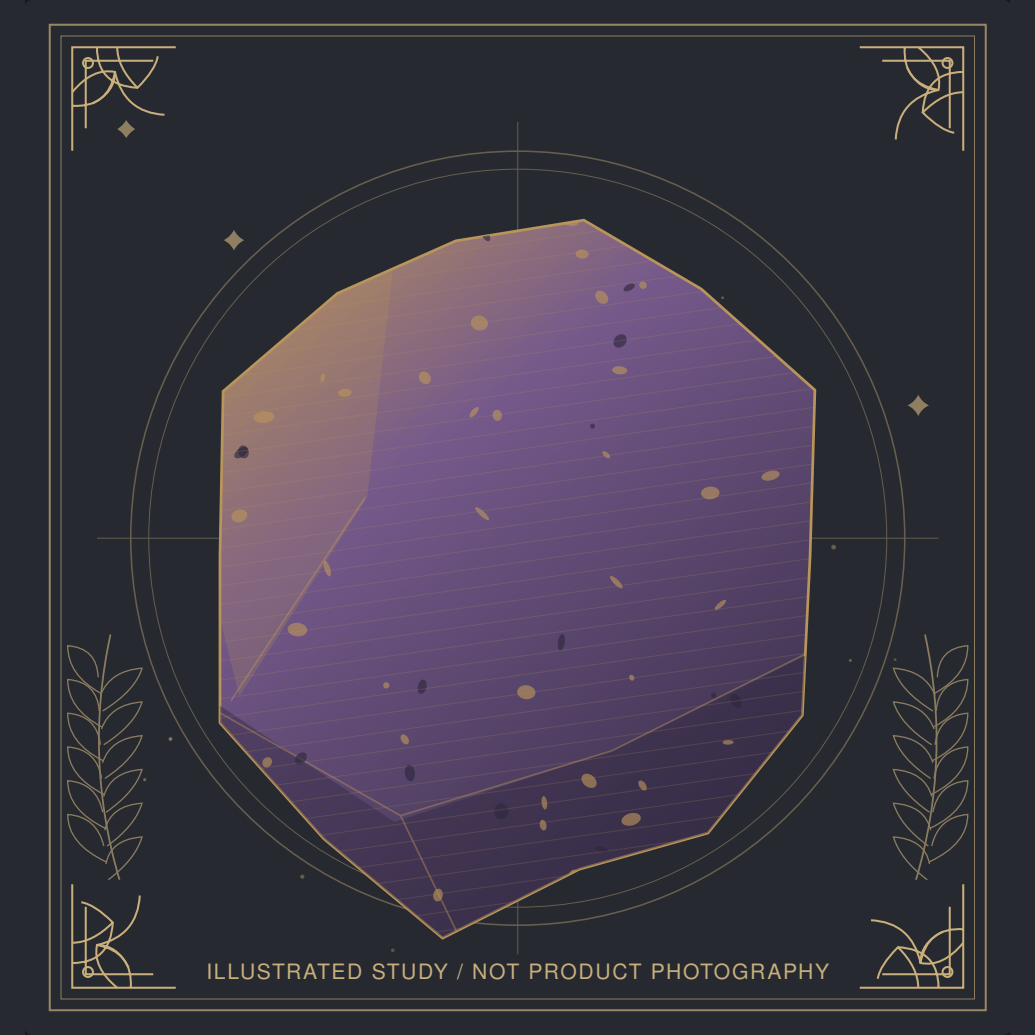
In this guide
Visual identity & plain-language name
Earth story: formation, structure & color
Bornite is Cu5FeS4, relatively soft around 3–3.25, with a fresh copper-red to brown surface that tarnishes. Chalcopyrite is CuFeS2, tetragonal and about 3.5–4, with brass-yellow fresh color. Their formulas, structures and hardness differ even when the external rainbow looks similar. [1][2]
Peacock ore is an appearance-based trade category commonly involving bornite or chalcopyrite. These are different copper iron sulfides: bornite has ideal formula Cu5FeS4, while chalcopyrite is CuFeS2. The Handbook describes bornite's fresh copper-red to brown appearance and rapid development of iridescent purplish tarnish. Chalcopyrite begins brass-yellow and can also become tarnished and iridescent. Surface color is therefore distinct from the interior mineral composition. [1][2]
The minerals also differ in structure and properties. Bornite is described in the reference as orthorhombic and pseudocubic, with hardness about 3–3.25 and density about 5.06–5.08. Chalcopyrite is tetragonal, with hardness 3.5–4 and density about 4.1–4.3. Both occur in copper-bearing geological assemblages, but the broader setting and associated minerals can differ. A mixed sulfide rock may contain more than one phase. The iridescent label should consequently prompt a substrate determination rather than replace it. [1][2]
Bornite and chalcopyrite also differ in their recorded streak colors and relative density. These properties reinforce the species distinction even when tarnished surfaces look similar. A mixed specimen can produce overlapping observations, so material examination should determine the substrate instead of choosing a name from its most colorful face. [1][2]
Varieties & look-alikes
Compare confirmed bornite, confirmed chalcopyrite and treated iridescent specimens. Pyrite is another sulfide, not a synonym for either copper mineral. A brilliant purple-blue crust describes the surface; a mineral label describes the underlying phase. Two specimens sharing a trade name can have different interiors. [1][2]
- Bornite
- Bornite is one possible mineral beneath the peacock appearance. Fresh surfaces can be copper-red to brown, with purple iridescent tarnish developing subsequently. The specific sulfide formula, density and crystal properties distinguish it from chalcopyrite. A film of striking color is a surface observation; it does not prove that the whole specimen consists of bornite or is untreated. [1]
- Chalcopyrite
- Chalcopyrite is a separate tetragonal copper iron sulfide, typically brass-yellow before tarnishing. It can also show colorful iridescent surfaces and may occur with other sulfides. A confirmed chalcopyrite specimen should retain that name even if sold as peacock ore. Colorful appearance does not transform its composition into bornite or native copper. [2]
- Treated peacock ore
- This description concerns surface history rather than a third mineral species. An artificially enhanced iridescent film can sit on a natural ore mineral. The label should specify both substrate and known intervention, leaving either unresolved if evidence is lacking. A vivid photograph alone cannot separate natural tarnish from deliberately produced or enhanced surface colors. [1][2]
Human story: objects, names & cultural context
Bornite honors Austrian mineralogist Ignaz von Born, while chalcopyrite combines Greek brass and pyrite roots. These documented naming histories are more precise than treating peacock ore as one historical substance. The trade label groups a visual attraction that crosses mineral identities. [1][2]
Copper sulfide minerals have been studied and collected both as ore constituents and as decorative specimens. Bornite honors Ignaz von Born in its scientific naming account, while chalcopyrite's name combines copper and a historical pyrite-like reference. Peacock ore adds a modern descriptive resemblance to colorful plumage. These naming layers perform different jobs: a species name records material identity, and the shop label describes appearance. The label does not prove an ancient ritual lineage or one fixed mining origin. [1][2]
Meaning & practice: attributed traditions
A person may choose rainbow color as a symbol of change or variety, but this entry does not assign that personal interpretation to an inherited peacock-ore tradition. No single spiritual correspondence follows automatically from a label covering several minerals and surface conditions.
An editorial reflection could compare how the surface changes with the more stable material name underneath. Write one appearance-based assumption and what would be needed to verify it. The object becomes a prompt for careful judgment rather than a promise of transformation.
Material truth: trade names & treatments
Request the mineral identity and whether iridescence was enhanced. Untreated should not be inferred from spectacular color, and tarnish should not be mistaken for a new species. These relatively soft sulfides warrant protected display. Avoid scratching through the surface of a purchased specimen simply to inspect fresh color. [1][2]
An enhanced surface can coexist with a genuinely natural sulfide substrate. A treatment disclosure should therefore state artificially produced or enhanced iridescence when supported, not merely natural ore. Natural tarnish is also real, so color alone cannot establish whether intervention occurred. A collector description should distinguish identified bornite, identified chalcopyrite, mixed sulfides and an untested peacock-ore trade piece. Aggressive cleaning can remove or alter the very surface film responsible for the decorative effect. [1][2]
View the piece from several angles and note whether vivid color covers isolated faces, broken edges or most of the surface. Such observations document presentation without supplying a treatment verdict. Do not scratch through the film or apply household chemicals merely to see whether a different color lies beneath. If the object matters enough to confirm, appropriate mineral analysis and treatment information from its source are more useful. Preserve the substrate and surface history together in the record so that future owners can understand what the commercial name meant.
Sources & related specimens
The two Handbook references establish distinct sulfide identities and naming. Read pyrite for a separate iron sulfide and azurite for how copper can also occur in chemically different secondary minerals.
- Handbook of Mineralogy: Bornite
Mineralogical Society of America · Identity and natural history · Accessed October 9, 2026
- Handbook of Mineralogy: Chalcopyrite
Mineralogical Society of America · Identity and natural history · Accessed October 9, 2026