
Resin held in time
Amber
Fossilized resin, an organic gem rather than a crystalline mineral.
Organic gem material: fossil resin
Amber is fossilized plant resin, an organic gem rather than a crystalline mineral.
Geology · Human history · Attributed traditions
Explore the specimen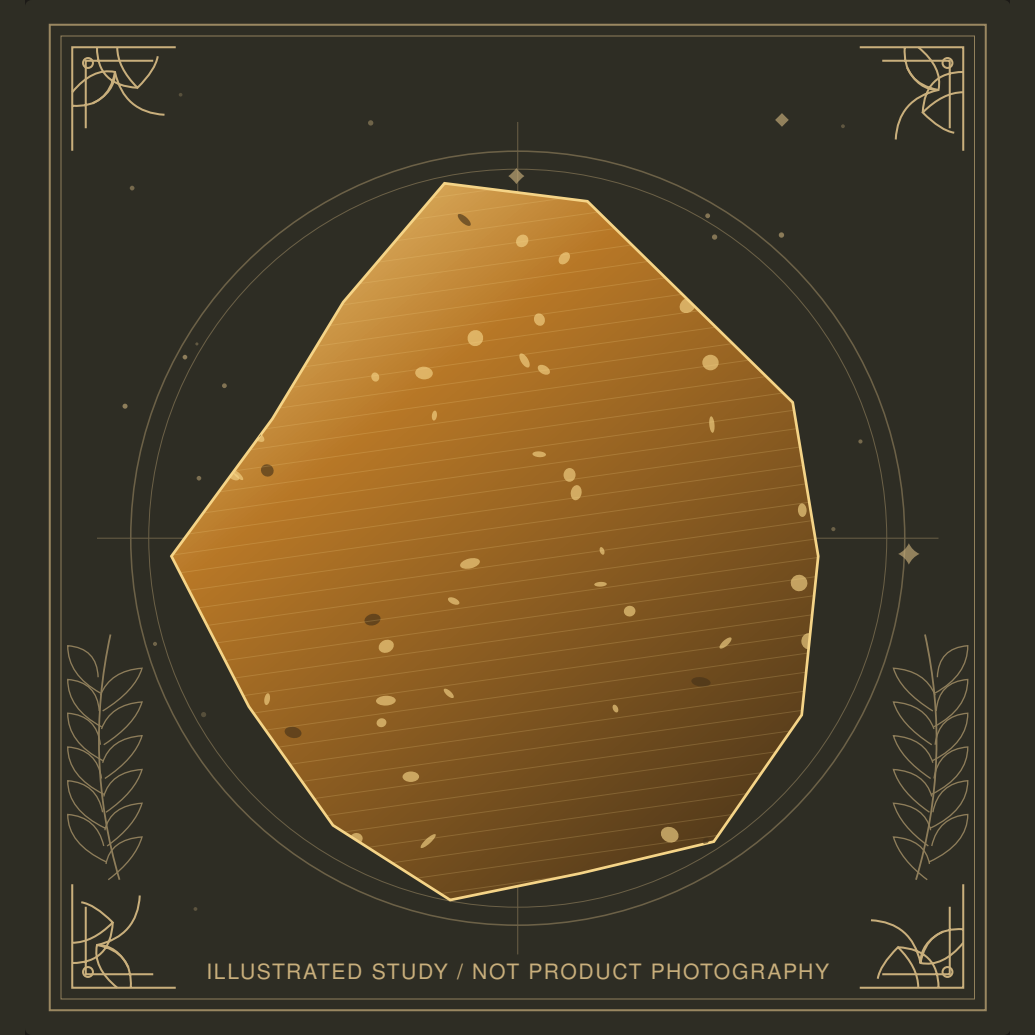
Material
Fossilized resin, an organic gem rather than a crystalline mineral. [2]
Family
Fossil resin [2]
Appearance
Fossil resin in golden, brown and other appearance varieties. [2]
Meaning & tradition
Bird: sun-linked uplifting symbolism in a contemporary framework. [1]
In this guide
Visual identity & plain-language name
Amber is fossilized plant resin, an organic gem rather than a crystalline mineral. Transparency, cloudiness, flow textures and inclusions can vary. A polished cabochon may reveal a preserved organism or simply resin texture; attractive inclusions require identification of both the resin and the enclosed feature. [2]
Earth story: formation, structure & color
GIA describes amber as fossil resin and gives its low hardness, commonly about 2–2.5. Resin history, maturation and geological setting differ among deposits. The material does not have a mineral crystal system. An inclusion can provide paleontological evidence, but color alone does not date the resin or establish one extinct tree source. [2]
Amber begins as plant resin that underwent geological preservation and maturation. It is an organic gem material, so it has no single mineral crystal system or universal simple formula comparable to a quartz crystal. Flow textures, cloudiness, bubbles and biological inclusions can preserve aspects of the resin's history. The organism inside, the resin's original source plant and the geological deposit are different research questions; one visible insect cannot answer all of them. [2][4]
GIA records low hardness around 2–2.5 and low density relative to many minerals. Those properties explain why a substantial amber ornament may feel light but can still scratch easily. Deposits differ in age, source and preservation, and origin labels need supporting evidence. A golden translucent cabochon is not automatically Baltic amber, while fluorescence and lighting effects can make a documented piece appear different against a dark background. A blue visual effect must not be conflated with a uniformly blue bodycolor or a mineral inclusion's color. [2][4]
Varieties & look-alikes
Transparent, cloudy and inclusion-bearing amber are descriptive categories. Baltic, Dominican and other origin labels need evidence. Blue-appearing amber involves lighting-dependent fluorescence in documented material rather than simply blue bodycolor. Copal is younger resin; pressed, treated or imitation products require a separate condition or identity statement. [2][4][3]
- Baltic amber
- Baltic is an origin designation requiring provenance or suitable supporting examination. It is not established by honey-yellow color alone. A piece can be clear, cloudy or inclusion-bearing within an origin category. Record the actual evidence for origin and any processing separately, rather than assuming that a geographical sales name settles age and treatment. [2][4][3]
- Dominican amber
- Dominican likewise names an origin context rather than a unique color or an automatic insect species. An identified deposit and documented specimen history strengthen the description. Optical appearance and included organisms still require their own observations. A polished piece's country label does not establish that it is untreated or that every enclosed feature is natural. [2][4][3]
- Blue amber
- Blue appearance can involve fluorescence and lighting conditions in documented amber. Photograph the effect separately from ordinary bodycolor and identify the illumination and background. The effect should not be described as a new blue mineral species. Origin, treatment and the precise optical response need their own evidence, especially for visually striking retail material. [4]
- Pressed amber
- Pressed describes manufacture from amber material rather than an untouched natural resin mass. The identity and process should both be retained. A composite object can be attractive and still require an assembly disclosure. Treating all processed amber as indistinguishable from an original intact piece loses information important to collectors and future owners. [2][5]
- Copal comparison
- Copal is a resin category commonly contrasted with more geologically matured amber, not simply a low-quality mineral variety. Material examination and context matter when distinguishing them. A resin's yellow color and an apparent insect do not provide a dependable geological age. Avoid destructive tests on valuable specimens and retain the identification basis in the record. [3]
Human story: objects, names & cultural context
GIA’s history account focuses on the significance of preserved organisms and the modern interest generated by fossil inclusions. A genuine insect is an object of study, not proof that every inclusion or dramatic animal shape is authentic. Human fascination with preserved life is well grounded without adding a universal ancient correspondence. [6]
The GIA historical account discusses the scientific fascination with organisms trapped in fossil resin and the wider modern interest in that preservation. Inclusions can provide information about ancient ecosystems when both material and organism are properly identified. The fascination is understandable, but a dramatic inclusion's appearance does not prove authenticity or permit a fictional reconstruction of the entire environment. Amber jewelry and specimen collecting also have their own maker and acquisition histories, which should be recorded alongside any paleontological interpretation. [6]
Meaning & practice: attributed traditions
Stephanie Rose Bird includes amber in a contemporary sun-linked group of uplifting symbolic materials. This is an attributed spiritual interpretation. [1]
An editorial reflection can use preserved life as a prompt to notice one small detail you would otherwise overlook. Record that observation. The object can symbolize attention and continuity without promising a physiological effect or turning a personal ritual into paleontological evidence.
Material truth: trade names & treatments
Low hardness means amber can scratch more readily than quartz. Heat, assembly, pressing and imitation are relevant product questions. GIA’s treatment guidance discusses altered gem materials; retain precise processing records. Do not damage a specimen with a hot point or solvents as a casual authenticity experiment. [2][5]
Pressed amber, heat-treated material, younger resin and imitations differ in identity or processing. A product may contain genuine fossil resin and still have undergone treatment or assembly. GIA's treatment guidance separates interventions rather than reducing the description to genuine versus fake. Inclusions can also be manipulated or simulated, so a remarkable animal shape warrants careful examination. A routine hot-point or solvent experiment on a finished specimen is destructive and can leave both material and inclusion interpretation unresolved. [2][5]
Observe transparency, internal flow patterns and surface condition under gentle illumination. For an inclusion-bearing piece, record which details are visible and which are a seller's identification. A taxonomic name, a precise age and a locality claim each need evidence beyond one photograph. Keep fragile polished material away from harder stones during storage and preserve treatment reports. Its personal symbolism can draw on warmth, color or preserved detail without pretending that a resin ornament confers an organism's ancient biological properties.
Sources & related specimens
GIA supports organic identity and inclusion context. Bird documents a modern symbolic theme. Compare jet for another organic gem and fossil wood for biological structure preserved by mineralization.
- Stephanie Rose Bird: Using Stones, Minerals, and Metals for a Charmed Life (2003)
Llewellyn Worldwide · Stephanie Rose Bird’s attributed contemporary Hoodoo-informed symbolic framework · Accessed October 9, 2026
- GIA: Amber
Gemological Institute of America · Identity and natural history · Accessed October 9, 2026
- Amber Description
Gemological Institute of America · Mineralogy, geology, naming and documented material history · Accessed October 9, 2026
- Color Phenomena of Blue Amber (2014)
Gemological Institute of America · Mineralogy, geology, naming and documented material history · Accessed October 9, 2026
- GIA: An Introduction to Gem Treatments
Gemological Institute of America · Treatment categories, with specimen-specific disclosure still required · Accessed October 9, 2026
- GIA: Amber History and Lore
Gemological Institute of America · Historical reception and named cultural or literary contexts · Accessed October 9, 2026