
One family many colors
Zoisite and Tanzanite
Zoisite mineral; tanzanite is blue-violet gem zoisite.
Zoisite species, color varieties and zoisite-bearing decorative rocks
Zoisite is a calcium aluminium silicate with several familiar gem appearances. Blue-violet tanzanite, pink thulite and green ruby-bearing material belong in comparison, but a mixed rock is not one uniformly colored zoisite crystal.
Geology · Human history · Attributed traditions
Explore the specimen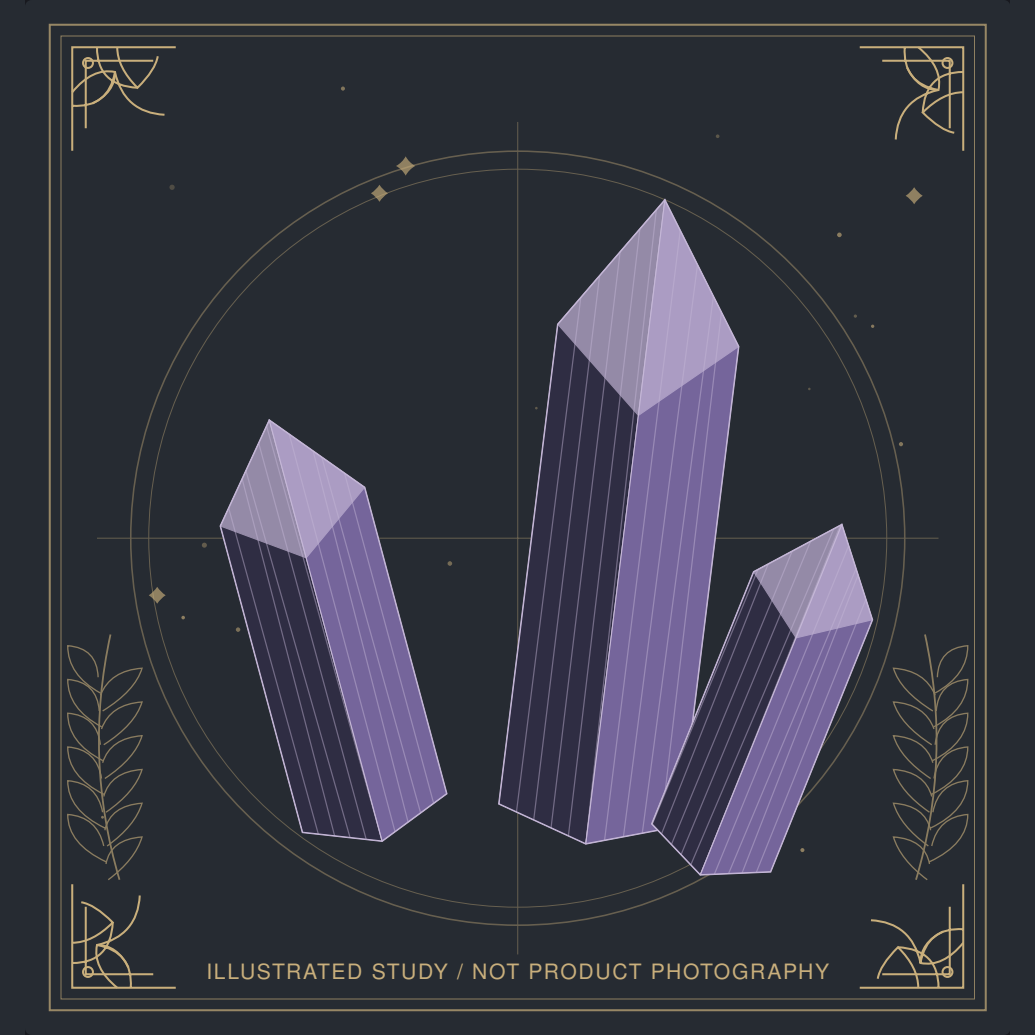
Traditions
Sandra Kynes’s 2018 correspondence article includes zoisite among relationship-oriented stones. [6]
In this guide
Visual identity
Zoisite is a calcium aluminium silicate with several familiar gem appearances. Blue-violet tanzanite, pink thulite and green ruby-bearing material belong in comparison, but a mixed rock is not one uniformly colored zoisite crystal. [1][2]
Tanzanite can show three differing color impressions in different crystal directions. GIA describes a range from violetish blue to bluish violet, with cut orientation and size affecting presentation. A photograph centered on the strongest direction can hide that complexity. Green zoisite and pink thulite supply other familiar appearances within the species account. Ruby-bearing material is a mixed rock, so an illustration should keep the red corundum distinct from the green host rather than suggesting one red-and-green crystal species. [3][1][4]
Earth story: geology and formation
The Handbook of Mineralogy relates zoisite to metamorphic environments. Ruby-in-zoisite contains red corundum alongside the green material, with other components possible. Tanzanite’s blue-violet appearance frequently involves heat treatment; the color history should accompany its zoisite identity. The Handbook links zoisite with calcium-rich metamorphic rocks and records associated garnet, albite, quartz and calcite. It lists exceptional gem material from Tanzania’s Merelani Hills and well-crystallized examples from Pakistan. A locality reference and a color designation are separate parts of a caption. The green-and-red assemblage used decoratively should therefore not be treated as merely a low-grade form of a blue-violet faceted tanzanite. [1][2]
Zoisite is an orthorhombic calcium aluminium silicate containing hydroxyl. The Handbook lists hardness 6–7 and measured density around 3.15–3.36 grams per cubic centimetre, glassy to pearly luster and perfect cleavage in one direction. Colorless, pink, green, blue and purple appearances can occur within the mineral category, but a ruby-bearing aggregate also includes distinct corundum. The difference between a single crystal and a mixed decorative rock should remain visible in the terminology. Scratch hardness, cleavage, aggregate texture and known treatment history describe different aspects of the same finished object. [1]
Zoisite is a calcium-aluminum hydroxyl silicate with orthorhombic symmetry. The Handbook records metamorphic occurrences in calcium-bearing rocks and associated minerals such as garnet, feldspar and quartz. Tanzanite is the blue to violet-blue gem variety, not a separate mineral structure. Its strong directional color means a cutter’s orientation affects the displayed hue. A green zoisite-bearing rock with red corundum and a transparent tanzanite jewel therefore belong in one comparative article while representing different compositions of objects and very different visual presentations. [1][3]
Varieties and lookalikes
These names describe different levels of information: a mineral species, a visual variety, a crystal habit or a retail label. The distinctions below keep the recognizable shop vocabulary alongside its material explanation.
Ruby in zoisite is a material combination, and any accompanying dark minerals require their own identification. Pink thulite is a variety designation, while tanzanite describes a transparent blue-violet gem category. These terms are therefore not equivalent levels of taxonomy. A mixed polished stone does not have the uniform hardness, density or cleavage of a single zoisite crystal throughout its surface. The component explanation is more accurate and more useful than promoting each color combination to a separately named mineral. [1][4]
Human story: history and naming
The mineral name honors Siegmund Zois. This is a naming history distinct from tanzanite’s modern market history. A recent trade name and an old geological age do not jointly prove an ancient spiritual practice under the tanzanite label. [1]
GIA dates the modern tanzanite discovery narrative to 1967 in the Merelani area of northern Tanzania and describes Tiffany’s naming and major promotion in 1968. It presents the commonly told discovery account as a story rather than an exhaustive firsthand record. The documented commercial chronology is a useful human history in its own right. It is distinct from the species name honoring Siegmund Zois, and from the geological age of the metamorphic rock that eventually supplied the gem. [5][1]
Meaning and practice: attributed traditions
Sandra Kynes’s 2018 correspondence article includes zoisite among relationship-oriented stones. This is a contemporary family-level interpretation. It should not be assigned without qualification to every constituent of ruby-bearing rock or every modern tanzanite ritual. [6]
An optional relationship reflection can consider how separate components remain distinct while sharing one setting, using the specimen as a personal metaphor.
Kynes assigns a relationship-oriented correspondence to zoisite. This family-level attribution should remain attached to her contemporary framework, rather than being presented as an ancient Merelani practice. A participant may choose a relationship reflection while observing either a gem or a mixed specimen, but the different components retain their own identities. The commercial tanzanite name and the green-red rock’s appearance do not independently supply a shared spiritual lineage. The intended practice can be stated clearly without making the geology responsible for a promised relational outcome. [6]
Material identity and trade terminology
Ruby-in-zoisite is a mixed material, not ruby in fuchsite. The red corundum and confirmed green host should be identified separately. Heat treatment commonly modifies tanzanite color. A violet-blue photograph alone cannot authenticate untreated color or source. [1][2]
Heat treatment is important in the tanzanite trade and belongs in a material declaration. Natural host identity does not guarantee that the blue-violet appearance is untreated. Zoisite has recognized cleavage and hardness around 6–7, so a dramatic-looking gem still needs its physical vulnerability understood. A confirmed source statement also matters: GIA places the commercial tanzanite supply at Merelani, but the look of a blue polished stone alone cannot authenticate that origin or rule out another mineral used as an imitation. [2][3][1]
Sources and related specimens
The references below distinguish mineral identification and physical properties from historical interpretation and practitioner symbolism. A cited material category describes a kind of stone; it does not certify the identity, treatment or provenance of an untested individual retail specimen.
- Handbook of Mineralogy: Zoisite
Mineralogical Society of America · Mineral composition, structure, physical properties and occurrence · Accessed October 9, 2026
- GIA: An Introduction to Gem Treatments
Gemological Institute of America · Geological, gemological or documented material-history evidence · Accessed October 9, 2026
- GIA: Tanzanite
Gemological Institute of America · Geological, gemological or documented material-history evidence · Accessed October 9, 2026
- Handbook of Mineralogy: Corundum
Mineralogical Society of America · Mineral composition, structure, physical properties and occurrence · Accessed October 9, 2026
- GIA: Tanzanite History and Lore
Gemological Institute of America · Historical naming, material use and explicitly attributed lore · Accessed October 9, 2026
- Sandra Kynes: 365 Days of Crystal Feng Shui for Your Home (2018)
Llewellyn Worldwide · Contemporary practitioner symbolism and retailer terminology; distinct from mineralogical evidence · Accessed October 9, 2026