

A blue green prism
Apatite
A mineral-group name; much gem material is fluorapatite.
Mineral group; species determination may be more precise
Apatite is a mineral-group name, not an identity assigned by blue color.
Geology · Human history · Attributed traditions
Explore the specimen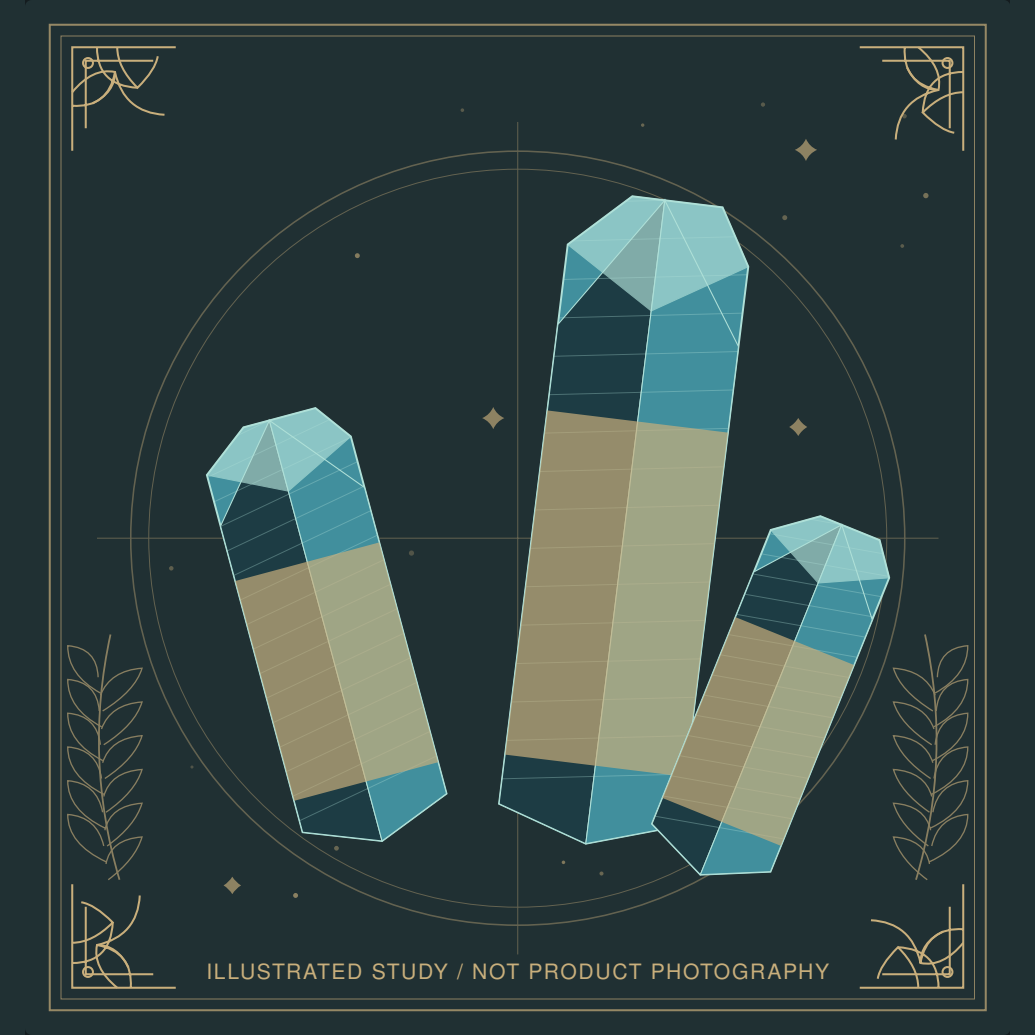
Material
A mineral-group name; much gem material is fluorapatite. [2]
Family
Phosphate minerals [2]
Appearance
Blue-green prisms, granular masses and many other colors. [2]
Meaning & tradition
Kynes: communication, a modern association. [3]
In this guide
Visual identity & plain-language name
Apatite is a mineral-group name, not an identity assigned by blue color. Fluorapatite, chlorapatite and hydroxylapatite differ in an important structural constituent. A polished blue bead does not reveal which member is present. Transparent prisms and opaque tumbles can be related without becoming interchangeable identification standards. [2]
Earth story: formation, structure & color
Fluorapatite has the ideal composition Ca5(PO4)3F and Mohs hardness 5. The Handbook lists hexagonal or monoclinic structure, poor cleavage and brittle behavior. This widespread rock-forming phosphate occurs in igneous, metamorphic and sedimentary settings. A pegmatite crystal and a phosphate-rich sediment record different paths through Earth chemistry. [2]
Apatite's phosphate units contain phosphorus surrounded by oxygen, with calcium and the fluorine, chlorine or hydroxyl constituent completing the structure. The group connects unusually diverse settings: accessory crystals scattered through igneous rocks, larger crystals in pegmatites, metamorphic occurrences and sedimentary phosphate deposits. A large euhedral crystal records available growth space; a granular phosphate rock records an aggregate rather than one exceptionally big crystal. Fluorapatite's measured density of about 3.1–3.25 and refractive indices near 1.63–1.65 provide more specific tests than a blue-green photograph. [2]
The Mohs value describes resistance to scratching, not resistance to impact. Poor cleavage does not make apatite unbreakable: the Handbook also describes conchoidal to uneven fracture and brittle tenacity. Some specimens fluoresce, phosphoresce or respond to an electron beam, but these conditional observations are not defining attributes of every apatite. Likewise, the crystal-system information in an identification sheet should not be converted into a claim that every retail bead originally grew as the same six-sided prism. [2]
Varieties & look-alikes
Blue, green and yellow describe bodycolor rather than three species. Cat’s-eye describes an optical effect in suitably oriented material. Apophyllite has a similar-sounding name but belongs to a different mineral group. Compare the face geometry of a raw prism with the manufactured outline of a tumble; polishing removes natural architectural clues. [2]
- Blue apatite
- Blue identifies a bodycolor across group material, not a newly defined mineral species. Transparent gem rough, cloudy blue aggregates and mottled tumbles can differ greatly in clarity and constituent minerals. The fluorine-rich member is common, but a seller's blue apatite label is not a chemical analysis. Bright saturation should not automatically become a claim of a specific country or mine. [2]
- Green apatite
- Sea-green and other green appearances occur in the fluorapatite reference. A color label can remain useful when accompanied by the broader group identity, specimen form and any confirmed species determination. Green transparent prisms may visually resemble beryl or other minerals, so compare more than hue: crystal morphology, density and suitable optical measurements form a stronger identification record. [2]
- Yellow apatite
- Yellow is among the documented fluorapatite colors, along with pink, violet, brown, white and colorless appearances. It does not mean that the stone has a different phosphate formula from every blue piece. A pale transparent gem and a golden opaque tumble can belong to the same broad label while requiring different observations to establish purity and identity. [2]
- Cat’s-eye apatite
- The eye is a moving band of reflected light best observed under a small directed light source. GIA documents the effect in green and yellow apatite and a notably rare vivid blue example. A dome cut presents the phenomenon deliberately; it does not make the material chrysoberyl, which has its own cat's-eye variety and different chemistry. [1]
Human story: objects, names & cultural context
The apatite group name derives from a Greek reference to deception, reflecting confusion with other minerals. Fluorapatite adds the fluorine distinction. This is scientific naming history, not evidence that ancient users assigned blue apatite today’s communication symbolism. [2]
The scientific name provides a useful historical lesson in identification. Minerals that appeared similar could be separated through measurements and chemistry, and apatite's name preserves that experience of mistaken resemblance. Fluorapatite is the more precise name when fluorine dominance has been established. A record listing a mine, collector, acquisition date and species determination preserves substantially more mineral history than the unsupported phrase ancient wisdom stone. The naming account supports a mineralogical chronology; it supplies no date for a particular polished object's symbolic use. [2]
Meaning & practice: attributed traditions
Sandra Kynes includes apatite among communication stones in her 2018 crystal-placement account. This is an attributed contemporary interpretation. [3]
An editorial communication practice might use the piece as a reminder to prepare a clear statement before a difficult conversation. Write what you need to say and consider what the listener needs to understand. The stone marks an intention; the speaker carries out the action.
Material truth: trade names & treatments
Specify a confirmed species, the broader group or a seller’s color description on the label. Hardness 5 is below quartz, while brittleness also matters for exposed edges. An attractive polish and six-sided silhouette are clues, not a substitute for examination. Separate the known material identity from treatment and origin claims about one retail piece. [2]
GIA's report of a blue cat's-eye apatite distinguishes a reported Brazilian origin from a completed scientific explanation of that particular stone's color. Its discussion notes earlier research associating blue with manganese-bearing substitutions, while explicitly leaving the displayed specimen's color origin for further investigation. This is a good example of why a compelling explanation should remain conditional when the necessary analyses have not been performed. Chatoyancy also depends on internal features and cutting orientation, rather than blue color alone. [1][2]
For your own specimen notes, distinguish what you see from what you were told: pale green bodycolor, bright narrow eye under a small light source, polished dome, or a seller's fluorapatite label. Keep the source of each identification attached to the record. An intact prism may show natural growth faces; a faceted gem shows the cutter's chosen proportions. Neither shape alone supplies the species, mine or treatment history. Store softer apatite apart from harder quartz beads so that the objects you compare do not abrade one another.
Sources & related specimens
The mineralogical reference establishes properties and occurrence; Kynes documents the modern correspondence. Compare apophyllite for the naming distinction and aquamarine for why similar color does not imply shared chemistry.
- Blue Cat’s-Eye Apatite
Gemological Institute of America · Mineralogy, geology, naming and documented material history · Accessed October 9, 2026
- Handbook of Mineralogy: Fluorapatite
Mineralogical Society of America · Identity and natural history · Accessed October 9, 2026
- Sandra Kynes: 365 Days of Crystal Feng Shui for Your Home (2018)
Llewellyn Worldwide · Sandra Kynes’s contemporary crystal-placement and intention framework · Accessed October 9, 2026