
Copper light
Sunstone
Feldspar gem material with reflective inclusions, sometimes showing aventurescence.
Optical gem variety encompassing more than one feldspar host
Sunstone is a feldspar gem with reflective inclusions producing glitter or a warm shimmering appearance. A bright orange body is not its only form. The inclusion type and feldspar composition vary among documented sources.
Geology · Human history · Attributed traditions
Explore the specimen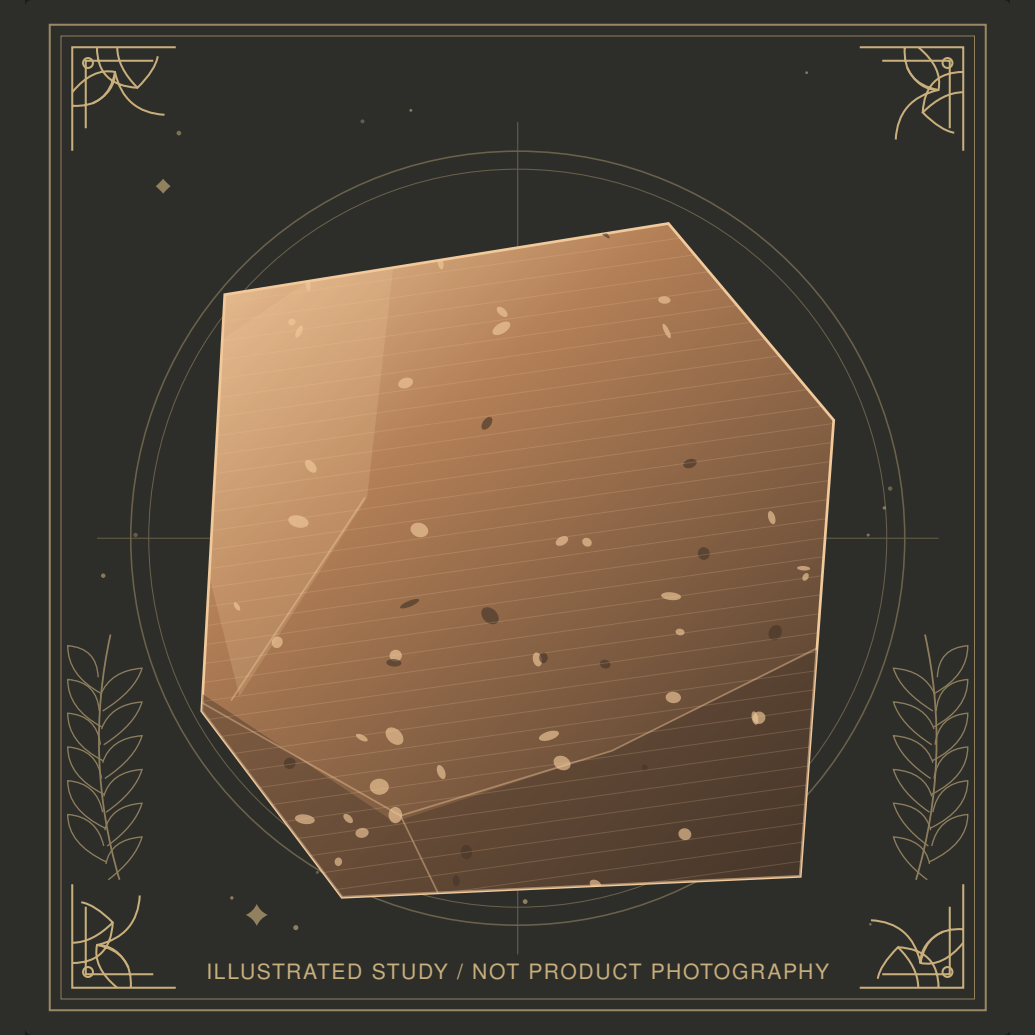
Material
Feldspar gem material with reflective inclusions, sometimes showing aventurescence. [1][2][3]
Traditions
Sandra Kynes’s 2018 correspondences include sunstone in success-oriented practice. [6]
In this guide
Visual identity
Sunstone is a feldspar gem with reflective inclusions producing glitter or a warm shimmering appearance. A bright orange body is not its only form. The inclusion type and feldspar composition vary among documented sources. [1][2][3]
Small reflective inclusions can create a broad reddish or golden sheen, while larger inclusions appear as distinct glittering points. The effect may sit over a colorless, yellow, green, red or brownish body. A faceted gem can emphasize transparency and color, while a cabochon or carving may emphasize the moving reflective field. These choices explain why two genuine sunstone objects can look very different. An orange opaque tumble should not serve as the visual definition for every transparent Oregon or orthoclase sunstone. [1]
Earth story: geology and formation
GIA distinguishes copper-bearing Oregon feldspar from other sunstones with different reflective components. Its optical review explains why inclusions, their orientation and the host jointly affect appearance. A generic orange illustration cannot stand for every sunstone deposit. The host composition and included particles jointly affect the optical result. GIA’s research distinguishes reflective copper populations from other feldspar inclusions, allowing a more precise account than simply labeling all shimmer sun energy. A stone may display body color without strong visible glitter at one angle, or the inclusions may dominate another view. Geographic terms should accompany documentation rather than be inferred from the warmth of the photograph. [1][2][3]
Feldspars are major rock-forming aluminium silicates. Alkali feldspars and the sodium–calcium plagioclase series are related but compositionally distinct. Their microscopic intergrowths or included particles can interact with light in different ways: a floating sheen, iridescent flash and scattered glitter should not be collapsed into one effect. GIA’s optical review uses microscopy and crystallographic relationships to distinguish these textures. A cabochon’s orientation emphasizes selected optical features, and turning the same stone can alter which colors or reflective regions are visible. Body color, transparency, inclusion texture and directional sheen are useful separate observations; none alone certifies a named deposit. [2]
The host feldspar can be orthoclase, oligoclase or labradorite, and those identities carry different compositions and optical constants. GIA lists specific gravities around 2.58, 2.65 and 2.70 respectively, rather than one number for every sunstone. The glitter comes from reflective inclusions inside the host. In Oregon material, copper inclusions are important. This makes sunstone a useful example of an optical variety name that crosses mineral-host boundaries: the observable effect and the precise mineral identification are complementary parts of the description. [1][2]
Varieties and lookalikes
These names describe different levels of information: a mineral species, a visual variety, a crystal habit or a retail label. The distinctions below keep the recognizable shop vocabulary alongside its material explanation.
Goldstone is a manufactured glass comparison, not another naturally occurring feldspar species. Its dispersed reflective particles can imitate the attractive glitter associated with sunstone. Green or red material described as Oregon sunstone also needs its source identity preserved, because GIA’s discussion of naturally colored Oregon material is a specific statement about that recognized supply. It should not be generalized into an assurance that every bright red feldspar offered worldwide is untreated. Host, inclusion type, source and treatment status answer different questions. [3][1][4]
- Orange/peach sunstone
- Body color and reflective glints are distinct observations. A similar color does not prove the same inclusion chemistry. [1][2][3]
- Oregon sunstone
- A documented regional material with copper-related optical features. A regional sales label still needs provenance. [1][2][3]
- Rainbow lattice material
- Rainbow lattice is a trade designation for a patterned feldspar material, distinct from the familiar diffuse copper glitter of Oregon sunstone. GIA’s 2024 microscopy records reflected rays from hematite platelets in an examined Australian sample, with their apparent direction changing when the stone is tilted. The specific optical observation should not be generalized into a chemical recipe for all sunstone or a claim that the pattern is a surface coating. [7][1]
Human story: history and naming
GIA documents Oregon collecting and mining history, giving a specific modern place story. Broadly labeled Native American origin legends without a named community are not used here as established cultural evidence. A real local mining history need not acquire an invented ancient ritual to be meaningful. [5]
GIA describes a nineteenth-century expansion in awareness as finds in Norway, Siberia and elsewhere increased availability. Its Oregon account then places early twentieth-century reports in Warner Valley lava fields and follows the development of mining claims. This is a documented collecting and commercial history. Unnamed community legends are less precise evidence and should not displace the identifiable regional record. A material can have an engaging human story through discovery, extraction and design even when no securely attributed ancient spiritual account is available. [5]
Meaning and practice: attributed traditions
Sandra Kynes’s 2018 correspondences include sunstone in success-oriented practice. This is a contemporary spiritual interpretation. The visually sunny appearance can be a chosen personal symbol without promising success or establishing a universal Sun correspondence. [6]
An optional success reflection is to notice one completed step before planning the next, rather than expecting the material to produce an outcome.
Kynes includes sunstone among materials associated with success in contemporary home practice. The solar name and sparkle can supply a familiar metaphor of warmth or encouragement, but they do not demonstrate an energy source inside the object. A reader may adopt an intended reminder to begin a task confidently or recognize progress. That symbolic use can be described accurately beside the copper inclusions or other reflective phases without requiring either geology or an unidentified historical community to validate the modern association. [6]
Material identity and trade terminology
Goldstone is manufactured glass and should not be sold as natural sunstone. Oregon provenance requires supporting information for the actual piece. Different feldspars and inclusion populations share the gem name, so mineral identity and reflective appearance belong alongside the commercial label. [1][2][3]
Sources and related specimens
The references below distinguish mineral identification and physical properties from historical interpretation and practitioner symbolism. A cited material category describes a kind of stone; it does not certify the identity, treatment or provenance of an untested individual retail specimen.
- GIA: Sunstone
Gemological Institute of America · Geological, gemological or documented material-history evidence · Accessed October 9, 2026
- GIA: Optical Effects in Phenomenal Gemstones
Gemological Institute of America · Geological, gemological or documented material-history evidence · Accessed October 9, 2026
- GIA: Are there sunstone imitations?
Gemological Institute of America · Geological, gemological or documented material-history evidence · Accessed October 9, 2026
- GIA: An Introduction to Gem Treatments
Gemological Institute of America · Geological, gemological or documented material-history evidence · Accessed October 9, 2026
- GIA: Sunstone History and Lore
Gemological Institute of America · Historical naming, material use and explicitly attributed lore · Accessed October 9, 2026
- Sandra Kynes: 365 Days of Crystal Feng Shui for Your Home (2018)
Llewellyn Worldwide · Contemporary practitioner symbolism and retailer terminology; distinct from mineralogical evidence · Accessed October 9, 2026
- Rainbow Rays in Rainbow Lattice Sunstone (2024)
Gemological Institute of America · Geological, gemological or documented material-history evidence · Accessed October 9, 2026