
Cracks filled with time
Septarian Nodules
Concretions with internal cracks and later mineral fillings.
Fractured and mineral-filled sedimentary concretion
Septarian describes a cracked concretion, not one mineral species.
Geology · Human history · Attributed traditions
Explore the specimen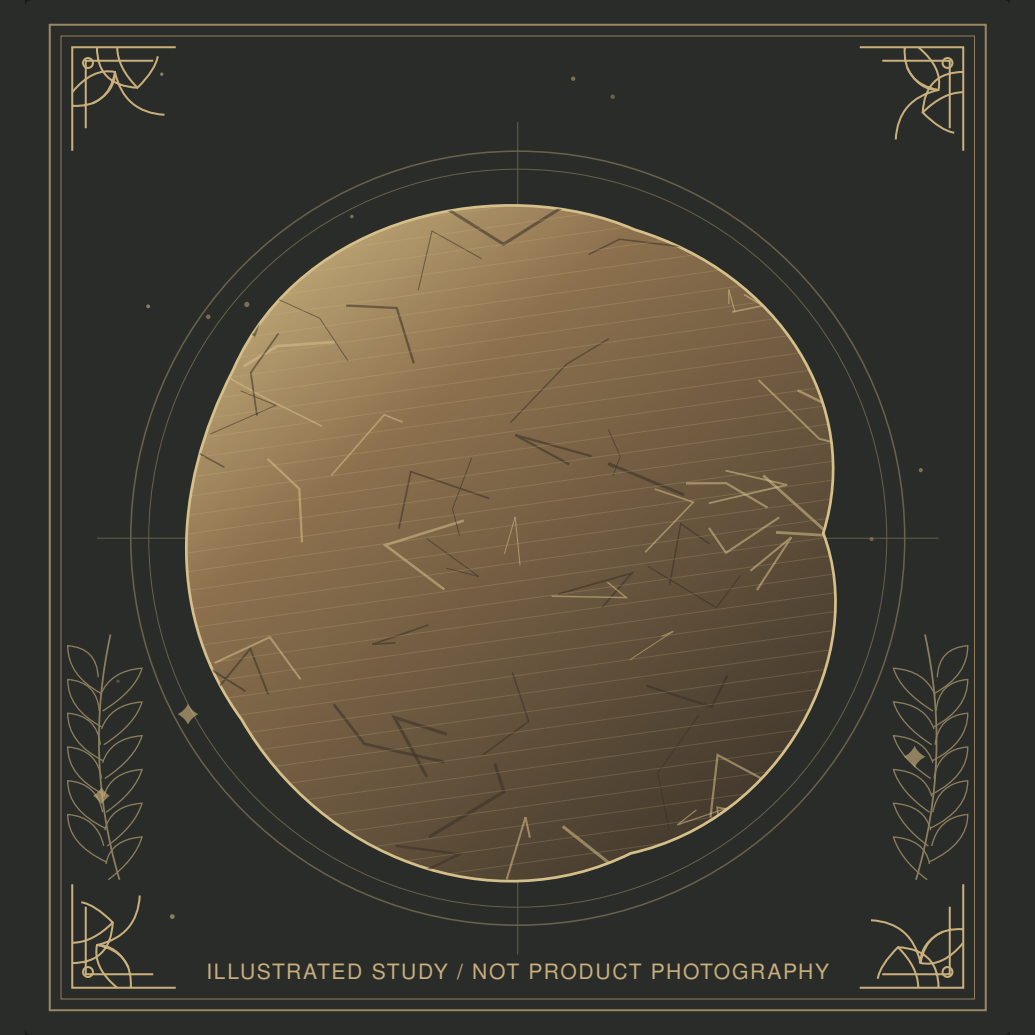
Meaning & tradition
The Crystal Council: grounding and change. [3]
In this guide
Visual identity & plain-language name
Earth story: formation, structure & color
BGS descriptions document septarian nodules cut by calcite veins. Research by T. R. Astin links fracture development in studied concretions with burial, stresses and pore-fluid conditions. Several explanations exist across deposits, so a single drying story should not be applied to every example. Cementation, fracture and filling can each leave evidence. [2][1]
A concretion is a localized body cemented within sediment, and septarian describes an internal crack network that later became mineral-filled. The surrounding body and the veins therefore represent different stages of development. British Geological Survey descriptions place particular septarian nodules in mapped sedimentary units and record calcite-filled cracks. A polished cross-section reveals these relationships, but the cut and final outer egg or sphere are modern manufacture. [2][1]
Astin's research investigates how fractures can develop in concretions under burial stresses and changing pore-fluid conditions. Its evidence pertains to studied deposits and does not require every septarian to have formed through simple surface drying. Cementation, internal fracture and subsequent mineral precipitation may each contribute. A dark rock body, pale or yellow vein and crystal-lined cavity can involve different constituents. The object has no single ideal formula, crystal system or universal hardness because septarian is a structural and rock category, not one mineral species. [2][1]
A vein network records filled openings, but its visible arrangement alone may not settle the fluid source, exact burial depth or fracture cause. The published study's model should remain attached to its examined context. A locality record adds evidence that a decorative cross-section cannot supply on its own. [2][1]
Varieties & look-alikes
Compare intact nodules, polished cross-sections and open crystal-lined cavities. Calcite-filled cracks and darker concretion body are descriptive components rather than separately named spiritual stones. A fossil may be present in a particular nodule, but the septarian network itself does not identify a dinosaur egg or an animal species. [2][1]
- Septarian concretion
- The parent category describes a cemented sedimentary body with an internal crack-and-fill structure. It is not a new mineral species. The component identities and mapped formation add specificity when known. A rounded nodule by itself is not septarian unless the characteristic internal structure has been established through a break, cut or other evidence. [2][1]
- Dragon egg products
- The egg outline is a manufactured presentation designed to expose pattern or a crystal cavity. It should not be mistaken for a fossil egg or a natural crystal habit. The geological object can remain genuine while its shape and evocative name are lapidary inventions. Preserve the concrete rock description, known constituents and any repairs beside the product name. [2][1]
- Calcite-filled nodules
- Calcite can fill fractures or line cavities in documented septarian examples. The fill has a mineral identity separate from the concretion body, and different regions can vary in durability. A yellow or pale vein should be named calcite only when supported. The complete nodule needs a component account rather than the ideal formula of its most conspicuous vein. [2][1]
Human story: objects, names & cultural context
The scientific literature treats concretions as records of sediment alteration. BGS ties particular examples to mapped formations, while the research paper studies the timing and mechanics of fracture. Their geological context provides a stronger age account than a generic retail claim about millions of years. [2][1]
Geological mapping turns an attractive nodule into a more specific record of sedimentary history by connecting it to its formation and associated fossils. The British Geological Survey's descriptions illustrate this field context; Astin adds analytical investigation of fracture timing and mechanics. Neither source makes a polished object's retail outline a fossil identification. Modern lapidaries can cut an egg shape to expose the vein network, creating a useful decorative view of real geological structure without preserving an original biological egg. [2][1]
Meaning & practice: attributed traditions
The Crystal Council associates septarian with grounding and personal change. This is contemporary symbolic interpretation. [3]
An editorial change reflection can identify what is established, what has opened and what you intend to add. The visible stages provide a personal metaphor, not a proof of energy transfer or supernatural formation.
Material truth: trade names & treatments
Request locality and material details, especially when a seller assigns a precise age. Do not equate a polished nodule’s manufactured egg outline with fossil identity. Carbonate vein fills and fractures can make different parts of the object vulnerable. Filling, repairs and supports belong in the condition record. [2][1]
Dragon egg is a product-shape and imagery label, not evidence for a dinosaur, reptile or mythical organism. A septarian nodule can contain an actual fossil, but that fossil needs independent identification. Calcite-filled fractures can respond differently from the surrounding body, and repairs or fills may be present in a cut specimen. Requesting a known locality or examination record is especially useful when a seller assigns an exact age or a detailed formation story to unprovenanced material. [2][1]
Read a polished piece in stages: describe the body, the intersecting veins and any open cavity before proposing a sequence. Note whether a vein terminates, cuts another feature or follows the edge of a darker region. These relations can help a geological interpretation, but a photograph alone may be incomplete. A label can state septarian concretion with calcite veins where supported and leave the body composition more broadly described. That wording keeps the memorable pattern connected to what is actually known.
Sources & related specimens
BGS supplies field descriptions and the research reference explains fracture processes in studied material. The Crystal Council supplies modern symbolism. Compare calcite for a common fill and fossil limestone for a distinct fossil-bearing rock category.
- Septarian crack formation in carbonate concretions from shales and mudstones
Clay Minerals / Cambridge University Press · Mineralogy, geology, naming and documented material history · Accessed October 9, 2026
- Thame geological memoir: septarian nodules and calcite veins
British Geological Survey · Mineralogy, geology, naming and documented material history · Accessed October 9, 2026
- Septarian: contemporary meanings
The Crystal Council · Contemporary symbolic associations attributed to The Crystal Council · Accessed October 9, 2026