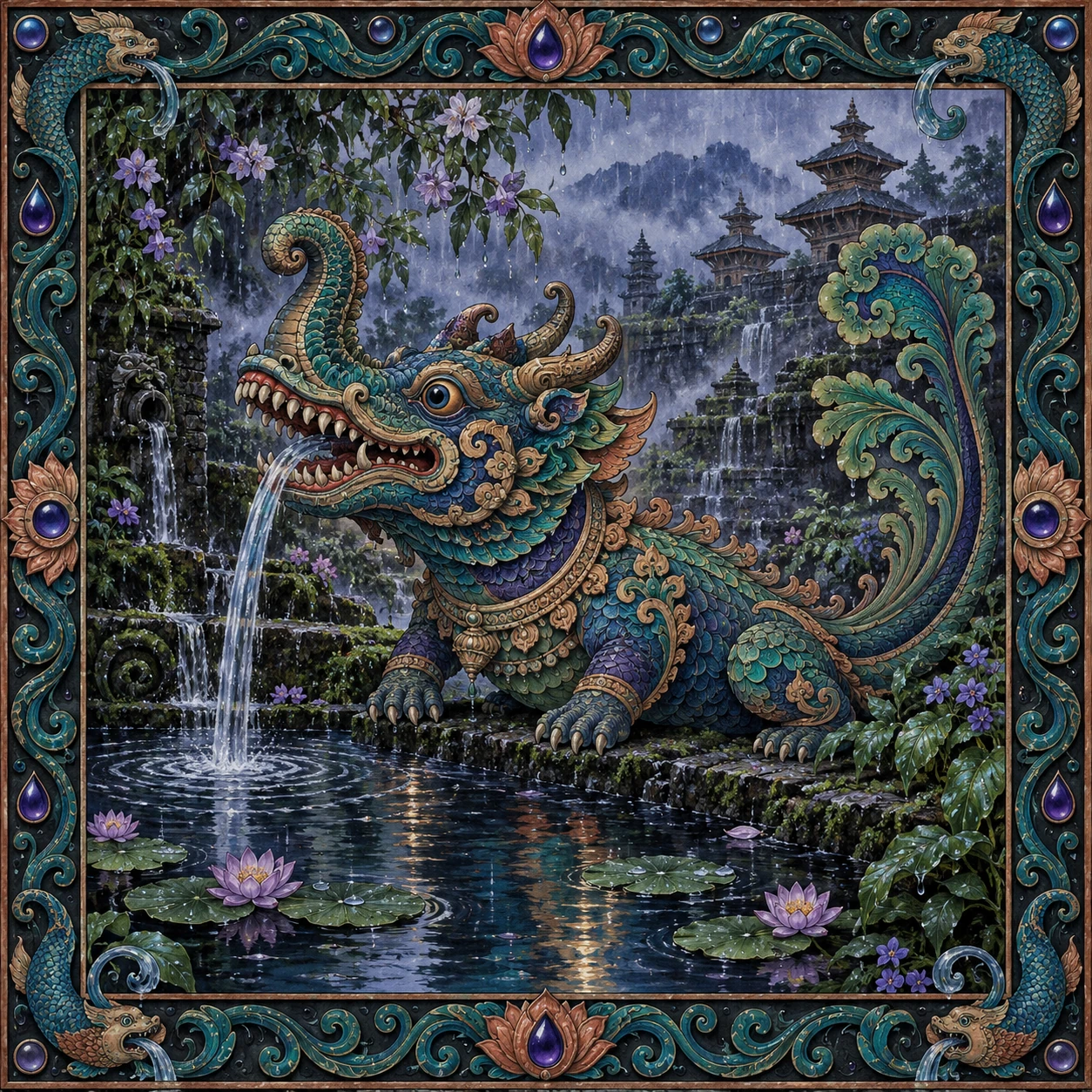
In Cleveland's Ganga sculpture, dated around 700, Makara has a fancifully foliated tail. Vajracharya's Newar forms have wide mouths, large eyes, raised trunks, curly horns, short legs and foliage interpreted through water and rain. Neither object supplies a universal checklist. [3][5]
Foliage makes the boundary between animal and environment unusually porous. A tail can appear to continue into growth, so that the creature's ending becomes another beginning. The mouth, meanwhile, offers a clear focal point: water can emerge where an observer expects a cry or a bite. The combination makes the body seem both animate and generative, turning a practical flow into an encounter with an extraordinary presence.
The original folio selects a Newar fountain-inspired form, including a curled snout and a cloud-foliage tail beside a rain-fed pool. It changes the composition and keeps the creature separate from a named deity. The flowing stream and atmosphere are interpretive choices rooted in the selected architectural vocabulary. [2][5]