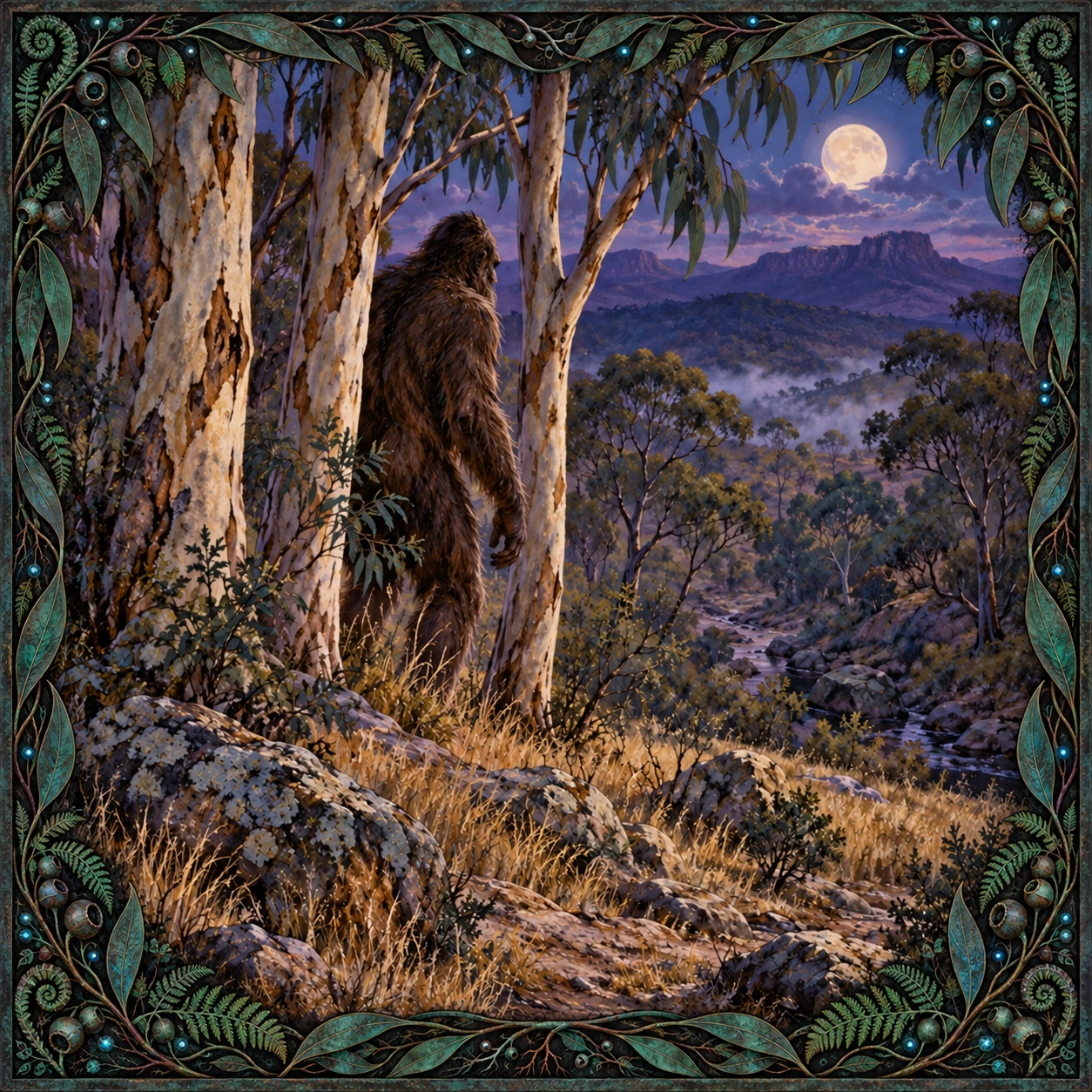
A search narrative has its own rhythm: waiting makes a sound seem significant, and a guide can teach a companion which marks deserve attention. Describing that rhythm need not dismiss either person. It helps a reader ask what was already expected when the observation occurred. A useful record would preserve ordinary details as well as dramatic ones: duration, distance, light, interruptions and what remained visible afterward. Those details give uncertainty shape instead of merely declaring it.
Wong-See quotes ecologist Scott Burnett questioning the absence of material expected from a breeding population and noting possible mistaken observations. These are interview comments, not a controlled examination of Taylor’s encounter. [4]
Future work should add inspectable historical newspaper pages, clearly scoped community sources, and records that separate observation from identification. A claimed print needs a date, place, scale, substrate description, and a recoverable recording; a sample needs documented collection and testing. Those questions do not require a numerical existence score. The present evidence supports a careful file on encounter narratives and reception, with explicit limitations. It does not support biological taxonomy, population estimates, or a claim that every unexplained trace has one cause.