

Luminary Oddities · Natural history & art
Delias benasu
Delias benasu
Lepidoptera / Pieridae
A Sulawesi jezebel whose rediscovered female and later living photographs show how a sparse historical museum record can gradually become a fuller view of a species.
Explore this insect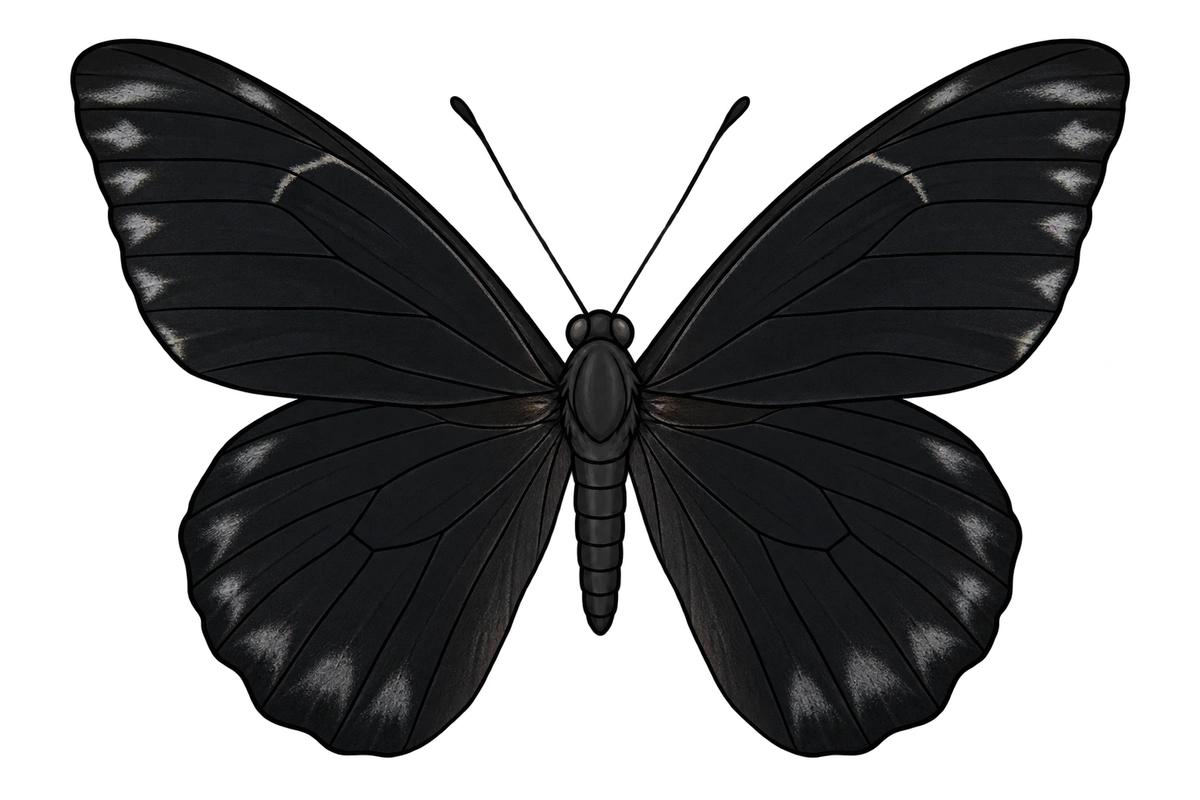
At a glance
- Range context ↘
- Sulawesi [3]
- Identification detail ↘
- Female documented in Roepke’s 1959 paper [2]
- Biological reference ↘
- Living Lore Lindu reference [3]
Identity and close relatives
How to look at the wings
Use the identified male and female plate rather than a general statement that benasu is a large jezebel. Wing proportions and the arrangement of pale and dark areas should be compared at a measured scale. A photographic display size cannot establish the butterfly's actual dimensions.
Range and living habitat
The specialist account records Sulawesi localities including Pulu Pulu and Mount Tambusisi, with arimai associated with the latter. Its living reference from Lore Lindu is credited to Donny Heru Kristianto. Preserve those named places rather than reducing every reference to a single island label. [3]
A life in four stages
Roepke's 1959 paper concerns the female adult, not a complete developmental sequence. A reared series would answer a different question by connecting larvae and pupae to a determined Sulawesi adult. The old scarcity of female specimens should not become a claim that females are biologically rare.
Leaves for larvae, food for adults
A particular benasu food plant was not established in the checked sources. A flower visit by an adult and a larva feeding on a plant are different relationships. Botanical identification and successful rearing would be necessary to add a defensible larval association.
Behaviour in the living landscape
The specialist author reports adults around flowering canopy trees near Puncak Palopo. This is a localized observation, not proof of an exclusive canopy niche or a measured flight height everywhere. A useful survey would record tree identity, actual feeding and repeated visits. [3]
A closer scientific story
In 1959 Roepke described a female obtained through Toxopeus after the species had been known from very few males. That history shows the limits of a museum sample. An incomplete sex series can restrict taxonomic knowledge without directly measuring the abundance of the living population. [2]
Connections in the ecosystem
Canopy observations suggest where to seek adults, while the unknown immature stages leave breeding resources unresolved. Linking those two perspectives would establish whether adult gathering places also lie near reproductive sites. Until then, canopy flower records should remain adult resource observations.
Names and natural-history records
Roepke traced early specimens and their museum locations when presenting the female. The value lies in making the comparison reproducible. Retaining the specimen identifier, collection and original determination would allow a later researcher to inspect the same sex-specific evidence. [2]
Habitat and conservation context
Historical scarcity in collections is not a current global threat category. A modern survey should distinguish limited access to canopy adults from a small population. Named Sulawesi localities and repeat visits offer a more defensible starting point than counting old published specimens.
Reading the specimen views
Place male and female adult views together with their determinations visible. A living canopy image may reveal posture while a spread plate shows pattern more clearly. Neither should be used to infer the appearance of an undocumented sex or immature stage.
From biological reference to artwork
An illustration can preserve the pattern of an identified male or female and name the Sulawesi reference population. It should avoid combining sexes to fill unclear details. The historically important female deserves a clearly stated reference, not a pattern inferred from the male.
Caring for a framed specimen
Keep damp and unstable conditions away from the frame. Preserve the sex and historical specimen references with the catalogue entry. The 1959 publication date belongs with any statement about the formerly incomplete female record. [4]
Questions worth asking
Which plants support benasu development? How widely are females encountered with comparable field effort? Does adult canopy use vary among Sulawesi localities? Those questions connect the historic sex discovery with the living observations available today.
Sources and further reading
Roepke's original female paper is the primary historical source. The specialist synthesis supplies regional comparisons and attributed field photographs. The catalogue establishes current rank. The historical small sample should be read as a limit on knowledge at that date, not a modern population estimate.
- Delias classification and museum-image catalogue ↗
University of Florida Lepiverse; Catalogue of Life 2026-08-26 XR · Accessed 2026-10-09
Indexed genus classification lists the named taxon at species rank; this supports catalogue status, not a resolved species boundary.
- Das Weibchen von Delias benasu Martin ↗
W. Roepke; Naturalis / Zoologische Mededelingen (1959) · Accessed 2026-10-09
Primary study of the female and historical museum specimens; Sulawesi discovery context.
- Delias benasu: specialist records and comparison plates ↗
Delias of the World; international Delias specialists · Accessed 2026-10-09
Specialist account includes original Puncak Palopo canopy observations and explains alternative group placements.
- Caring for natural history collections ↗
Canadian Conservation Institute; Fiona Graham · Accessed 2026-10-09
Preventive care of fragile biological collections; the brief enclosure-handling and environment recommendations are general collection practice. Species-label recordkeeping recommendations are editorial.
Continue exploring
Sources checked 2026-10-09. Illustrations · Luminary Oddities.
Return to the Entomological Atlas ↑