
Luminary Oddities · Natural history & art
Delias ottonia
Delias ottonia
Lepidoptera / Pieridae
A Philippine jezebel with geographically named populations on Mindanao and Basilan, whose relationships and unknown host plant reward careful separation of island, mountain and taxonomic rank.
Explore this insect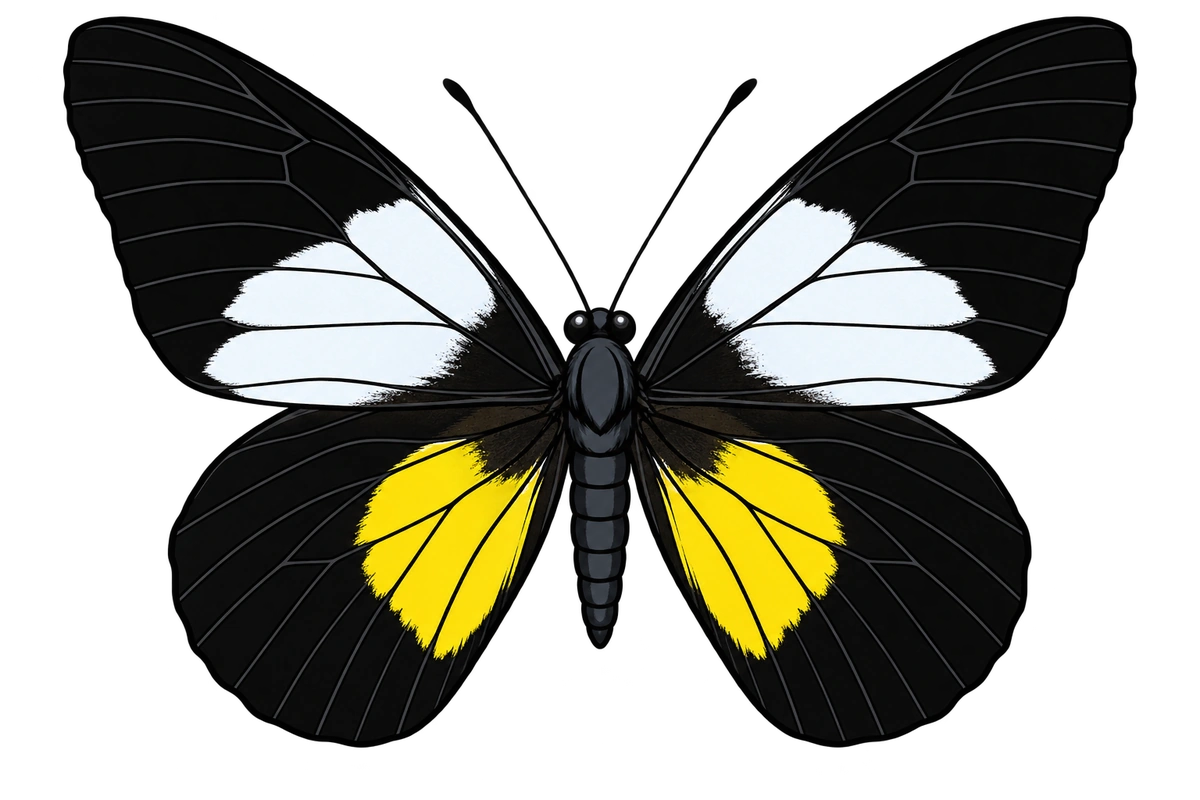
At a glance
- Range context ↘
- Mindanao and Basilan records [2]
- Identification detail ↘
- Several named geographic forms [2]
- Biological reference ↘
- Host unknown in the 2025 review [3]
Identity and close relatives
Delias ottonia is listed as a species in the current catalogue. The specialist account places it alongside other Philippine members of the pasithoe comparison group. Regional names within ottonia should not be counted as extra species simply because different mountains or islands appear on their labels. [1][2]
How to look at the wings
The comparison plate provides labelled adult views. Start with wing outline, the pale forewing pattern and the corresponding hindwing surface, comparing the same sex. The plate is a visual reference; a secure abbreviated diagnostic sentence against all related taxa was not established in the checked text.
Range and living habitat
Named records include Mount Kitanglad and Mount Matutum on Mindanao, surigaoensis from the Surigao area, and semperorum on Basilan. These finer geographic units are worth retaining. Combining them into one vague Philippine locality would discard information useful to both identification and biogeography. [2]
A life in four stages
The checked adult and taxonomic references do not establish a complete reared life cycle. A geographically explicit developmental series could test whether the named populations share immature morphology. The emerged adult and plant determination would need to remain accessible with the observations.
Leaves for larvae, food for adults
The 2025 review reports the host of ottonia as unknown. Glochidion use in related henningia is a focused hypothesis for investigation, not an assigned food plant. A field search should distinguish larvae actually feeding from an adult merely resting on a candidate tree. [3]
Behaviour in the living landscape
The mountain and island records provide starting places for observation, not a documented courtship or flight schedule. Surveys should state season, effort and behaviour directly observed. A photographed insect passing through a site is different evidence from oviposition or repeated larval feeding there.
A closer scientific story
Ottonia connects two questions that should be tested separately: differences among its named populations and the boundary against other species such as woodi. The historical debate over woodi illustrates why a local form should not automatically be promoted to a species from a single distinctive image.
Connections in the ecosystem
The unknown larval plant leaves an important ecological connection unresolved. Local plant surveys paired with reproductive observations would help identify where ottonia completes development. This is more specific than equating an adult mountain record with dependence on every component of mountain forest.
Names and natural-history records
The specialist account records the Basilan name semperorum from 2009 alongside other ottonia forms. Publication of a geographic name documents a taxonomic proposal; it does not add another accepted species under the classification used here. Original locality and rank should stay together. [2]
Habitat and conservation context
No current global threat assessment is supplied by the checked sources. The separate mountain and island records suggest the appropriate scale for a first survey: locality-level occupancy and breeding evidence. Apparent absences require comparable effort before being interpreted as losses.
Reading the specimen views
Keep the geographic form in the caption when it was determined by the source. Use paired surfaces and the same sex for comparisons with woodi and henningia. A montage should make its specimens' different localities visible rather than imply one continuous adult series.
From biological reference to artwork
Follow the identified reference population, including its actual wing outline and pattern. A standard pose can clarify comparisons, but it should not erase a geographic caption or introduce a feature from a different population. The illustration's traceable reference is part of its scientific value.
Caring for a framed specimen
Protect the enclosure from bumps and loose hanging hardware. Retain the exact island or mountain label with the digital reference. A future revision of an ottonia form can then be followed without losing the specimen's original geographic context. [4]
Questions worth asking
What plant supports ottonia development? Which adult characters remain consistent among Mindanao and Basilan populations? What evidence separates woodi from ottonia? Localized series, immature stages and voucher-linked genetic work would address these questions without confusing subspecies coverage with species coverage.
Sources and further reading
The specialist plate and locality list are the main adult resources. The 2025 primary paper establishes the precise host gap relative to henningia. The catalogue supplies the rank used here; more complete biology requires direct observations of ottonia rather than genus-level inference.
- Delias classification and museum-image catalogue ↗
University of Florida Lepiverse; Catalogue of Life 2026-08-26 XR · Accessed 2026-10-09
Indexed genus classification lists the named taxon at species rank; this supports catalogue status, not a resolved species boundary.
- Delias ottonia: specialist records and comparison plates ↗
Delias of the World; international Delias specialists · Accessed 2026-10-09
Specialist records include Mount Kitanglad/Mount Matutum, Mindanao and Basilan semperorum; range history.
- Novel host plant shifts in the subtribe Aporiina and Phyllanthaceae use by Delias henningia ↗
Braby, Hsu, Lin and Lin; Journal of Natural History (2025) · Accessed 2026-10-09
Primary life-history study: henningia on Glochidion zeylanicum in the Philippines; related hidecoae and ottonia host use is unresolved.
- Caring for natural history collections ↗
Canadian Conservation Institute; Fiona Graham · Accessed 2026-10-09
Preventive care of fragile biological collections; the brief enclosure-handling and environment recommendations are general collection practice. Species-label recordkeeping recommendations are editorial.
Continue exploring
Sources checked 2026-10-09. Illustrations · Luminary Oddities.
Return to the Entomological Atlas ↑